English
 日本語
日本語 한국어
한국어 Deutsch
Home > Author > Tang Ruihe — Regional Product Sales Manager > All-Around Heated Foot Warmer: Enclosed Comfort, Flexible Use, and Factory-Direct Manufacturing Strength
Content
Cold feet can affect concentration, relaxation, sleep quality, and general comfort. In offices, dormitories, bedrooms, and living rooms, users often need focused warmth rather than the expense and inconvenience of heating an entire room. The All-Around Heated Foot Warmer, model MT-FW-001, is designed to answer this need with a compact, enclosed warming structure that surrounds the feet and helps retain heat more effectively than many open heating solutions.
More than a simple electric foot pad, this product combines a soft Crystal Velvet and sponge construction, adjustable temperature settings, 50W heating performance, overheat protection, and a lightweight foldable format. Its internal space creates a comfortable warming environment for everyday use, while its multipurpose structure allows it to warm hands, knees, the waist, or the abdomen when required.
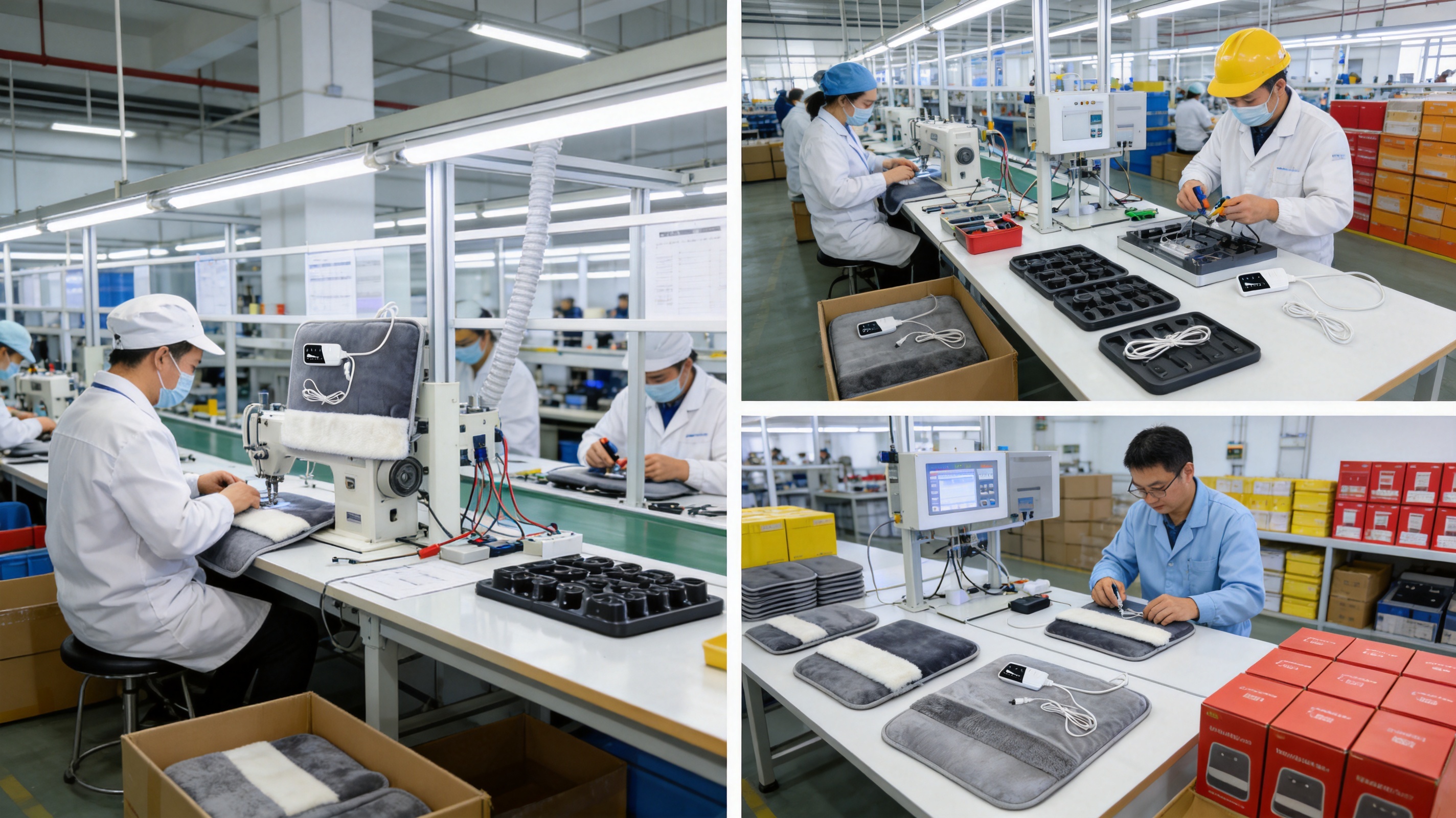
The product is manufactured by Ningbo Meeting Industrial&Trading Co., Ltd., an integrated home appliance manufacturer with capabilities covering injection molding, sewing, assembly, and complete appliance production. With approximately 5,000 square meters of production facilities, the company is positioned to support product development, customization, quality control, and delivery coordination through an integrated manufacturing process.
This article examines the product’s construction, performance advantages, practical applications, manufacturing strengths, customization potential, and suitability for wholesale, OEM, ODM, and private-label programs.
Traditional room heating is not always the most efficient or comfortable solution for individual users. A person working at a desk may feel cold around the feet while the rest of the room remains comfortable. Similarly, someone reading on a sofa may want localized warmth without increasing the temperature throughout the home. A heated foot warmer addresses this specific problem by directing heat where it is needed.
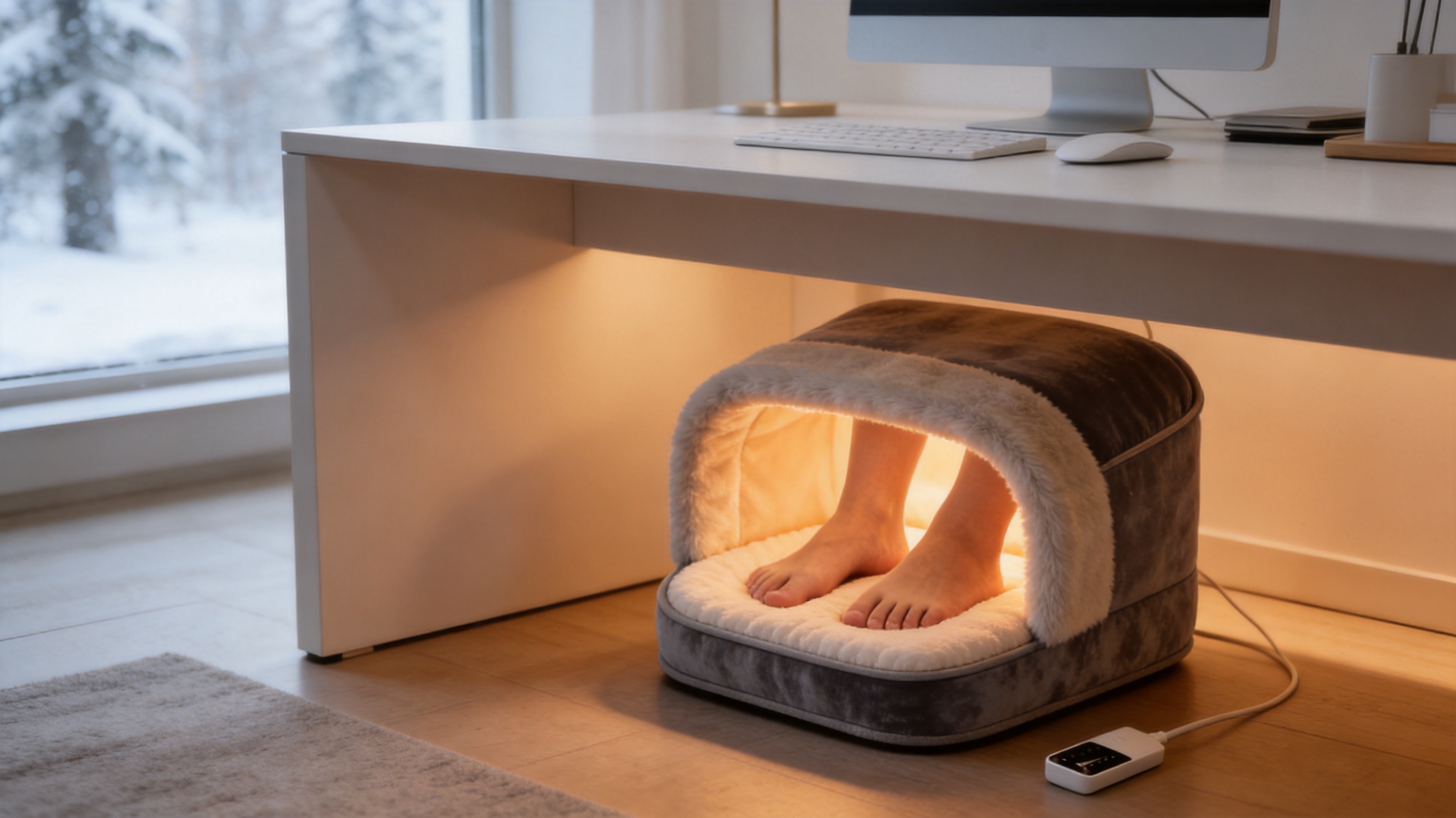
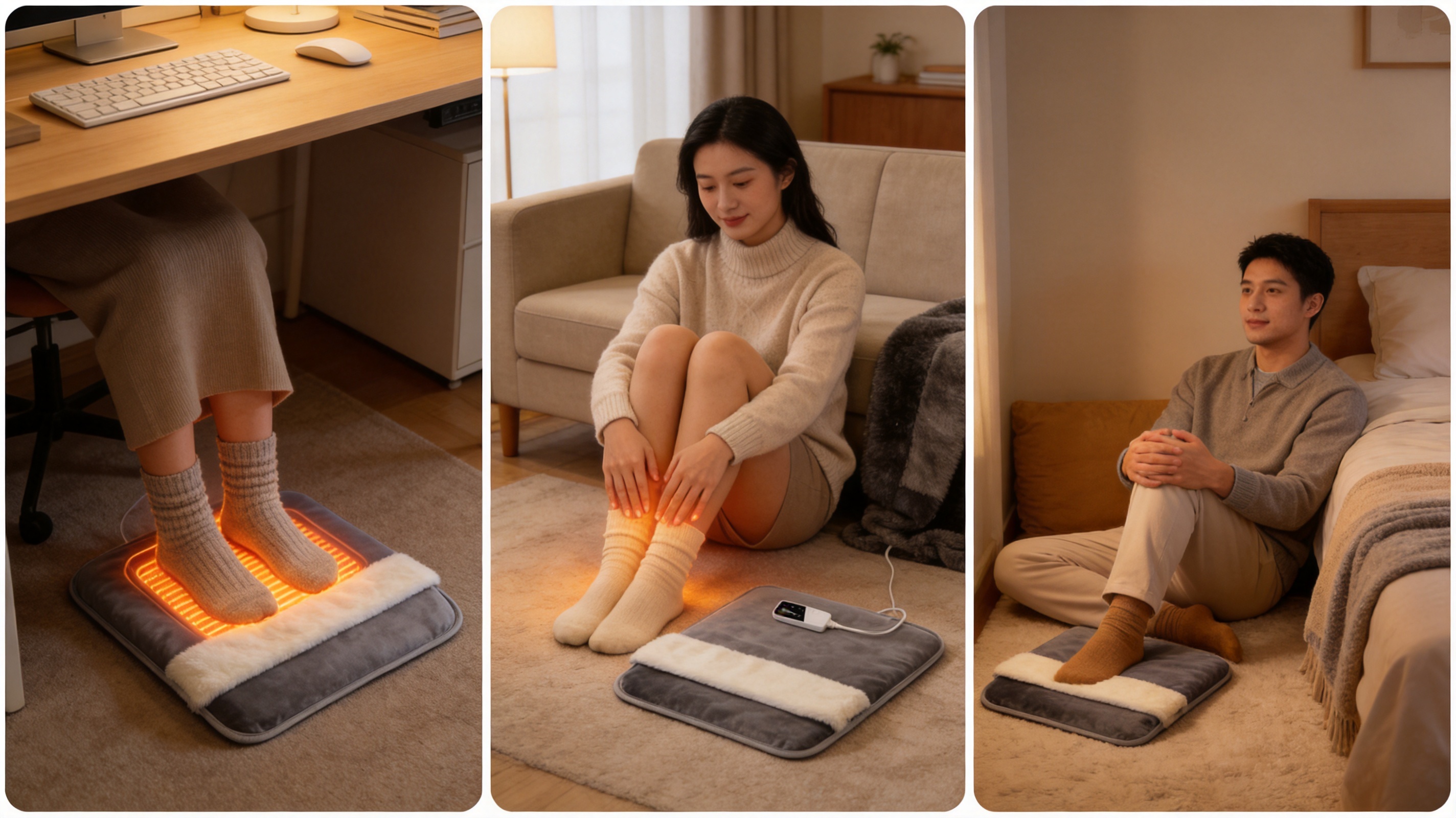
The MT-FW-001 uses an enclosed, wrap-around structure. Instead of placing the feet on top of a flat heated surface, the user places them into a soft warming space. This structure helps reduce the escape of heat and creates a more stable internal environment. The result is a cozy experience that is suitable for extended periods of desk work, reading, watching television, resting, or relaxing.
The enclosed format also gives the product a more comfortable tactile experience than many rigid or exposed heating products. The user’s feet are surrounded by soft materials rather than exposed directly to a hard platform. This makes the product especially suitable for home and office settings where comfort, quiet operation, and ease of use are important.
Focused heating also supports energy-conscious use. With a rated power of 50W, the product is designed to provide personal warmth without operating a high-power room heater. Actual energy consumption depends on usage time, temperature setting, local electricity rates, and operating conditions, but localized heating can be a practical choice when only one person requires additional warmth.
The product is identified as the All-Around Heated Foot Warmer, with model number MT-FW-001. It belongs to the electric foot warmer category and is designed for household, office, dormitory, and personal comfort applications.
Product Name |
All-Around Heated Foot Warmer |
Model |
MT-FW-001 |
Product Category |
Electric Foot Warmer |
Primary Material |
Crystal Velvet and Sponge |
Voltage |
100V |
Power |
50W |
Product Size |
43 × 47 × 3.5 cm |
Packaging |
1 piece per color box |
Warranty |
1 year |
Minimum Order Quantity |
1,500 pieces per color |
The listed 100V specification is particularly relevant for target markets that use a 100V household electrical system. Importers and distributors should confirm the required voltage, plug configuration, control specifications, labeling, and applicable compliance requirements before placing an order for a particular market. Because the manufacturer supports OEM and ODM cooperation, electrical configuration and control options may be discussed during project development.
The 43 × 47 × 3.5 cm format provides a balance between usable interior space and compact storage. The product is large enough to create a comfortable warming area while remaining manageable for packaging, transport, and seasonal storage. The relatively slim profile also supports placement under a desk, beside a sofa, or in a bedroom without occupying excessive floor space.
The principal design advantage of the MT-FW-001 is its enclosed warming structure. Open heating pads expose much of their heated surface to the surrounding air. Although they can provide useful warmth, heat may disperse quickly, particularly in cold rooms or near drafts. An enclosed foot warmer creates a partial barrier around the feet, helping retain warmth within the intended area.
This design can improve the perceived effectiveness of the product in several ways. First, the feet are positioned inside a defined warming space rather than resting on a flat surface. Second, the surrounding material helps reduce direct heat loss. Third, the enclosed structure can make the user feel warmer because it provides both conductive warmth from the heated area and a degree of insulation from the surrounding environment.
Compared with exposed heating wires, rigid heated platforms, or basic flat mats, an enclosed design may offer a more comfortable and immersive experience. The user does not need to maintain constant contact with a narrow heated strip. Instead, the warming area surrounds the feet and supports a more stable feeling during ordinary use.
The design is also useful for users who move their feet slightly while working or relaxing. A flat pad may provide its best performance only when the feet remain directly above the heating zone. A soft enclosed warmer can be more forgiving because the warming space surrounds the feet and accommodates normal changes in position.
While the product is engineered for personal comfort, users should always follow the operating instructions supplied with the final product version. Heated appliances should not be folded, compressed, covered with unsuitable materials, or used in conditions that are inconsistent with the manufacturer’s instructions. Appropriate operation is essential for maintaining safe and reliable performance.
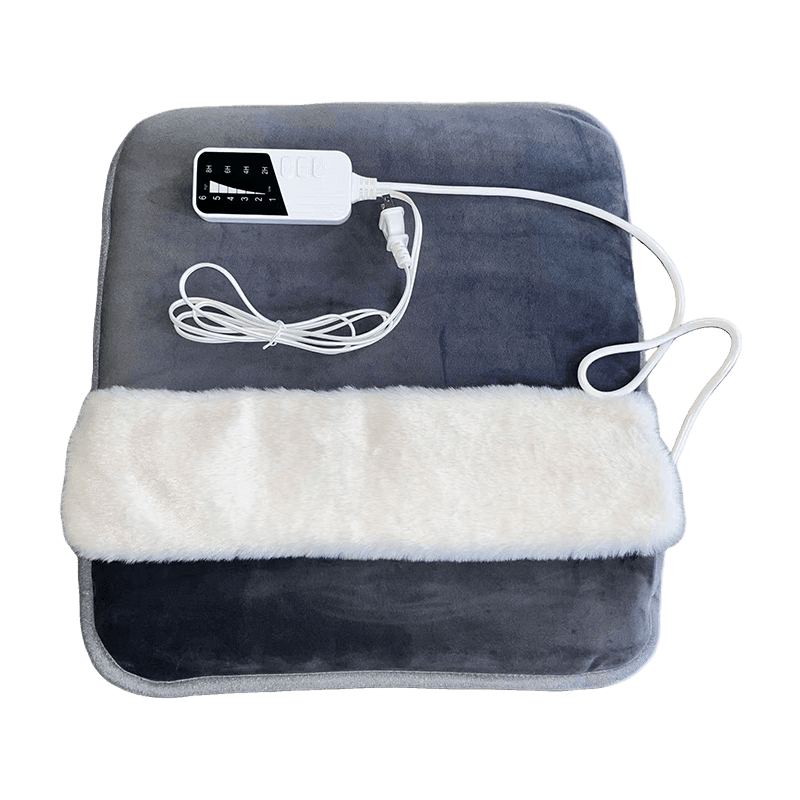
All-Around Heated Foot Warmer
The selected Crystal Velvet and sponge construction is intended to create a soft, comfortable, and supportive user experience. Crystal Velvet is commonly associated with a plush surface and gentle touch, while sponge adds cushioning and structure. Together, these materials help transform a functional electrical appliance into a more inviting household comfort product.
Material comfort is important because foot warmers are often used for extended periods. A user may place the product under a desk during a workday, use it while reading, or keep it near a sofa during a winter evening. If the interior feels rough, stiff, or unstable, the product may be used less frequently even if its heating function is effective. Soft interior materials encourage regular use and improve the overall perception of quality.
The combination of textile and sponge also supports a more flexible product form. Unlike a rigid enclosure, a soft structure can be folded or stored when not required. This is valuable for households with limited storage space, office users who need to clear their work area, and retailers that must manage seasonal inventory.
For OEM and ODM projects, material selection can be adapted according to the target market. Possible development discussions may include plush fabrics, flannel, alternative surface textures, color options, inner-layer construction, and packaging presentation. Any material change should be evaluated for comfort, durability, cleanability, appearance, and compatibility with the heating system.
Manufacturers and distributors can also use material choices to create different product lines. A basic version may focus on cost efficiency and practical warmth. A premium version may use a denser plush fabric, upgraded packaging, refined colors, or additional control features. This flexibility enables buyers to position the same basic product concept for different channels and consumer groups.
People have different preferences for warmth. Room temperature, clothing, activity level, age, and personal sensitivity can all affect how much heat a user wants. The MT-FW-001 includes multiple temperature levels so users can adjust the warming experience according to their needs and environment.
Adjustable control is a meaningful advantage over single-temperature heating products. A fixed output may feel insufficient in one situation and excessive in another. Multiple settings allow the user to begin at a lower level, increase warmth when necessary, and reduce the temperature as comfort improves. This creates a more personalized experience and can help users avoid unnecessary continuous operation at the highest setting.
Simple controls are especially important for products used in bedrooms, offices, and living spaces. The product is intended to offer intuitive operation without requiring complicated setup. Clear control design can reduce user confusion and make the product easier to introduce into retail, hospitality, workplace, and household environments.
For customized projects, buyers may discuss the preferred control layout, control location, indicator design, temperature levels, timer functions, or other operating features. The available options depend on technical evaluation, production requirements, target-market regulations, and the final product specification. Clear communication during the development stage is essential to ensure that the heating system, controller, textile structure, and packaging all work together correctly.
Heating products must be designed with safety and reliability in mind. The MT-FW-001 incorporates overheat protection and is intended to provide stable heating performance during normal use. These features support confidence in everyday operation, particularly when the product is used during long periods of reading, working, or relaxing.
Overheat protection is designed to help limit excessive temperature conditions if an abnormal situation occurs within the heating system. It is one part of a broader safety approach that may include heating element design, insulation, wiring arrangement, controller performance, material selection, assembly quality, and production inspection.
Stable heating performance is also important for user comfort. A product that heats inconsistently may create hot and cool areas, require frequent adjustment, or provide a less satisfying experience. Consistent assembly and appropriate control of the heating system help the product deliver a predictable warming effect.
Users should operate the product only as instructed. The final operating manual should explain how to connect the product, select temperature settings, clean or maintain the textile components, and store the warmer safely. Buyers should also confirm the final safety documentation and market-specific requirements before commercial distribution.
From a purchasing perspective, safety is not limited to the finished product. It also depends on manufacturing control. Electrical components must be handled properly, wiring must be positioned correctly, sewing must not damage internal parts, and finished products must be inspected before packing. A factory with integrated sewing, assembly, and appliance production can coordinate these stages more effectively than a fragmented supply chain.
Although the product is primarily designed for the feet, its soft enclosed structure can support several other personal warming applications. Depending on the final instructions and user requirements, it may be used to warm hands, knees, the waist, or the abdomen. This multipurpose potential improves the value of the product and can expand its target audience.
For example, a user working at a desk may initially use the product for the feet and later place the hands inside during a break. Someone relaxing on a sofa may position the warmer around the knees. A user seeking localized comfort around the waist or abdomen may use the product in an appropriate position while following the operating guidelines.
Multipurpose use also creates stronger merchandising opportunities. Retailers can present the item as a flexible personal warming product rather than a single-purpose seasonal accessory. E-commerce listings can focus on foot warmth while explaining additional use scenarios. Distributors serving offices, dormitories, gift shops, winter-product retailers, and household appliance stores can adapt the product message to different customers.
However, multipurpose positioning should remain accurate and responsible. The product is a warming appliance, not a medical device, and marketing materials should avoid unsupported therapeutic or medical claims. Its principal benefit is localized comfort and warmth in everyday situations.
Many offices maintain a general room temperature that does not satisfy every employee. Feet may feel cold because of flooring materials, air circulation, proximity to windows, or long periods of sitting. The compact format of the MT-FW-001 makes it suitable for placement under a desk, where it can provide personal warmth without affecting coworkers.
The soft construction is compatible with a quiet office environment. Unlike bulky space heaters, the product does not require a large floor area and is intended to warm the user’s immediate personal space. Its 50W power rating also makes it suitable for buyers who prefer a lower-power personal warming option, subject to proper electrical use and workplace policies.
At home, the foot warmer can be used beside a sofa, under a desk, near a reading chair, or in a bedroom. The enclosed structure creates a comfortable personal space during cold mornings, winter evenings, or periods of rest. Since it can be folded and stored, it does not need to remain permanently in the living area.
Students and residents of compact apartments often need products that provide comfort without taking up much room. A small personal heater may be easier to store and manage than a larger room-heating appliance. The MT-FW-001 is designed for focused warmth, making it a practical option for dormitory desks, compact bedrooms, and shared living spaces.
Cold-weather products are often used intensively for part of the year and stored during warmer months. The foldable construction supports seasonal organization. Retailers can present the product as a winter personal comfort item, while households can place it in a closet or storage box after the cold season ends.
Warmth-oriented products can be appropriate for winter gifting, employee benefits, customer appreciation programs, and seasonal promotions. The color-box packaging format provides a suitable foundation for retail presentation, while OEM buyers can develop customized packaging, branding, and printed materials for their own sales channels.
The strongest competitive advantage of the MT-FW-001 is the combination of enclosed warming, soft comfort, adjustable temperature control, multipurpose use, and compact storage. Many competing products emphasize only one of these features. A flat mat may provide a simple heating surface but lack enclosure. A rigid foot heater may retain heat but feel less comfortable. A general space heater may warm a broader area while consuming more power and offering less personal control.
Comparison Factor |
All-Around Heated Foot Warmer |
Open Heating Pad |
General Room Heater |
Warming Area |
Focused enclosed space around the feet |
Mostly limited to the exposed pad surface |
Broad room area |
Heat Retention |
Improved by wrap-around structure |
More exposed to surrounding air |
Depends on room size and insulation |
Personal Control |
Multiple temperature settings |
Depends on model; may be limited |
Usually controls room temperature |
Comfort Surface |
Crystal Velvet and sponge construction |
May be textile, rubber, or synthetic surface |
Usually no direct foot contact area |
Storage |
Foldable and space-saving |
Generally easy to store |
Often bulkier |
Additional Uses |
Hands, knees, waist, or abdomen, subject to instructions |
Usually focused on one surface |
Not designed for localized contact warming |
This comparison does not mean that one type of heating product is suitable for every consumer. Rather, it shows that an enclosed foot warmer occupies a useful middle position. It offers more targeted comfort than a room heater and more surrounding warmth than a simple exposed pad.
Its soft construction can also create a stronger emotional appeal. Consumers often purchase comfort products based not only on technical specifications but also on how pleasant, safe, and convenient the product feels in daily life. A plush, enclosed warmer can communicate coziness more effectively than a hard electrical platform.
Storage is an important but sometimes overlooked factor in household appliance design. A product that provides warmth during winter must be easy to put away when the season ends. The MT-FW-001 is lightweight and flexible, and its foldable design helps users store it in small spaces.
This feature benefits both end users and commercial buyers. Consumers can keep the product in a drawer, cabinet, closet, or storage box. Offices can store several units when they are not required. Retailers can manage seasonal inventory more efficiently because the product does not demand the same shelf or warehouse volume as a rigid heating appliance.
Foldability can also simplify transportation and distribution. Products that can be packed in an orderly and compact way may offer advantages in carton planning, warehouse handling, and retail display. Final shipping efficiency depends on packaging design, order quantity, and transport conditions, but the flexible product structure provides a useful starting point for logistical planning.
Packaging is supplied as one piece per color box. For wholesale and private-label programs, buyers may discuss color-box artwork, branding, language requirements, product photography, instruction manuals, barcode labels, carton markings, and other retail details.
A reliable heated textile appliance requires coordination between soft-goods production and electrical appliance manufacturing. The manufacturer’s integrated facilities cover injection molding, sewing, assembly, and complete appliance manufacturing. This combination is significant because the product depends on both fabric craftsmanship and controlled electrical assembly.
Injection molding capabilities can support the production of plastic components such as control housings, structural parts, connectors, or other customized elements. In-house or coordinated molding helps improve control over dimensions, surface finish, material selection, and component consistency. It can also reduce communication delays when a project requires a modified housing or a new control structure.
Sewing capabilities are essential for the Crystal Velvet and sponge body. Textile products require attention to cutting accuracy, seam strength, edge finishing, inner-layer placement, and the relationship between the fabric shell and heating system. A dedicated sewing process helps ensure that the soft structure maintains its intended shape and appearance throughout production.
Assembly brings together the electrical system, textile body, control components, wiring, insulation, and finished housing. This stage requires careful coordination because the heating element must function correctly without compromising the comfort or flexibility of the product. A factory that manages complete appliance assembly can establish consistent work instructions and inspection points across the production line.
The company’s approximately 5,000 square meters of production facilities provide space for multiple manufacturing functions and support a more organized workflow. Facility size alone does not determine product quality, but adequate space can support material storage, semi-finished product management, assembly areas, inspection stations, packing operations, and production scheduling.
As an integrated manufacturer, Ningbo Meeting can communicate across design, production, and project-support teams. This is useful when a buyer requests a modification. Instead of treating the electrical, textile, and packaging portions as completely separate projects, the manufacturer can evaluate how changes affect the entire product system.
Quality control for a heated foot warmer should cover the full production process rather than rely only on final visual inspection. Incoming materials, molded parts, textile components, electrical components, sewing quality, assembly accuracy, heating behavior, controls, packaging, and documentation all contribute to the finished product.
At the material stage, the manufacturer can verify whether fabrics, sponge, wiring, controllers, plastic parts, and packaging materials correspond to the approved specification. Consistency at this stage helps prevent variation later in production.
During sewing, inspection may focus on seam quality, fabric alignment, edge finishing, shape, and the secure positioning of inner materials. A well-controlled sewing process helps protect the heating system from unnecessary stress and supports a consistent appearance from one unit to the next.
During electrical assembly, attention should be given to wiring routes, connector installation, component placement, insulation, controller attachment, and overall assembly accuracy. Heating appliances must be assembled according to approved technical instructions, and any market-specific electrical requirements should be reviewed before production.
Functional inspection can verify power connection, control response, heating operation, temperature-level changes, and protective functions according to the approved testing procedure. Visual inspection can identify stitching issues, surface damage, contamination, deformation, printing errors, and packaging defects.
Final quality control may also include checking product dimensions, labels, manuals, color consistency, accessory inclusion, and carton quantities. This is especially important for OEM orders, where a buyer’s packaging and branding requirements may be different from the manufacturer’s standard version.
A clear quality-control plan also supports traceability. Production records, batch information, inspection results, and approved samples can help the manufacturer and buyer communicate more effectively if questions arise during delivery or market launch.
The MT-FW-001 is suitable for buyers seeking a ready product as well as companies that want to develop a customized warming item. The manufacturer provides OEM and ODM support covering several areas of the product and its presentation.
Buyers may discuss alternative fabrics such as plush, flannel, or other textile choices. Material changes can influence touch, appearance, warmth retention, durability, cleaning requirements, and cost. The chosen fabric should be evaluated together with the sponge layer and heating system to ensure that the finished product remains comfortable and functional.
Different markets may require different dimensions. A buyer may need a larger foot opening, a revised overall shape, a more compact form, or a structure designed for another body area. Size changes should be reviewed for comfort, heating coverage, folding behavior, packaging, and shipping efficiency.
The heating system and controller may be adapted to suit a project’s specifications. Discussions can include voltage, plug configuration, control method, temperature levels, timer functions, indicator design, and other operating details. These changes must be assessed technically and aligned with the requirements of the intended sales market.
Brand presentation is important for retail and online sales. OEM customers may request a private label, customized color box, instruction manual, product insert, barcode, outer carton, or color scheme. Effective packaging should explain the product’s key benefits without making unsupported claims. It should also provide clear instructions and relevant warnings for responsible use.
Customization is most successful when the buyer provides a clear product brief at the beginning of the project. Information about target market, retail price, sales channel, preferred materials, expected order quantity, packaging language, delivery schedule, and compliance needs allows the manufacturer to prepare a more accurate development plan.
A typical OEM or ODM project begins with requirement confirmation. The buyer and manufacturer discuss the product’s intended function, market, voltage, appearance, materials, controls, packaging, order volume, and delivery expectations. This stage helps identify technical questions before sampling begins.
The next stage may involve design adjustment and sample development. Depending on the requested changes, the manufacturer may prepare textile samples, color samples, control samples, structural drawings, packaging layouts, or complete functional samples. The buyer should evaluate the sample for comfort, appearance, operation, dimensions, and overall market suitability.
After sample approval, the manufacturer can prepare production materials and confirm the manufacturing process. This may include ordering fabrics and components, finalizing molded parts, preparing sewing patterns, confirming assembly instructions, and arranging quality-control checkpoints.
During mass production, the project team coordinates material preparation, sewing, electrical assembly, testing, packing, and shipment. Clear communication about approvals and changes is essential. Late modifications can affect materials, production timing, packaging, and cost, so they should be documented and reviewed before implementation.
Before shipment, finished goods can be inspected according to the agreed quality standard. The buyer may define inspection methods, sampling levels, packaging requirements, labeling rules, and document needs during the order-confirmation stage.
Project Stage |
Main Activities |
Buyer Considerations |
Requirement Review |
Confirm market, voltage, materials, controls, size, packaging, and quantity |
Provide a complete product brief and target specifications |
Sample Development |
Prepare appearance, structure, textile, electrical, and packaging samples |
Evaluate comfort, function, quality, and visual presentation |
Approval |
Confirm final sample, artwork, components, and inspection requirements |
Approve specifications in writing before mass production |
Mass Production |
Conduct molding, sewing, assembly, testing, and packing |
Monitor schedule and communicate any approved changes |
Final Inspection |
Check function, appearance, packaging, quantity, and documentation |
Confirm shipment readiness and required commercial documents |
The minimum order quantity is 1,500 pieces per color, which makes the product appropriate for distributors, importers, chain retailers, online sellers, promotional-product companies, and established private-label brands. The MOQ allows buyers to plan a meaningful market launch while still offering the possibility of color-based product differentiation.
Color selection can help retailers create seasonal collections, match existing product lines, or target different consumer preferences. A neutral color may suit office and home environments, while warmer or more decorative colors may support gift-oriented retail presentations. Final color availability depends on material sourcing and production confirmation.
The one-piece-per-color-box packaging format supports individual retail sales and simplified warehouse handling. Buyers can use the standard packaging format or request customized packaging to match their brand identity and sales channel. For e-commerce, packaging should be designed to protect the product while presenting the key benefits clearly to the customer.
Commercial positioning may focus on several product messages: enclosed warmth, soft materials, adjustable temperature, compact storage, multipurpose use, and lower-power personal heating. These messages can be adapted for different markets without changing the fundamental product concept.
Retailers should present the product accurately. It is a personal comfort appliance intended to provide localized warmth; it should not be marketed as a substitute for medical treatment or as a guaranteed solution for a health condition. Clear, responsible product communication helps build customer trust and reduces avoidable after-sales issues.
Working with an integrated manufacturer can simplify the process of developing and sourcing a soft electrical appliance. The product combines several manufacturing disciplines, and coordination is necessary to prevent problems between them. For example, changing the fabric may affect the sewing pattern, internal space, heat distribution, packaging dimensions, and final cost.
When molding, sewing, assembly, and appliance production are managed within one manufacturing system, technical feedback can move more quickly between relevant teams. A design engineer can discuss a housing change with the molding team, while the sewing team can review how the change affects the textile body. The assembly team can then evaluate the impact on wiring and production time.
Integrated production also supports clearer accountability. Buyers have a central manufacturing partner for product specifications, sampling, production planning, quality communication, and delivery coordination. This can reduce the administrative burden associated with managing multiple unrelated suppliers.
Ningbo Meeting’s focus on heating appliances, cooling appliances, and furniture-related household electrical products gives the company experience in product categories that combine practical household functions with comfort-oriented design. Its development and production structure is intended to support products that are safe, quiet, stable, and suitable for daily use.
The company was established in 2023 and has built its operations around product development, production management, project support, and complete appliance manufacturing. Its participation in professional exhibitions, including the Tokyo Gift Show, has provided opportunities to observe market trends, understand customer preferences, and establish business relationships across different regions.
Before purchasing or importing the MT-FW-001, buyers should confirm whether the 100V electrical specification matches their target market. If a different voltage or plug type is needed, the request should be discussed before sampling and quotation. Electrical changes may affect components, testing, labeling, documentation, and production scheduling.
Buyers should also determine the desired product color, fabric, packaging language, logo treatment, control functions, warranty arrangement, and inspection standard. These decisions influence the final quotation and development schedule.
For retailers, the product’s primary consumer profile may include office workers, students, home-based workers, older adults seeking everyday warmth, winter-gift buyers, and consumers living in colder climates. Retailers should still consider regional preferences, household electrical standards, climate, floor-space limitations, and local rules for heated appliances.
For distributors, a product launch plan may include product photography, instruction content, retail packaging, online listing information, seasonal promotional timing, and after-sales support. The one-year warranty can be included in the commercial proposal, subject to the agreed warranty terms and market requirements.
For safe and effective use, the product should be operated according to the final instruction manual. Users should inspect the cord, controller, plug, and textile body before use. If any part appears damaged, the product should not be operated until it has been checked or replaced according to the manufacturer’s guidance.
The warming area should be kept free from objects that could compress the structure or interfere with heat dissipation. Users should avoid using the product in wet conditions unless the final product documentation specifically permits such use. Cleaning should follow the manufacturer’s instructions, especially because the product includes electrical components.
When storing the warmer, it should be folded or arranged according to the approved storage method. Excessive bending, sharp creasing, heavy pressure, or unsuitable storage conditions may affect the textile body or internal components. Allowing the product to cool before storage is a sensible general practice for heated household appliances.
Children should use the product only with appropriate supervision, and users with reduced sensitivity to heat should take additional care. The product provides warmth for comfort and should not be used as a medical treatment. Responsible operation protects both the user and the long-term performance of the appliance.
The MT-FW-001 uses an enclosed, wrap-around structure rather than an exposed flat surface. This design helps retain warmth around the feet and creates a softer, more enclosed warming environment. It is intended to provide a more immersive comfort experience than a basic open mat.
The standard product uses Crystal Velvet and sponge. These materials provide a plush surface, cushioning, flexibility, and a comfortable touch suitable for everyday use.
The listed specification is 100V and 50W. Buyers should confirm that these specifications are suitable for their target market. Alternative electrical configurations may be discussed for customized projects, subject to technical evaluation.
Yes. The product includes multiple temperature settings so users can select a suitable warmth level for different environments and personal preferences.
The product is designed with overheat protection, stable heating performance, and simple controls for everyday use. The final user manual and market-specific documentation should be reviewed for complete operating and safety information.
It may also be used to warm hands, knees, the waist, or the abdomen, depending on the application and the final instructions. It is a personal warming appliance and should not be promoted as a medical device.
Yes. Its compact format, soft construction, localized warming function, and 50W power rating make it suitable for under-desk use in offices, provided that workplace policies and electrical requirements permit its use.
Yes. The product is lightweight, flexible, and foldable. These qualities make it easier to store in small homes, dormitories, offices, and seasonal inventory areas.
The standard packaging is one piece per color box. Customized retail packaging, branding, printed materials, and carton details may be discussed for OEM and ODM orders.
The listed warranty is one year. Buyers should confirm the detailed warranty terms, claim procedure, applicable region, and documentation requirements during order negotiation.
The listed MOQ is 1,500 pieces per color. Buyers should confirm the available color options, sample policy, production schedule, and final commercial terms with the manufacturer.
Customization may include fabric and material options, size and structure changes, heating and control options, branding, and packaging design. The exact scope depends on technical feasibility, target-market requirements, order quantity, and project timing.
The manufacturer operates production facilities covering injection molding, sewing, assembly, and complete appliance manufacturing. This integrated structure supports coordination between the product’s textile, plastic, electrical, and packaging requirements.
The product is manufactured by Ningbo Meeting Industrial&Trading Co., Ltd., located in Ningbo, Zhejiang Province, China. The company focuses on heating appliances, cooling appliances, and household electrical products for home and office use.
The All-Around Heated Foot Warmer is designed for consumers who want focused, comfortable warmth without heating an entire room. Its enclosed structure helps retain heat around the feet, while Crystal Velvet and sponge materials provide a soft and cushioned experience. Adjustable temperature settings allow users to personalize warmth, and overheat protection supports safer everyday operation.
Its advantages extend beyond foot warming. The product can support localized warmth for hands, knees, the waist, or the abdomen, subject to proper instructions. Its foldable, lightweight format makes it practical for offices, homes, dormitories, small living spaces, seasonal use, and gift-oriented retail.
For commercial buyers, the product offers a combination of practical function, attractive comfort positioning, flexible packaging, and OEM or ODM development potential. The 1,500-piece-per-color MOQ is suitable for distributors and private-label programs that are prepared to make a structured seasonal or year-round product launch.
The manufacturing foundation is equally important. With approximately 5,000 square meters of facilities and capabilities covering injection molding, sewing, assembly, and complete appliance production, Ningbo Meeting can coordinate the multiple disciplines required for a soft electrical warming product. Its focus on product development, safety, comfort, stable performance, quality control, and project support makes it a suitable manufacturing partner for buyers seeking more than a standard catalog item.
By combining enclosed warming design, soft materials, adjustable control, multipurpose use, compact storage, and factory-direct customization support, the MT-FW-001 represents a practical and adaptable solution for the personal heating market.
1. Product specification sheet for All-Around Heated Foot Warmer, Model MT-FW-001.
2. Manufacturer-provided information regarding materials, voltage, power, dimensions, packaging, warranty, and minimum order quantity.
3. Manufacturer-provided company profile describing production facilities, injection molding, sewing, assembly, product development, and appliance manufacturing capabilities.
4. General principles of household electrical appliance design, user safety, thermal control, and product instruction development.
5. General considerations for OEM and ODM development of textile-based household electrical products.
You settle onto the couch on a cold winter evening, blanket spread across your lap, and hesitate before reaching for the plug. How much electricity will this actually use? Most he...
READ MOREAs households increasingly seek ways to stay comfortable while managing energy costs, the Energy-Efficient Smart Heated Throw Blanket has emerged as a practical solution that blen...
READ MOREFalling asleep quickly and staying asleep through the night depend on more than just a dark, quiet room. Body temperature plays a central, often underappreciated role in the sleep...
READ MORESmart energy-efficient portable cooling hand fans have quickly become one of the most practical personal comfort devices available, combining compact design, long battery life, an...
READ MORELayering Is the First Rule of Using a Heated Blanket Last winter, a customer told me his new heated blanket felt cold around his feet. We checked the setup together, and the probl...
READ MOREThe first time you wash a heated blanket, the process feels slightly risky. You are placing a product filled with wires into water, and a mistake can shorten its lifespan or damag...
READ MORE