Home > News > Industry News > Is an Energy-Efficient Smart Heated Blanket the Ultimate Secret to Cutting Winter Bills and Achieving Deep Sleep?
10/07/2026 Industry News

Is an Energy-Efficient Smart Heated Blanket the Ultimate Secret to Cutting Winter Bills and Achieving Deep Sleep?

Content

Falling asleep quickly and staying asleep through the night depend on more than just a dark, quiet room. Body temperature plays a central, often underappreciated role in the sleep process, and this is precisely where the smart heated throw for sleep quality has carved out a growing place in modern bedrooms. Unlike a traditional heated blanket that simply warms a surface, a smart heated throw combines adjustable, app-connected heating technology with safety features and sleep-focused design, aiming to support the body's natural temperature rhythm rather than working against it. This article explores the science behind temperature and sleep, how smart heated throws are engineered, and what to consider when choosing one to genuinely improve rest rather than just add warmth.

Quick summary: A smart heated throw for sleep quality is a connected, temperature-controllable blanket designed to support the body's natural pre-sleep cooling process, using programmable heat zones, timers, and often app or voice control to create optimal warmth conditions before sleep without overheating the body during the night.
Smart Heated Throw Sleep Temperature Regulation Connected Bedding Technology Thermal Comfort for Sleep

Why Temperature Matters So Much for Sleep

The human body's core temperature naturally follows a daily rhythm, rising during waking hours and beginning to drop in the evening as part of the physiological process that initiates sleep. This drop in core temperature is closely tied to the release of melatonin and signals to the brain that it is time to transition into rest. Interestingly, this internal cooling process is often supported by warming the extremities — particularly the hands and feet — which helps the body dissipate heat more efficiently through the skin, allowing the core to cool faster.

This is part of why a warm blanket, warm bath, or warm socks before bed can genuinely help people fall asleep faster: the surface warmth encourages blood vessels near the skin to dilate, releasing internal heat more effectively. However, once asleep, the body continues to require a slightly cooler environment to maintain deep, uninterrupted sleep stages. A blanket that stays too warm throughout the entire night can work against this process, contributing to restlessness, frequent waking, or reduced time spent in deep and REM sleep stages.

The Core Challenge Smart Heated Throws Address

Traditional electric blankets and throws were not designed with this nuanced temperature curve in mind — many simply provide a constant, adjustable level of heat for as long as they remain switched on. A smart heated throw, by contrast, is engineered specifically to align with the body's pre-sleep warming need and its later cooling need, using programmable settings, timers, and sometimes adaptive technology to taper heat output as the night progresses.

What Makes a Heated Throw "Smart"

The word "smart" in this context refers to a combination of connected technology, programmability, and often data-driven personalization that distinguishes these throws from conventional electric blankets.

App and Voice Control

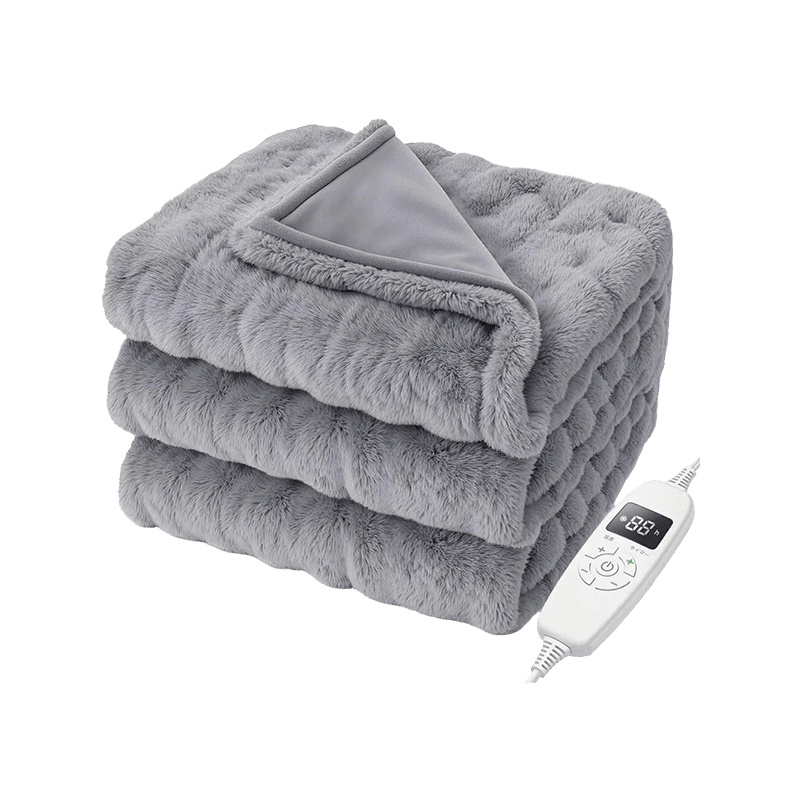
Most smart heated throws connect to a smartphone app via Bluetooth or Wi-Fi, allowing users to adjust heat levels, set schedules, and monitor usage without needing to reach for a physical remote or dial. Many models also integrate with voice assistants, enabling hands-free adjustments — useful for someone already settled into bed who wants to lower the heat without getting up or fumbling for a controller in the dark.

Programmable Heat Schedules

Rather than requiring the user to manually adjust or turn off the throw at some point during the night, smart models allow pre-set schedules — for example, a warm setting for the first 30 to 60 minutes to aid falling asleep, followed by an automatic reduction or shutoff to avoid overheating during deeper sleep stages later in the night.

Multi-Zone Heating

Some smart heated throws feature multiple independently controllable heating zones, allowing warmth to be concentrated on areas like the feet — which research suggests plays an outsized role in triggering the body's sleep-onset cooling response — while keeping other areas slightly less warm, or allowing two people sharing a bed to set different heat levels on their respective sides.

Adaptive and Sensor-Based Adjustment

More advanced smart heated throws incorporate temperature sensors that monitor the surface or ambient temperature and adjust heat output automatically to maintain a consistent, pre-set comfort level, rather than relying solely on a fixed power setting that might feel too warm or too cool as room conditions change throughout the night.

Feature Traditional Heated Blanket Smart Heated Throw
Control method Physical dial or corded remote App, voice assistant, or smart controller
Heat scheduling Manual on/off Programmable auto-adjust or shutoff
Zone control Single uniform zone (typically) Multiple independently controlled zones
Temperature consistency Fixed power output Sensor-based adaptive adjustment
Safety monitoring Basic auto shutoff timer Continuous monitoring with alerts

The Science-Backed Case for Pre-Sleep Warming

Sleep researchers have long studied the relationship between skin temperature, particularly in the extremities, and how quickly a person falls asleep. Warming the feet and hands before bed has been associated with faster sleep onset in various studies, largely attributed to the vasodilation effect described earlier, which helps the body shed core heat more efficiently. A smart heated throw applied in the pre-sleep window can replicate this effect in a controlled, comfortable way, particularly for individuals who naturally have colder extremities or who sleep in cooler bedroom environments.

Avoiding the Overheating Trap

The risk with any heat source in bed is maintaining warmth well past the point where it becomes counterproductive. Once a person has fallen asleep, continued or excessive warmth can interfere with the natural core temperature decline needed to sustain deeper sleep stages, potentially contributing to night waking or a less restorative night overall. This is precisely why the "smart" element of these throws — automatic tapering, scheduled shutoff, and adaptive sensing — is not simply a convenience feature, but a functional design choice aimed at supporting the full sleep cycle rather than just the falling-asleep phase.

"The goal isn't to stay warm all night — it's to help the body do what it already wants to do: warm up just enough to let go, then cool down to stay asleep."

Key Technologies Inside a Smart Heated Throw

Heating Element Type

Most heated throws use one of two primary heating technologies: traditional resistive wire heating elements woven through the fabric, or newer carbon-fiber and micro-alloy heating panels that distribute warmth more evenly and tend to sit flatter and more flexibly within the fabric than older coiled-wire designs. Carbon-fiber and similar flexible heating technologies are increasingly favored in smart throws for their more even heat distribution and improved durability under repeated folding and washing.

Low-Voltage Safety Systems

Many smart heated throws operate on low-voltage direct current power delivered through a transformer, rather than running mains voltage directly through the blanket itself. This design reduces electrical risk and is a key differentiator from older, higher-voltage heated blanket designs that carried more significant fire and shock safety concerns.

Temperature Sensors and Feedback Loops

Integrated temperature sensors allow the throw's control system to continuously monitor actual surface temperature and adjust power output in real time, maintaining the user's selected comfort level even as ambient room temperature fluctuates throughout the night.

Connectivity Hardware

Bluetooth or Wi-Fi modules embedded in the control unit allow communication with a smartphone app, enabling remote scheduling, usage history tracking, and sometimes integration with broader smart home ecosystems, such as automatically activating a warming schedule when a smart home system detects the user's bedtime routine beginning.

Safety Considerations Specific to Heated Bedding

Because a heated throw is used in direct, prolonged contact with the body during sleep — a time when a person is not consciously monitoring comfort or safety — certain design and usage considerations are especially important.

Automatic Shutoff

A reliable automatic shutoff feature, whether time-based or triggered by sensor feedback, is one of the most important safety features in any heated throw, reducing the risk of prolonged, unmonitored heat exposure during sleep.

Overheat Protection

Quality smart heated throws include overheat protection circuitry that detects abnormal temperature spikes — which could indicate a fault, folded or bunched fabric trapping heat, or a damaged heating element — and automatically shuts down power before a safety issue develops.

Washability and Wire Durability

Because bedding requires regular washing, heated throws designed for genuine everyday use typically feature washable heating elements rated for machine washing, along with detachable control units that should never themselves be submerged. Flexible carbon-fiber or micro-alloy heating technology tends to hold up better to repeated washing than older rigid coil designs, which can develop weak points or breaks over time.

Certifications and Standards

Buyers should look for relevant electrical safety certifications appropriate to their region, confirming that the product has been independently tested for electrical and fire safety standards specific to heated bedding products, which are held to a higher scrutiny level than many other electronic household goods due to their prolonged skin contact and unattended overnight use.

Safety checklist before buying:
  • Confirm automatic shutoff and overheat protection features
  • Verify low-voltage operation through an external transformer
  • Check that the heating element (not the control unit) is machine washable
  • Look for recognized electrical safety certification for your region
  • Review the manufacturer's guidance on use with electric blankets, mattress pads, or other heat sources simultaneously

Choosing the Right Smart Heated Throw for Sleep Quality

1. Heat Range and Increments

A wider range of temperature settings, ideally with fine incremental control rather than just a few broad "low, medium, high" options, allows users to dial in the precise warmth level that helps them fall asleep without tipping into overheating.

2. Zone Configuration

For individuals who specifically feel cold in their feet or hands before sleep, a throw with independent foot-zone heating may deliver more targeted benefit than a single, uniformly heated surface. Couples sharing a bed may also benefit significantly from dual-zone designs that let each side be controlled independently.

3. Scheduling Flexibility

Look for a throw that allows a customizable warm-up and cool-down schedule, rather than a single fixed auto-shutoff timer, since sleep onset time and individual temperature preferences vary significantly from person to person.

4. Fabric Feel and Weight

Since the throw will be in direct, prolonged contact with skin, fabric softness, weight, and breathability matter both for comfort and for how evenly heat is perceived. Overly heavy or non-breathable fabric can trap heat unevenly, undermining the benefit of precise digital temperature control.

5. App Reliability and Data Privacy

Because smart heated throws rely on connected apps for scheduling and control, it is worth considering the reliability of the manufacturer's app, whether the throw can still function with basic on/off and heat-level control if connectivity is lost, and what data (if any) the app collects regarding usage patterns or sleep timing.

How to Use a Smart Heated Throw to Support Better Sleep

Warm Before, Not Through, the Night

For most people, the greatest sleep benefit comes from using the throw to warm the bed and body in the 20 to 45 minutes before actually falling asleep, then allowing the throw to automatically taper off or shut down shortly after sleep onset, rather than running at a constant warm setting throughout the entire night.

Pair with a Cool Bedroom Environment

Sleep researchers commonly recommend a cooler ambient bedroom temperature for optimal sleep quality. A smart heated throw pairs particularly well with this approach, since it allows the user to keep the room itself cool — which supports the body's natural core-temperature drop — while still providing localized warmth exactly where and when it is needed most.

Establish a Consistent Pre-Sleep Routine

Using the throw's programmable scheduling feature consistently, night after night, can help reinforce a broader wind-down routine, working alongside other sleep hygiene practices such as dimming lights and reducing screen exposure before bed.

Adjust Seasonally

Heat needs often change with the seasons, and many smart throws allow saved presets, making it easy to switch between a lighter, shorter warming schedule in summer months and a longer, slightly warmer schedule in colder months without needing to reconfigure settings from scratch each time.

Who Benefits Most from a Smart Heated Throw

People with Cold Extremities

Individuals who frequently experience cold hands or feet at bedtime — a common complaint, particularly among older adults and those with certain circulatory sensitivities — may find targeted, adjustable warmth especially helpful in supporting faster, more comfortable sleep onset.

Couples with Different Temperature Preferences

Dual-zone smart throws address a very common bedroom compromise, allowing two people to independently set the warmth level that suits them individually rather than negotiating a single shared setting for an entire blanket or electric mattress pad.

People in Cold Climates or Poorly Insulated Bedrooms

In colder regions or older homes with less effective heating and insulation, a smart heated throw can provide targeted comfort without needing to raise the whole-room thermostat, which can also support household energy savings compared to heating an entire bedroom to a comfortable sleeping temperature.

Shift Workers and Irregular Sleepers

For individuals whose sleep schedule does not align with a conventional nighttime routine, app-based scheduling allows a smart heated throw to be adapted flexibly to whatever hours the person is actually trying to sleep, rather than being tied to a fixed overnight timer.

Common Misconceptions

"Warmer is always better for sleep."

As outlined earlier, the body actually needs to cool down to sustain deep sleep once it has fallen asleep. Running a heated throw at a high, constant setting all night can work against this natural process rather than supporting it.

"Smart features are just marketing, not real sleep benefits."

While not every connected feature directly affects sleep physiology, scheduling and automatic tapering directly address the mismatch between the body's warming and cooling needs across a sleep cycle — a genuine functional advantage over a basic, constantly-on heated blanket.

"Heated throws are unsafe to use overnight."

Modern smart heated throws designed for overnight use include multiple layered safety systems — low-voltage operation, overheat protection, and automatic shutoff — that address the safety concerns historically associated with older, higher-voltage electric blanket designs.

Maintenance and Longevity Tips

To keep a smart heated throw performing safely and effectively over time, users should always disconnect the control unit before washing the fabric portion, follow the manufacturer's specific washing instructions regarding water temperature and drying method, and periodically inspect the fabric for any signs of wear, exposed wiring, or damage to the heating panel, discontinuing use and contacting the manufacturer if any such issues are found. Storing the throw folded loosely rather than tightly compressed when not in use can also help preserve the integrity of the internal heating elements over the product's lifespan.

A smart heated throw for sleep quality represents a thoughtful application of connected technology to a genuinely physiological need: supporting the body's natural temperature rhythm around the moment of falling asleep, without disrupting the cooling process required to stay asleep through the night. By combining programmable scheduling, zone-specific heating, adaptive temperature sensing, and layered safety systems, these throws go well beyond the simple warmth of a traditional electric blanket. For anyone whose sleep is affected by cold extremities, a chilly bedroom, or simply the desire for a more personalized, comfortable wind-down routine, a well-chosen smart heated throw can be a small addition to the bedroom that supports a genuinely better night's rest.

You May Also Like
News