English
 日本語
 한국어
 Deutsch
Home > Author > Wei Manxi — Product After-Sales Coordinator > Large-Area Constant-Temperature Heating Floor Mat: A Practical Guide to Full-Floor Comfort
Content
Modern households increasingly seek practical ways to improve indoor comfort without relying entirely on whole-room heating. A heated floor mat can provide warmth exactly where people sit, work, rest, or play, helping create a comfortable personal zone while supporting more targeted energy use. The Large-Area Constant-Temperature Heating Floor Mat, model MT-DN-001, is designed for this purpose. Measuring 200 × 150 cm and delivering 1140W of heating power at 100V, it offers broad coverage, adjustable temperature control, timer programming, and a range of safety-oriented functions for everyday indoor use.
Unlike a small personal heating pad intended for one chair or one pair of feet, this model is built around a generous floor area. Its format makes it suitable for living rooms, bedrooms, home offices, family areas, and pet zones. Users can sit, lie down, place a low table above it, or position it beneath a desk while enjoying warmth distributed across a substantial surface.
The product is manufactured by Ningbo Meeting Industrial&Trading Co., Ltd., an integrated home appliance manufacturer with production capabilities covering injection molding, sewing, assembly, and complete appliance manufacturing. This integrated structure supports control over multiple stages of product development and production, from component preparation and material processing to final assembly and inspection.
This article examines the product’s design, operating functions, application value, manufacturing advantages, customization potential, and comparison points against more limited heating solutions. It also provides a technical overview, usage considerations, and a question-and-answer section for buyers, distributors, importers, and OEM customers.
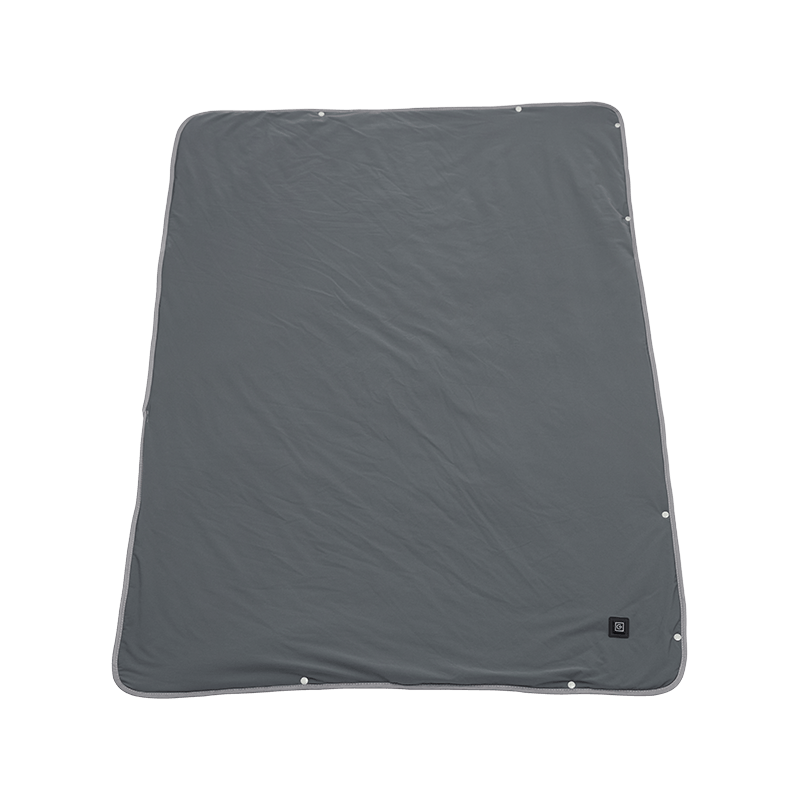
Large-Area Constant-Temperature Heating Floor Mat
The MT-DN-001 is a large-area heated floor mat created to provide consistent warmth across a broad indoor surface. Its 200 × 150 cm size gives it a practical footprint for shared spaces. Instead of concentrating heat into a small cushion or narrow strip, the mat creates a wider heated zone that can accommodate more than one user or support several activities at the same time.
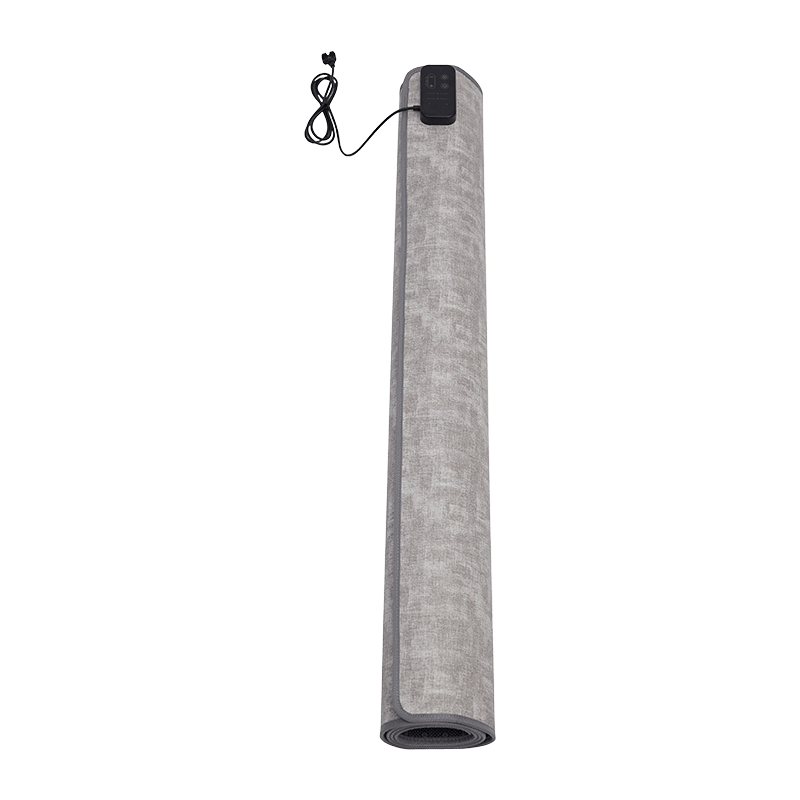
The mat combines a PVC and fabric construction. PVC can provide structural durability, surface protection, and resistance to routine wear, while a soft fabric option can improve touch comfort and create a more pleasant surface for sitting or reclining. The material configuration is suitable for manufacturers and buyers who need a balance between easy maintenance, everyday resilience, and user comfort.
Its rated power is 1140W at 100V. This high-output configuration is intended to support rapid heat-up and stable warmth across the large surface area. Because electrical systems and household voltage standards vary by market, buyers should confirm the correct voltage configuration, plug type, safety certifications, and installation requirements before ordering or distributing the product.
Temperature adjustment is provided through four operating levels. The low range is approximately 27–32°C, the medium range is approximately 32–37°C, the high range is approximately 38–44°C, and the H+ range is approximately 50–55°C. This range allows users to select gentle warmth for longer periods or higher heat when a colder environment requires faster warming.
A timer function offers four selectable durations: 3, 6, 9, and 12 hours. Once the selected period ends, the mat can automatically stop heating, reducing the possibility of unnecessary continuous operation. Timer functionality is especially useful for evening relaxation, working at a desk, or warming a space before sleep while maintaining a defined operating period.
| Item | Specification |
|---|---|
| Model | MT-DN-001 |
| Product Type | Large heated floor mat |
| Dimensions | 200 × 150 cm |
| Rated Power | 1140W |
| Rated Voltage | 100V |
| Material | PVC/Fabric |
| Temperature Levels | 4 levels, approximately 27°C–55°C |
| Timer Settings | 3, 6, 9, and 12 hours |
| Packaging | 1 piece per color box |
| Warranty | 1 year |
| Minimum Order Quantity | 1,500 pieces per color |
The main advantage of the MT-DN-001 is its large heating footprint. Many compact heating products are designed for a single individual or a specific body part. They may warm a seat, footwell, shoulder area, or bed section, but they do not create a broad shared zone. A 200 × 150 cm floor mat addresses that limitation by covering a much larger part of the room.
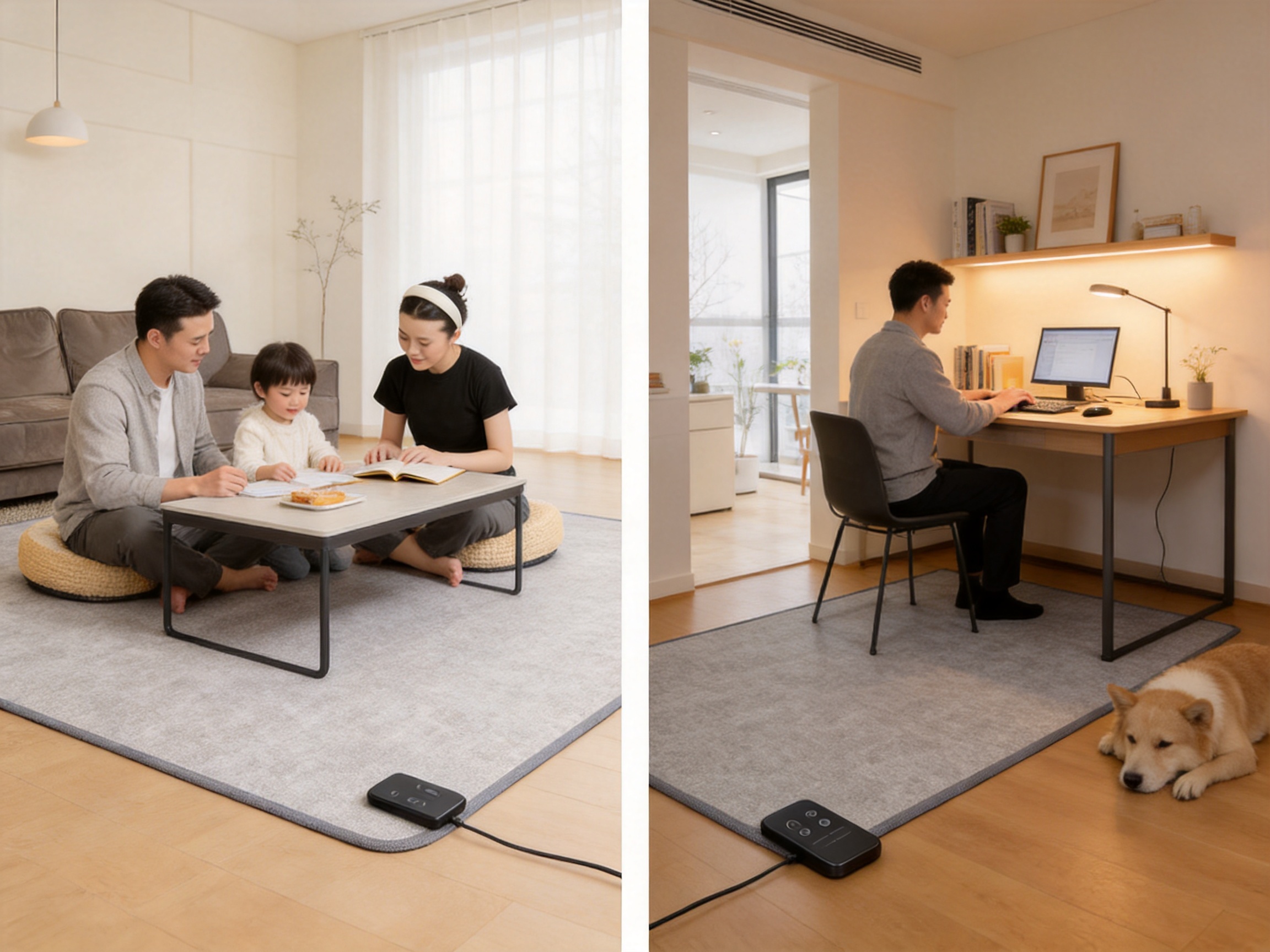
In a living room, the mat can be placed beneath a low coffee table or in front of a sofa. Family members can sit around the same area instead of each using a separate heating device. The surface can also support floor seating, reading, casual conversation, board games, or other indoor activities that benefit from warmer flooring.
In a bedroom, the mat can be positioned beside a bed or within a floor seating area. It can provide warmth during morning routines, reading, dressing, or relaxation. In a home office, it can be placed beneath a desk or around a workstation, helping reduce the discomfort caused by cold flooring during extended periods of sitting.
The broad format also makes the product relevant to homes where floor-based living is common. Users who sit on floor cushions, low chairs, or small tables can benefit from heat distributed around the entire activity area rather than only beneath their feet.
Compared with a small under-desk heater, the floor mat provides a more localized and gentle heating zone without directing hot air toward the user’s face or hands. Compared with a small electric blanket, it is designed for floor-level use and provides a broader communal surface. Compared with a portable room heater, it focuses warmth close to the occupants instead of attempting to heat the entire volume of a room.
Targeted heating can be useful in transitional seasons or in homes where occupants have different comfort preferences. Rather than heating every room to the same temperature, a user may warm one area where people are actively spending time. This approach can support more flexible household routines and allow warmth to be adjusted according to activity, time of day, and personal preference.
The product should not be treated as a substitute for required building heating, insulation, or frost protection. Its value lies in creating a comfortable heated zone for occupants. Proper use depends on a stable, suitable floor surface, correct electrical supply, unobstructed heat dissipation, and compliance with all instructions supplied with the final product.
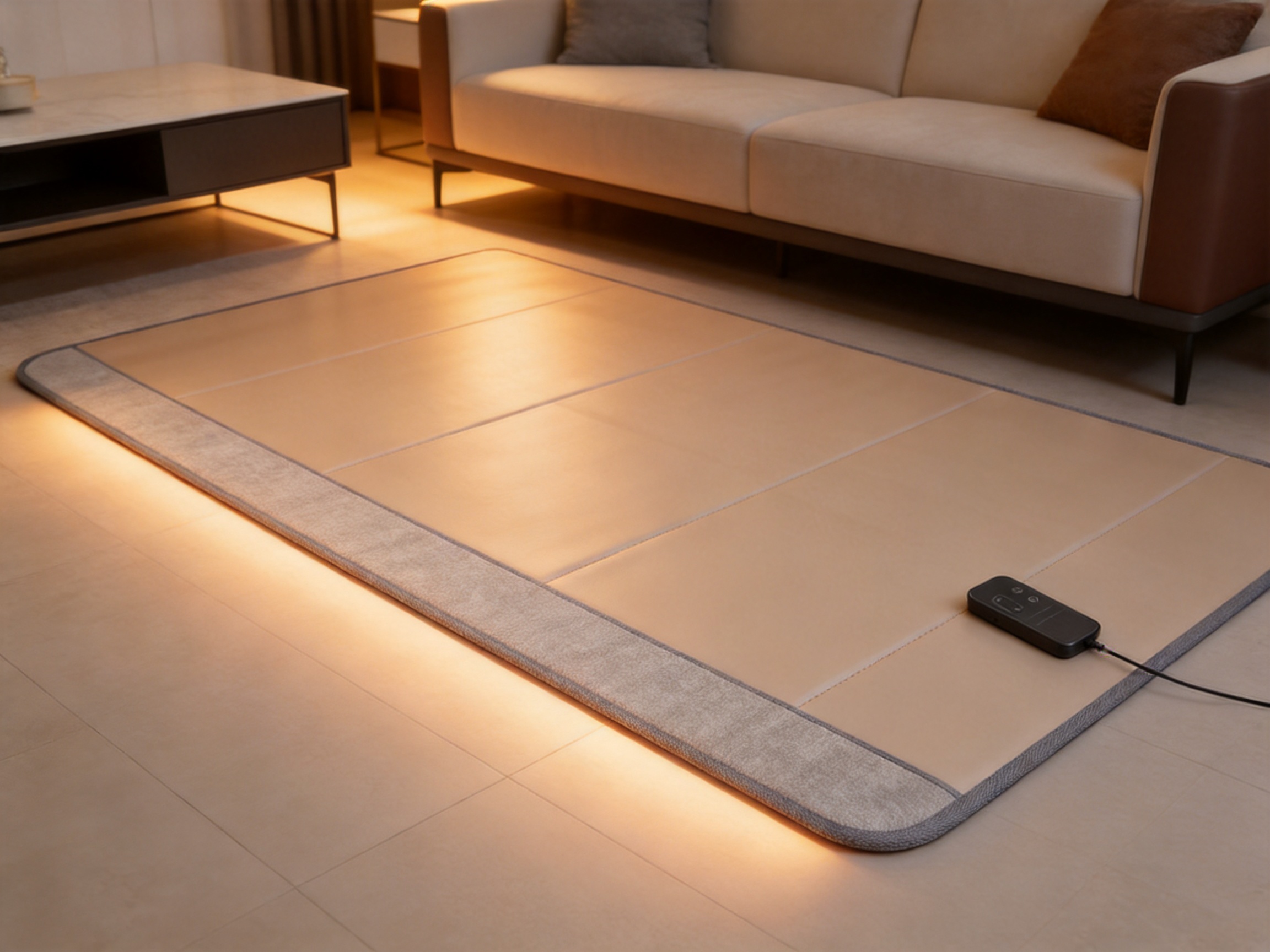
People experience warmth differently. A single fixed temperature can be too cool for one user and too hot for another. The MT-DN-001 addresses this issue through four temperature levels, allowing users to adjust the output according to the surrounding environment and their activity.
The low setting, approximately 27–32°C, is suited to mild weather or users who prefer gentle warmth. It can be useful when the room is cool but not extremely cold, or when the mat is intended to remain comfortable during reading, light work, or casual sitting.
The medium range, approximately 32–37°C, is designed for regular daily use. It can offer noticeable warmth without immediately moving to the higher operating range. This level may be appropriate for home offices, living room seating, or family spaces during cool seasons.
The high setting, approximately 38–44°C, is intended for colder surroundings or situations where users want faster and more substantial warming. It may be useful when the mat is first switched on, provided that users follow the operating instructions and do not cover the product with unsuitable materials.
The H+ setting, approximately 50–55°C, provides the highest listed temperature range. This setting requires particular attention to user safety, duration of use, surface conditions, and the needs of children, older adults, and people with reduced heat sensitivity. A high temperature should not automatically be considered appropriate for every user or situation.
Four-level control also benefits product sellers. A product with multiple settings can address a wider range of climates and customer preferences than a single-temperature design. It can be marketed for seasonal use, family use, work-from-home comfort, and localized heating. For distributors, this flexibility may support positioning in several consumer segments without requiring completely different product platforms.
The 3-, 6-, 9-, and 12-hour timer options make the mat easier to integrate into daily routines. Users can select a duration that matches the intended activity instead of relying solely on memory to switch the product off. For example, a user may choose three hours for an evening reading session, six hours for a work period, or a longer setting for extended household use.
A timer can also help limit unnecessary operation. When users fall asleep, leave the room, or become engaged in another activity, automatic shut-off can reduce the chance that the mat remains heated for longer than intended. However, a timer is an additional convenience feature, not a replacement for responsible supervision and correct operation.
For manufacturers, timer functionality increases the product’s perceived value. It transforms a basic heating surface into a more controllable home appliance. Retailers can explain the timer as part of a broader convenience package that includes temperature adjustment, child safety control, and broad floor coverage.
Timer settings may also support energy-management habits. The actual energy consumption depends on the selected power level, operating time, local electricity rates, and how the heating system cycles during use. Sellers should avoid promising a specific energy saving unless it has been verified through standardized testing. The practical benefit is that users have more control over when the appliance operates.
Safety is a central consideration for any electrical heating product. The MT-DN-001 is described as incorporating water-resistant protection, a child safety lock, and EMF shielding. These functions are intended to improve confidence during everyday indoor use, although the final product must still be used according to its manual, applicable regulations, and market-specific certification requirements.
The product information identifies IPX7-standard water-resistant protection. An IPX7 designation generally relates to protection against temporary immersion under defined test conditions. It should not be interpreted as permission to use an electrical heating appliance underwater, in a bathtub, in a shower area, or in any situation where the controller, plug, cable, or electrical connection may be exposed to unsafe moisture.
For practical household use, the feature can provide an additional level of protection against accidental moisture exposure when the product has been correctly manufactured, sealed, tested, and maintained. Users should keep the electrical connections dry, disconnect the appliance before cleaning, and follow the final instruction manual. Importers should confirm that the claimed ingress protection has been verified for the complete market-ready configuration.
The child safety lock is designed to reduce accidental operation or unintended control changes. This is particularly valuable in family rooms, bedrooms, and shared spaces where children may interact with household appliances. A lock function can help prevent casual button presses from changing the temperature or timer.
Despite this feature, the mat should not be treated as a toy. Young children should use heated products only under appropriate adult supervision. Children, elderly users, and individuals with reduced sensitivity to heat may not recognize excessive warmth quickly, so responsible supervision remains essential.
The product is also described as incorporating an EMF shielding design intended to reduce electromagnetic exposure. Buyers should request relevant technical documentation, testing details, and market compliance information when making regulatory or medical-related claims. The feature can be presented as part of the product’s comfort and design approach, but sellers should avoid suggesting that it diagnoses, prevents, or treats a medical condition.
Safety depends on more than individual features. The mat should be placed flat, without sharp folds, severe creases, or heavy concentrated pressure that could damage internal elements. Users should inspect the surface, cable, plug, and controller before operation. Any sign of overheating, unusual odor, visible damage, or abnormal performance should result in immediate disconnection and professional inspection.
The PVC and fabric construction is intended to combine durability with a comfortable user experience. PVC can help form a stable, wear-resistant base, while fabric surfaces can provide a softer contact feeling. This combination is suitable for a product that may experience repeated sitting, foot traffic, storage, and seasonal use.
A heated floor mat must handle more than heat. It may be exposed to movement, furniture repositioning, dust, accidental spills, and repeated rolling or storage. Material selection therefore affects not only comfort but also cleaning, appearance retention, flexibility, and service life.
The product is designed to be easy to maintain. Routine care should follow the final product manual and should use cleaning methods compatible with the selected surface material. Users should avoid aggressive chemicals, abrasive tools, unauthorized washing methods, or any process that may damage insulation, electrical connections, or protective layers.
Before cleaning, the product should be switched off and disconnected from the power supply. It should be fully dry before being used again. When stored, it should be protected from sharp objects, excessive compression, high humidity, and extreme temperatures. Correct storage is particularly important for seasonal heating products because long periods of inactivity can expose them to folding damage or poor storage conditions.
Many low-cost heating products compete mainly on price and electrical output. A more complete product strategy considers the user’s physical interaction with the surface. A comfortable finish can improve the experience of sitting or lying near the mat, while a durable exterior helps maintain appearance during repeated use.
For private-label buyers, the surface material can become an important brand differentiator. Buyers may request different textures, colorways, edge treatments, or fabric choices to match local preferences. The manufacturer’s stated support for surface material and texture customization can help distributors build a product range that looks distinct from generic alternatives.
Living rooms are one of the most natural applications for a large heated floor mat. It can be positioned near a sofa, beneath a low table, or in a floor seating area. The broad surface supports multiple people and creates a warm zone for reading, watching television, socializing, or relaxing.
In bedrooms, the mat can be placed beside or beneath a bed where the floor layout and manufacturer instructions permit. It may provide comfort during morning routines or evening relaxation. Users should ensure that the product is not trapped beneath unsuitable bedding or heavy materials that could restrict heat dissipation.
Cold floors can make desk work uncomfortable, especially when a user remains seated for several hours. A large mat can extend beyond the immediate foot area and create warmth around the workstation. Office users should position desks and chairs in a way that does not damage the mat or create excessive concentrated pressure.
Shared family spaces benefit from broad coverage because several people may use the area at once. The timer and child lock can provide additional convenience, while the adjustable temperature settings allow different users to choose a comfortable operating level. Adult supervision and safe placement remain important in all family applications.
The mat may also be used to create a comfortable warm area for pets. However, pets should be monitored, and the surface should be protected from chewing, scratching, moisture, and damage to the cable or controller. Users should follow veterinary advice where an animal has a health condition or reduced heat sensitivity. The product should not be marketed as a medical treatment for animals.
The MT-DN-001 is not the only type of household heating product available. Its competitive value becomes clearer when compared with other common categories.
Small pads are compact and convenient, but their coverage is limited. They may be suitable for one seat or a specific body area, while the MT-DN-001 covers 200 × 150 cm. The larger size supports shared use and multiple activity positions. For households that want one central warm zone rather than several small devices, the floor mat offers a more comprehensive format.
An under-desk heating cover is usually designed for a specific workstation. It may be excellent for a single user but less suitable for family rooms or floor seating. The MT-DN-001 can serve as a home office heating solution while also being relocated to a living room, bedroom, or shared space.
Fan heaters warm air and can provide rapid room-level output, but they may create airflow, noise, or uneven temperature distribution. A floor mat delivers radiant or surface-level warmth directly around the user’s activity area. It does not need to blow air toward the occupant, although it also should not be presented as a replacement for all room-heating needs.
Electric blankets are designed for beds or direct body coverage. A heated floor mat is more flexible for floor-level activities and can accommodate multiple users. Its construction, placement, and cleaning requirements are different, making it a complementary product rather than a direct substitute in every scenario.
Built-in heated flooring may provide highly integrated room comfort, but installation can be expensive, disruptive, and difficult to change after construction. A portable mat offers a more accessible solution for renters, existing homes, temporary spaces, and seasonal use. It can be moved or replaced without modifying the floor structure.
These comparisons illustrate the product’s central position: it provides more coverage than a personal pad, more application flexibility than a fixed under-desk product, and less installation commitment than permanent heated flooring.
The performance of a household appliance depends not only on its visible features but also on the manufacturing system behind it. Ningbo Meeting Industrial&Trading Co., Ltd. was established in 2023 as an integrated manufacturer specializing in home appliance development and production. The company operates approximately 5,000 square meters of production facilities and covers injection molding, sewing, assembly, and complete appliance manufacturing.
This combination of capabilities is relevant to heated floor mats because the product includes multiple disciplines. Plastic parts may require injection molding. Fabric or soft-surface components require sewing and material handling. Electrical components must be integrated through assembly. The finished appliance then requires functional inspection, packaging, and delivery coordination.
Injection molding supports the production of repeatable plastic components such as controller housings, structural parts, protective covers, connectors, and other appliance elements. In-house or closely coordinated molding capability can improve control over dimensions, surface finish, material selection, and design revisions.
For OEM customers, molding capability can reduce communication gaps between product designers and production teams. It also makes it easier to adapt housing shapes, button layouts, colors, branding areas, and packaging configurations for different markets.
Heated floor mats combine electrical systems with flexible or fabric-based surfaces. Sewing capability is therefore important for edge finishing, surface construction, protective layers, and textile-based customization. Consistent sewing quality contributes to appearance, durability, and user comfort.
Different markets may prefer different fabric textures, colors, patterns, or surface treatments. A production team with soft-goods experience is better positioned to manage these variables than a supplier focused only on rigid plastic appliances.
Assembly brings together the heating elements, controllers, wiring, surface materials, protective layers, and external components. Effective assembly management helps ensure that the finished product follows the intended design and that functional checks can be completed before packing.
Complete appliance manufacturing capability can support better coordination between mechanical, electrical, and appearance requirements. It also creates a clearer channel for reviewing product improvements, resolving production issues, and implementing customer-specific changes.
The company’s production model provides control from components to finished products. Such control can help reduce dependency on fragmented subcontracting, especially when buyers require coordinated changes to the controller, surface, logo, packaging, or electrical configuration.
For international customers, efficient communication is another important manufacturing strength. The company describes a professional team covering research and development, design, production management, and project support. This structure is intended to support clear communication, accurate implementation of design concepts, production details, and delivery schedules.
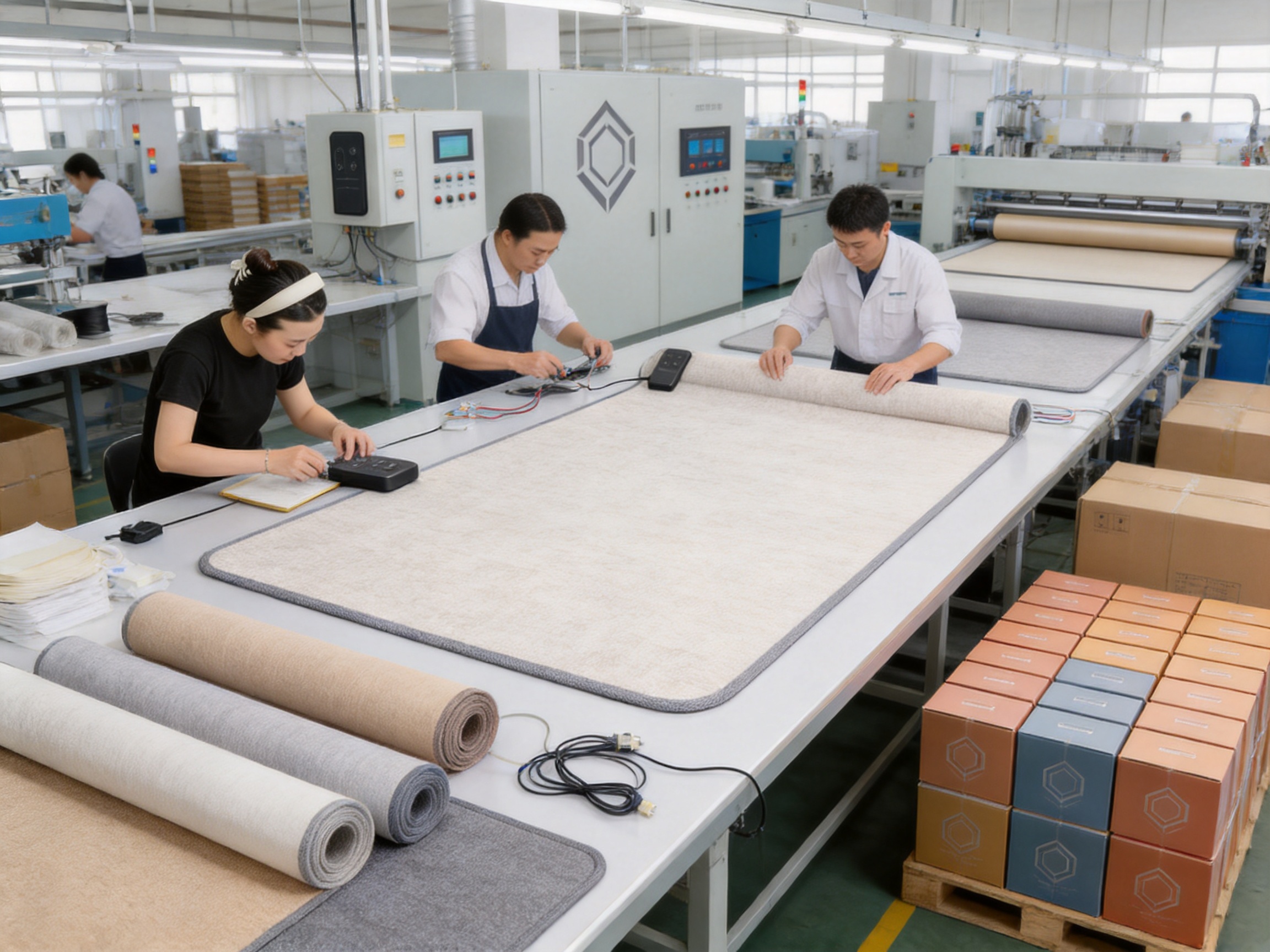
The MT-DN-001 can serve as a standard product platform or as a starting point for market-specific development. The manufacturer offers OEM and ODM support, allowing buyers to explore customization in several areas.
Different retail channels may require different dimensions. A compact version may suit apartments or individual workstations, while a larger version may serve family rooms or commercial lounge areas. Power configuration may also need to change according to size, heating performance, target climate, and local electrical standards.
Any change to size or power should be evaluated through engineering review and testing. A larger surface does not automatically justify a higher power rating, and electrical changes must be matched with suitable wiring, controllers, protective components, thermal performance, and regulatory approval.
Surface customization can help a product fit a retailer’s visual identity or a regional consumer preference. Buyers may consider soft fabric, durable PVC, textured finishes, color matching, edge details, or seasonal patterns. The selected surface must remain compatible with heat, cleaning requirements, flexibility, and production processes.
Customers may request changes to heating distribution, temperature ranges, control logic, or heat-up performance. These changes require careful evaluation because the heating system must remain uniform, stable, and safe across the entire mat. Testing should consider hot spots, cold areas, repeated cycling, surface temperatures, insulation, and long-term reliability.
The controller is a major part of the user experience. Buyers may request a different button layout, display, timer logic, child lock method, cable length, language marking, or control housing. A well-designed controller can make the product easier to understand and more attractive in retail environments.
Logo printing, color boxes, instruction manuals, labels, and retail inserts can be customized for private-label programs. The listed packaging format is one piece per color box, but packaging specifications may be adapted according to shipping requirements, retail presentation, and buyer preferences.
Packaging should protect the mat, controller, cables, and surface from transport damage. It should also provide clear operating information, warnings, electrical specifications, warranty terms, and market-specific compliance markings where required.
Large-area heating products require consistent thermal distribution. A mat that heats unevenly may create uncomfortable hot spots and reduce user confidence. Product development should therefore evaluate heat distribution across the surface, response time at each temperature level, timer accuracy, controller behavior, and performance after repeated operating cycles.
Material compatibility is equally important. PVC, fabric, adhesives, wiring, insulation, and heating components must work together under repeated heating and cooling. The design should account for expansion, contraction, folding or rolling during storage, and ordinary movement during use.
Electrical safety testing should reflect the target market. Depending on the sales region, buyers may require specific standards, certifications, plug configurations, labeling, electromagnetic compatibility testing, fire-related assessments, and documentation. The final compliance pathway should be agreed upon before mass production.
Manufacturers and buyers should also establish procedures for incoming material inspection, in-process checks, finished-product testing, packaging inspection, and traceability. A defined quality system can help identify production deviations early and support more consistent shipments.
The one-year warranty listed for this model provides a basic period of after-sales support. OEM buyers should clarify what the warranty covers, how claims are processed, which components are included, and whether different markets require longer coverage or local service arrangements.
Importers should begin by confirming the voltage requirement. The listed version is rated at 100V, which is suitable for certain markets but not all regions. Voltage, plug shape, frequency, controller design, and local electrical regulations must be reviewed before placing an order.
The minimum order quantity is listed as 1,500 pieces per color. This quantity may be suitable for wholesalers, established distributors, retail chains, and private-label customers planning a substantial launch. Buyers with smaller demand should discuss trial orders, mixed-color arrangements, or alternative production terms directly with the manufacturer.
Color selection should be considered together with packaging, inventory planning, and retail positioning. A neutral color may suit broad household distribution, while specialized colors or surface textures may help a private-label product stand out. However, additional colors can affect material procurement, production scheduling, and minimum order requirements.
Buyers should request product samples and technical documents before mass production. Important documents may include specifications, user instructions, electrical diagrams where appropriate, test reports, packaging drawings, warranty policies, and quality inspection procedures.
Distributors should train sales staff to describe the product accurately. They should explain that the mat provides localized floor-level warmth, not necessarily complete room heating. They should also communicate safe placement, moisture precautions, child supervision, and correct temperature selection.
Place the mat on a clean, dry, level surface that is suitable for the product. Avoid sharp objects, excessive folds, unstable furniture, and conditions that may damage the surface or cable.
Inspect the mat, controller, plug, and power cord before each use, particularly after long-term storage. Do not operate the appliance if any part is damaged, frayed, deformed, unusually hot, or producing an abnormal odor.
Connect the product only to a compatible power supply. Do not use an unsuitable adapter, overloaded extension arrangement, or damaged outlet. If the local voltage does not match the product rating, consult the supplier or a qualified professional before use.
Keep the controller and electrical connection areas away from water. Even when a product includes water-resistant protection, users should not deliberately expose electrical components to immersion, shower spray, or standing water.
Select a moderate temperature for extended use and use the timer when appropriate. Users should be particularly cautious with the highest temperature setting and should avoid prolonged direct contact if they have reduced heat sensitivity.
Keep children and pets from chewing cables, scratching the surface, or changing controls without supervision. The child lock can reduce accidental operation but does not eliminate the need for responsible monitoring.
Switch off and disconnect the product before cleaning, moving, folding, or storing it. Follow the final product manual for cleaning and storage instructions.
A durable appliance can offer better long-term value than a product that requires frequent replacement. The MT-DN-001 is designed with wear-resistant, easy-care materials and a construction intended for repeated household use. Longevity depends on material quality, manufacturing consistency, correct operation, and proper storage.
Targeted heating may also support more selective use of household energy. Instead of heating an entire room to a high temperature at all times, users may warm the area where they are actively spending time. Actual results vary according to the building, climate, electricity price, room temperature, insulation, and operating habits.
Manufacturing integration can contribute to product sustainability by reducing unnecessary coordination between multiple suppliers and allowing design improvements to be handled more efficiently. Modular changes to controllers, surface finishes, packaging, or dimensions may extend the useful life of a product platform and help serve different markets without starting from zero each time.
Responsible product development should include material selection, packaging optimization, repairability considerations, quality control, and accurate customer education. Sustainability claims should be supported by measurable data rather than broad marketing language.
The MT-DN-001 combines several features that are valuable in contemporary home appliance markets: broad coverage, adjustable temperature, automatic timing, family-oriented controls, water-resistant protection, a comfortable surface, and flexible application. These features allow it to be positioned as more than a seasonal commodity.
Its large size creates a clear product identity. The mat is not simply a smaller pad with a different shape; it is a floor-level comfort zone for shared use. The combination of 200 × 150 cm coverage and 1140W output gives it a strong presence in living spaces, while the adjustable control system makes it adaptable to different users.
The manufacturer’s production capabilities add further value for business customers. Injection molding, sewing, assembly, and complete appliance manufacturing are relevant to the product’s mixed-material construction. OEM and ODM support can help importers develop market-specific versions with customized surfaces, controllers, packaging, and branding.
Compared with products that focus on only one usage scenario, this model offers broader placement possibilities. It can serve a home office during the day, a living room in the evening, and a bedroom or pet area according to household needs. That flexibility can support stronger retail messaging and broader customer appeal.
The main purpose is to provide broad, floor-level warmth for indoor living spaces. It is designed for activities such as sitting, relaxing, working, reading, or using a low table.
The listed size is 200 × 150 cm. This provides more coverage than a small personal heating pad and allows the mat to serve a shared seating or activity area.
It has four listed temperature levels: low at approximately 27–32°C, medium at approximately 32–37°C, high at approximately 38–44°C, and H+ at approximately 50–55°C.
The timer settings are 3, 6, 9, and 12 hours. Users can select a duration suited to their activity and operating preference.
Yes. Its large surface is designed for living rooms, floor seating, areas beneath low tables, and shared household spaces. It should be placed and operated according to the final instructions.
Yes. It can be positioned beneath or around a desk to provide floor-level warmth during work. The desk and chair should be arranged so they do not damage the mat or create excessive concentrated pressure.
The product information identifies IPX7-standard water-resistant protection. Buyers should verify the certification and scope of protection for the final configuration. The appliance should never be deliberately immersed, and electrical connections should remain dry.
Yes. A child safety lock is listed as one of the product’s features. It is intended to help prevent accidental operation or control changes, but adult supervision is still required.
OEM and ODM options are available. Potential customization areas include size, power, surface materials, textures, heating configuration, controller design, functions, logo printing, and packaging.
The listed minimum order quantity is 1,500 pieces per color. Buyers should confirm current production terms, color requirements, and customization conditions with the manufacturer.
The listed voltage is 100V. Importers must confirm compatibility with their target market and request the appropriate electrical configuration before ordering.
The listed warranty is one year. OEM and distribution customers should confirm the detailed warranty scope, claim process, exclusions, and regional service arrangements.
It is primarily a localized floor-heating product. It can improve comfort in the area where people are located, but it should not automatically be considered a replacement for required building heating or room-temperature management.
The product is manufactured by Ningbo Meeting Industrial&Trading Co., Ltd., an integrated home appliance company based in Ningbo, Zhejiang, China.
Buyers should request samples, final specifications, electrical and compliance documents, packaging details, test information, production schedules, warranty terms, and confirmation of the agreed customization requirements.
The Large-Area Constant-Temperature Heating Floor Mat offers a practical solution for households and commercial buyers seeking broad, controllable floor-level warmth. Its 200 × 150 cm format provides a substantial heated area, while the 1140W power rating is designed to support stable performance across the surface. Four temperature levels and four timer durations give users more control than a basic fixed-output heating pad.
Its product advantages also include a family-oriented child lock, listed IPX7 water-resistant protection, EMF shielding design, PVC and fabric material options, and suitability for living rooms, bedrooms, offices, family spaces, and pet areas. These features help distinguish it from smaller personal pads, fixed under-desk heaters, and more installation-intensive heating systems.
For business customers, the manufacturer’s integrated capabilities are equally important. Its approximately 5,000-square-meter production facilities cover injection molding, sewing, assembly, and complete appliance manufacturing. This provides a foundation for coordinated product development, stable production management, and OEM or ODM customization.
As with all electrical heating appliances, final safety and compliance depend on correct engineering, testing, certification, installation, and use. Buyers should verify the electrical configuration, technical documentation, market requirements, and performance claims before mass production or retail distribution. When these requirements are properly addressed, the MT-DN-001 can serve as a versatile, high-coverage warming product for modern indoor living.
1. Product technical specification for model MT-DN-001, including size, power, voltage, material, temperature levels, timer settings, packaging, warranty, and minimum order quantity.
2. Product feature information concerning large-area heating, adjustable temperature control, timer operation, water-resistant protection, child safety lock, and EMF shielding design.
3. Manufacturer information concerning Ningbo Meeting Industrial&Trading Co., Ltd., its production facilities, manufacturing processes, research and development capabilities, and OEM/ODM services.
4. General electrical appliance safety principles for household heating products, including safe placement, moisture precautions, inspection, supervision, and correct power-supply use.
5. General ingress protection classification concepts for electrical enclosures and appliances, including the limitations of water-resistance ratings in household applications.
Portable cooling fans have become an everyday essential for anyone who wants to stay comfortable when temperatures climb. Whether you are commuting, working outdoors, or simply re...
READ MOREWhen your eyes feel itchy, gritty or puffy, reaching for something cool is a natural reaction, and it is usually a sensible one. A cold compress is one of the simplest home measur...
READ MORECleaning has traditionally been one of the most time consuming and physically demanding tasks in both household and commercial settings. Whether it involves scrubbing floors, vacu...
READ MOREFalling asleep quickly and staying asleep through the night depend on more than just a dark, quiet room. Body temperature plays a central, often underappreciated role in the sleep...
READ MORESmart energy-efficient portable cooling hand fans have quickly become one of the most practical personal comfort devices available, combining compact design, long battery life, an...
READ MOREChoosing the Right Handheld Cooling Fan: Quick Answer The best handheld cooling fan for most people is a rechargeable, dual-blade or bladeless model with at least 3 speed settings...
READ MORE