English
 日本語
 한국어
 Deutsch
Home > Author > Tang Ruihe — Regional Product Sales Manager > Large-Area Constant-Temperature Heating Floor Mat: A Comprehensive Guide to Efficient, Safe, and Comfortable Indoor Warmth
Content
Modern households increasingly look for practical ways to improve comfort without heating an entire building. Whole-room heating systems can require substantial energy, may take time to warm a space, and often distribute heat unevenly. A large-area heated floor mat offers a more focused alternative by creating a warm, comfortable zone at floor level. It is suitable for living rooms, bedrooms, home offices, family spaces, and other indoor environments where people spend extended periods sitting, working, resting, or relaxing.
The Large-Area Constant-Temperature Heating Floor Mat, model MT-DN-001, is designed around this need. Measuring 200 × 150 cm and providing 1140W of heating power, it is intended to cover a generous section of a room rather than warming only a small personal area. Its combination of adjustable temperature levels, automatic timer functions, water-resistant construction, child-lock protection, electromagnetic-field shielding, and durable PVC or fabric surfaces makes it a versatile option for household and commercial distribution.
More than a simple electric warming pad, this product represents a complete comfort solution. It integrates a broad heating area, high-output heating performance, practical controls, material durability, and flexible manufacturing support. These features allow it to compete effectively with smaller heating pads, basic electric blankets, low-power floor warmers, and less customizable heating products.
Traditional portable heaters warm the air in a room. Although this approach can be effective, it may create differences in temperature between the floor, seating area, and upper part of the room. Warm air naturally rises, while cold air remains closer to the floor. As a result, occupants may still feel uncomfortable even when the room temperature appears acceptable.
A floor mat addresses this issue by delivering warmth directly where people sit, stand, work, or place their feet. Heat is generated across the surface of the mat and transferred to nearby occupants and objects through direct contact and radiant warmth. This localized approach can help users feel comfortable without depending entirely on the heating of the entire room.
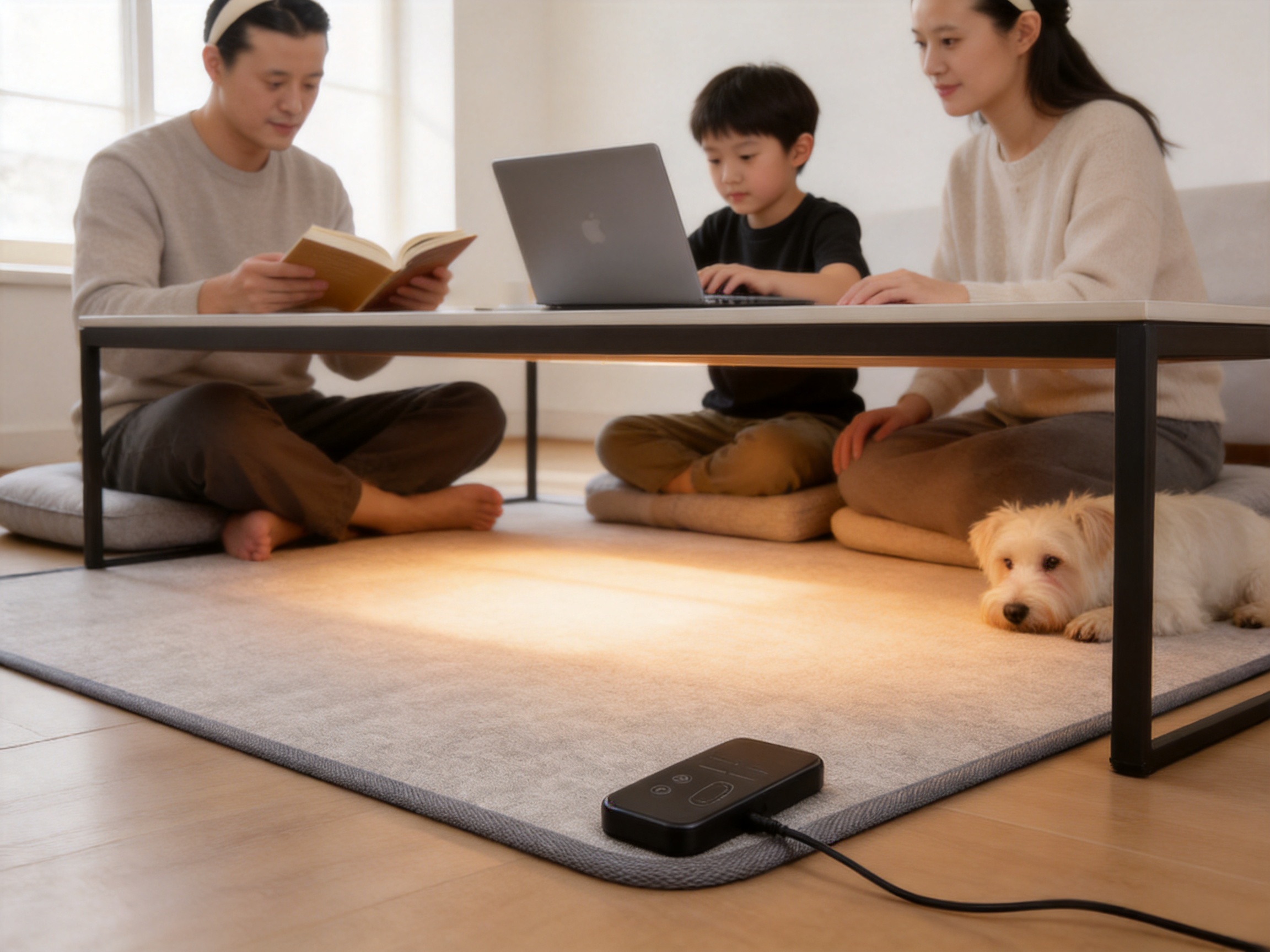
Small heating pads are useful for individual feet, chairs, or limited workspaces, but they may not be sufficient for a family sitting area or a room with several users. The 200 × 150 cm format of the MT-DN-001 provides a much wider warm zone. It can accommodate floor seating, a low table, several pairs of feet, a child’s play area, or a pet resting space, depending on how the room is arranged.
Large-area coverage is also valuable in homes where people prefer flexible floor-based lifestyles. In many households, family members gather around low tables, sit on cushions, read, watch television, play games, or work on laptops. A broad heating mat can support these activities without requiring each person to use a separate warming device.
The MT-DN-001 is a large heated floor mat intended for indoor use. Its design combines an expansive surface with a high-power heating system and several control functions. The following table summarizes the principal specifications supplied for this model.
| Specification | Details |
|---|---|
| Model | MT-DN-001 |
| Product category | Large Heated Floor Mat |
| Dimensions | 200 × 150 cm |
| Rated power | 1140W |
| Rated voltage | 100V |
| Materials | PVC and fabric options |
| Temperature control | Four levels, approximately 27°C–55°C |
| Temperature settings | Low, Medium, High, and H+ |
| Timer options | 3, 6, 9, and 12 hours |
| Water-resistance specification | IPX7 protection as stated for the product |
| Safety functions | Child safety lock and EMF shielding design |
| Packaging | One piece per color box |
| Warranty | One year |
| Minimum order quantity | 1,500 pieces per color |
The stated electrical specifications are important for buyers and distributors. Because the product is rated at 100V and 1140W, users should confirm compatibility with the electrical system of the intended market. Importers should also verify local plug configuration, testing requirements, labeling rules, electrical certifications, and installation instructions before commercial sale.
One of the clearest advantages of this model is its generous surface area. A 200 × 150 cm mat is substantially larger than personal foot warmers, chair pads, and compact under-desk heaters. It can create a shared warmth zone rather than serving only one small part of the body.
Compared with a small heating pad, a large floor mat reduces the need for multiple devices. A household may use one mat under a low table instead of placing separate warmers beneath several chairs. This can simplify room organization, reduce visible cables, and create a more unified appearance.
The large format is also advantageous for retailers and wholesalers because it supports multiple product applications. The same basic product can be marketed for living rooms, bedrooms, home offices, pet areas, reading corners, and family recreation spaces. A product with several clearly defined use cases can appeal to a wider customer base than a highly specialized warming device.
Large coverage does not simply mean larger dimensions. It also requires attention to heating uniformity. An inadequately designed large mat may develop hot spots, cold zones, or inconsistent surface temperatures. The MT-DN-001 is described as an evenly distributed constant-temperature heating mat, meaning that its heating system is intended to maintain consistent warmth across the active area. Stable distribution is especially important when the mat is used by several people or when furniture is placed near its surface.
For distributors comparing products, coverage should be assessed together with heating performance, control quality, surface construction, protection features, and after-sales support. A large mat that heats unevenly may offer less practical value than a slightly smaller product with better control. The strength of this model is that its large format is combined with multiple functional features rather than offered as size alone.
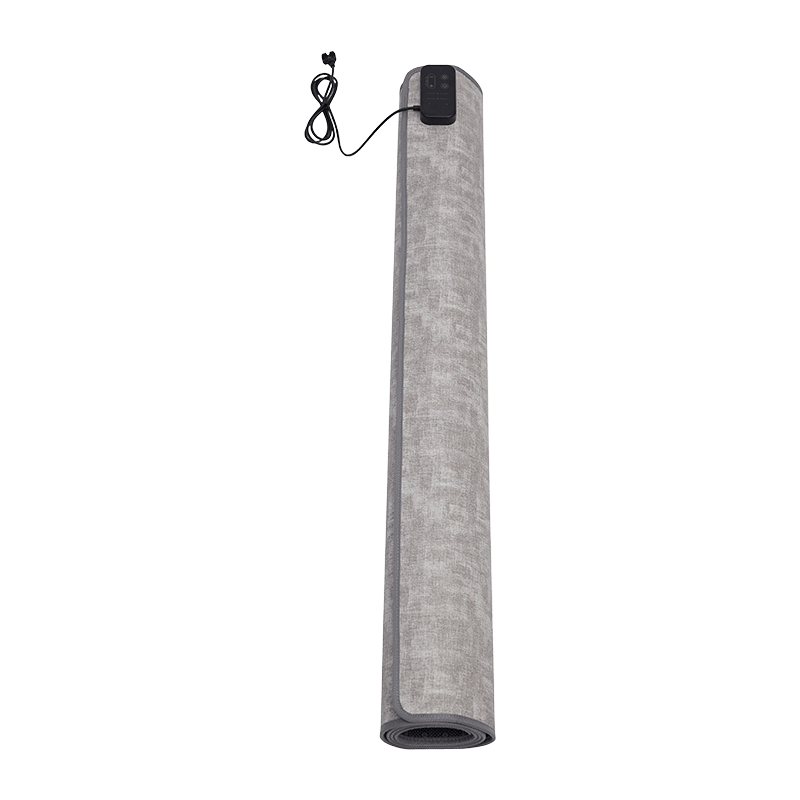
Large-Area Constant-Temperature Heating Floor Mat
The MT-DN-001 is rated at 1140W, giving it a powerful heating capacity for its large surface area. High output is useful when a mat must warm a broad zone within a reasonable period. A low-power product may consume less electricity at any given moment, but it may also require more time to reach a comfortable temperature or fail to provide sufficient warmth in colder conditions.
The product is designed for fast heat-up and stable performance. In practical use, the initial heating stage can be selected according to the user’s comfort needs and room conditions. Once the surface reaches the desired range, users can lower the setting to maintain warmth rather than continuing to operate at the highest level.
Power should always be considered alongside operating habits. The 1140W rating indicates the maximum or rated electrical consumption under specified conditions; actual energy use may vary according to the selected temperature level, timer duration, ambient temperature, insulation, and control behavior. A timer can help users avoid unnecessary operation by switching the mat off after a selected period.
High heating power also creates a responsibility for proper use. The mat should be placed on a suitable indoor surface, used according to the operating instructions, and connected to an appropriate electrical supply. Users should not cover the heating area with unsuitable insulating materials, fold the mat in a way that could damage internal components, or place heavy objects on it unless the product instructions specifically permit such use.
Comfort preferences vary significantly from person to person. A temperature that feels pleasant to one user may feel too warm or too cool to another. Weather, flooring materials, clothing, room insulation, and activity level also influence the preferred setting. The MT-DN-001 addresses these differences through four adjustable temperature levels.
The stated ranges are:
Low: approximately 27°C–32°C.
Medium: approximately 32°C–37°C.
High: approximately 38°C–44°C.
H+: approximately 50°C–55°C.
The lower settings are appropriate for maintaining gentle warmth over longer periods. They may be suitable for working at a desk, reading, relaxing in a living room, or providing a comfortable surface for ordinary household use. Medium and high settings can be selected when the surrounding environment is colder or when users want the mat to warm more quickly.
The H+ setting provides the highest temperature range and should be used carefully. A high surface temperature may not be suitable for every person, especially children, elderly users, people with reduced heat sensitivity, or individuals who may not be able to react quickly to discomfort. Direct skin contact should be managed responsibly, and users should follow the product manual and local safety guidance.
Compared with single-temperature heating pads, four-level control gives the product greater flexibility. It can be positioned as a comfort product for daily use rather than a device that is either fully on or fully off. Multiple levels also give sellers more opportunities to explain benefits to different customer groups, including families, office users, pet owners, and seasonal comfort product buyers.
The integrated timer provides four choices: 3, 6, 9, and 12 hours. This feature allows users to match operating time with their daily routine. For example, a person may select three hours for an evening reading session, six hours for a long work period, nine hours for extended family use, or twelve hours for a prolonged indoor comfort period when appropriate.
Automatic shut-off is valuable because users may become distracted, fall asleep, leave the room, or simply forget that the mat is operating. A timer reduces dependence on memory and helps limit unnecessary energy consumption. It also makes the product easier to integrate into regular household routines.
Timer functionality can be a significant competitive advantage over basic heating mats that require manual switching. It improves convenience without requiring a separate smart-home system or mobile application. For many consumers, simple physical controls are more accessible and more reliable than complicated digital features.
Retailers can also use the timer as an important selling point. Buyers often want warmth but remain concerned about electricity costs and unattended operation. The ability to define a maximum operating period helps address both concerns, although users should still follow all safety instructions and should not assume that timer functionality replaces responsible supervision.
The product information identifies IPX7 water-resistant protection. This rating refers to protection against temporary immersion under defined testing conditions. It does not mean that the product should be treated as waterproof in every situation or used in a wet environment without restrictions. The actual meaning of the rating depends on the complete product design, test method, and applicable certification documentation.
For a floor-level household product, water resistance can provide an additional layer of practical protection. Floors may be exposed to accidental spills, damp cleaning conditions, condensation, or contact with moisture. A water-resistant design can help reduce the risk associated with incidental exposure when the product is used and maintained correctly.
However, electrical safety remains essential. Users should inspect the mat, controller, cable, and plug before operation. Damaged products should not be used. The mat should not be connected to an unsuitable power supply, and it should not be cleaned or exposed to liquid in ways that conflict with the manufacturer’s instructions. Buyers should request test reports and certification records relevant to their destination market.
Water-resistant construction also contributes to product positioning. Compared with fabric-only warming products that may be difficult to maintain, a PVC or PVC-and-fabric surface can offer a more practical balance between comfort and cleanability. Families, pet owners, and office users may particularly value a surface that can be maintained more easily during daily use.
Households with children or pets need products that reduce the risk of accidental operation. The MT-DN-001 includes a child safety lock intended to prevent unintended changes to the controls. This feature can help stop children from adjusting the temperature or timer without supervision.
A child lock does not eliminate the need for adult supervision. It is one part of a broader safety approach that should include suitable placement, responsible temperature selection, cable management, and compliance with the operating instructions. Children should not be allowed to use the product as a toy, and pets should be monitored when they are near an active heating device.
Family-oriented design is an important advantage over products built only for individual users. A large mat may be used in shared areas where several people interact with the product. Controls that are easy to understand, stable surface materials, automatic timing, and protective functions make the product more suitable for these environments.
For wholesalers, safety-related functions can improve product differentiation. Many low-cost heating products compete primarily on price, but buyers are increasingly interested in control security and household suitability. A child lock can help position the product as a more considered solution for modern family spaces.
The product is described as incorporating an EMF shielding design intended to reduce electromagnetic exposure. This feature may be relevant to consumers who are concerned about electromagnetic fields from household electrical devices. Shielding performance can depend on the construction of the heating element, shielding materials, grounding design, wiring layout, operating conditions, and testing method.
For commercial buyers, any electromagnetic-field claim should be supported by appropriate technical documentation and test results. Marketing language should accurately reflect verified performance and should comply with the advertising rules of the destination market. The phrase “EMF shielding” should not be presented as a medical claim or as a guarantee of zero electromagnetic exposure.
When properly documented, a shielding design can strengthen the product’s safety-oriented positioning. It complements the child lock, timer, water-resistant construction, and temperature control system. Together, these features show that the product has been designed around more than heating output alone.
The MT-DN-001 uses PVC and fabric material options. This combination allows different markets to select a surface according to their priorities. PVC can provide a durable, smooth, and comparatively easy-to-maintain surface. A soft fabric option may emphasize comfort and a warmer tactile experience.
Surface material influences how a product feels, looks, and performs in the home. A living room model may need to coordinate with furniture and flooring. A home office model may prioritize easy cleaning beneath a desk. A family model may require a balance between softness and resistance to everyday wear. Offering material options gives importers and brand owners greater flexibility in developing a market-specific product range.
Wear resistance is particularly important for a large floor mat because it may experience repeated contact with feet, cushions, chair legs, low tables, or pet activity. The surface should be designed for daily use and should maintain its functional condition when handled, stored, and cleaned according to the instructions.
Maintenance requirements should be clearly communicated. Users should remove dust and surface debris regularly, avoid sharp objects, and follow the approved cleaning method. If the product is not designed to be machine washed or submerged, users should not treat it like a washable blanket. Clear care instructions reduce misuse and can help extend the product’s service life.
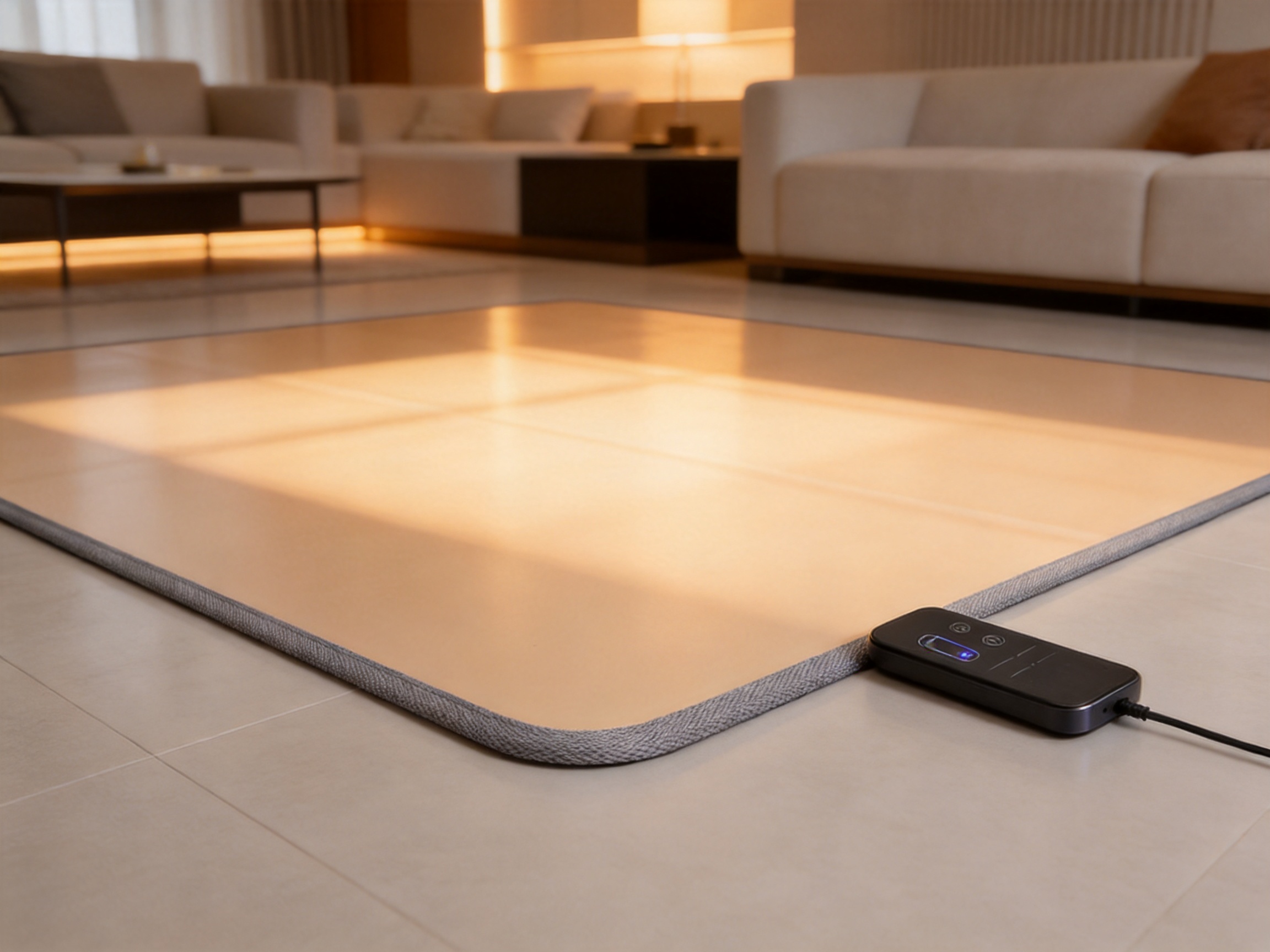
In a living room, the mat can be placed beneath a low table or in a floor-seating area. It can provide a warm zone for reading, watching television, playing board games, or spending time with family members. Its large dimensions make it more suitable for shared use than a small foot warmer.
The mat can be used beside or beneath a bed when the room layout and safety instructions permit. It may provide warmth while dressing, reading, or preparing for sleep. Users should ensure that the placement does not interfere with bed frames, furniture movement, ventilation, or the product’s operating requirements.
People who work from home may remain seated for many hours, particularly during colder seasons. A floor mat placed beneath a desk can help warm the lower body and feet without requiring the entire room to be heated to the same level. The timer is useful for aligning operation with working hours.
Shared indoor spaces often benefit from broad coverage. The mat can establish a warm area where adults and children sit together. The child lock and adjustable temperature settings support family-oriented use, although responsible supervision remains necessary.
Pets may appreciate a warm resting zone during cold weather. A mat can be positioned in a designated indoor pet area, provided that the product is protected from chewing, scratching, excessive moisture, and other hazards. Pet use should always be supervised, and the selected temperature should be appropriate for the animal.
Small heating pads are generally designed for individual body parts such as the feet, back, shoulders, or lap. Their compact size can be convenient, but it also limits the number of people who can use them and the amount of space they can warm. A large-area mat offers a different value proposition.
First, it supports shared comfort. One mat can serve multiple users at the same time, which may be more convenient than purchasing and managing several small products. Second, it offers greater placement flexibility. It can be used beneath a table, in a seating zone, beside a bed, or under a home-office workstation.
Third, the larger heating surface can create a more consistent experience. Users do not need to keep their feet or body within a small target area. Fourth, the product has more visible presence in a retail display and can be marketed as a complete household comfort solution rather than a personal accessory.
These advantages should be balanced against the product’s larger size, higher power rating, storage requirements, and need for suitable floor space. The best product depends on the customer’s intended use. For consumers seeking room-zone warmth and family use, the MT-DN-001 can offer more practical value than a compact pad.
Some electric floor mats provide only a single temperature setting and a simple power switch. Others may not include automatic timing, child protection, water-resistant construction, or material customization. The MT-DN-001 is differentiated by combining several functions within one product platform.
Its four temperature levels allow users to move from gentle maintenance warmth to stronger heating. The 3-, 6-, 9-, and 12-hour timer settings provide more control over operation. Child-lock functionality supports household safety, while the stated IPX7 protection and EMF shielding design reinforce the product’s safety-oriented positioning.
Another advantage is the availability of OEM and ODM support. Buyers are not limited to a fixed retail specification. Subject to technical feasibility and order requirements, they can request changes to size, power, surface materials, heating configuration, controller design, logo printing, and packaging. This creates a stronger foundation for businesses that want to build a distinct product line rather than resell a generic item.
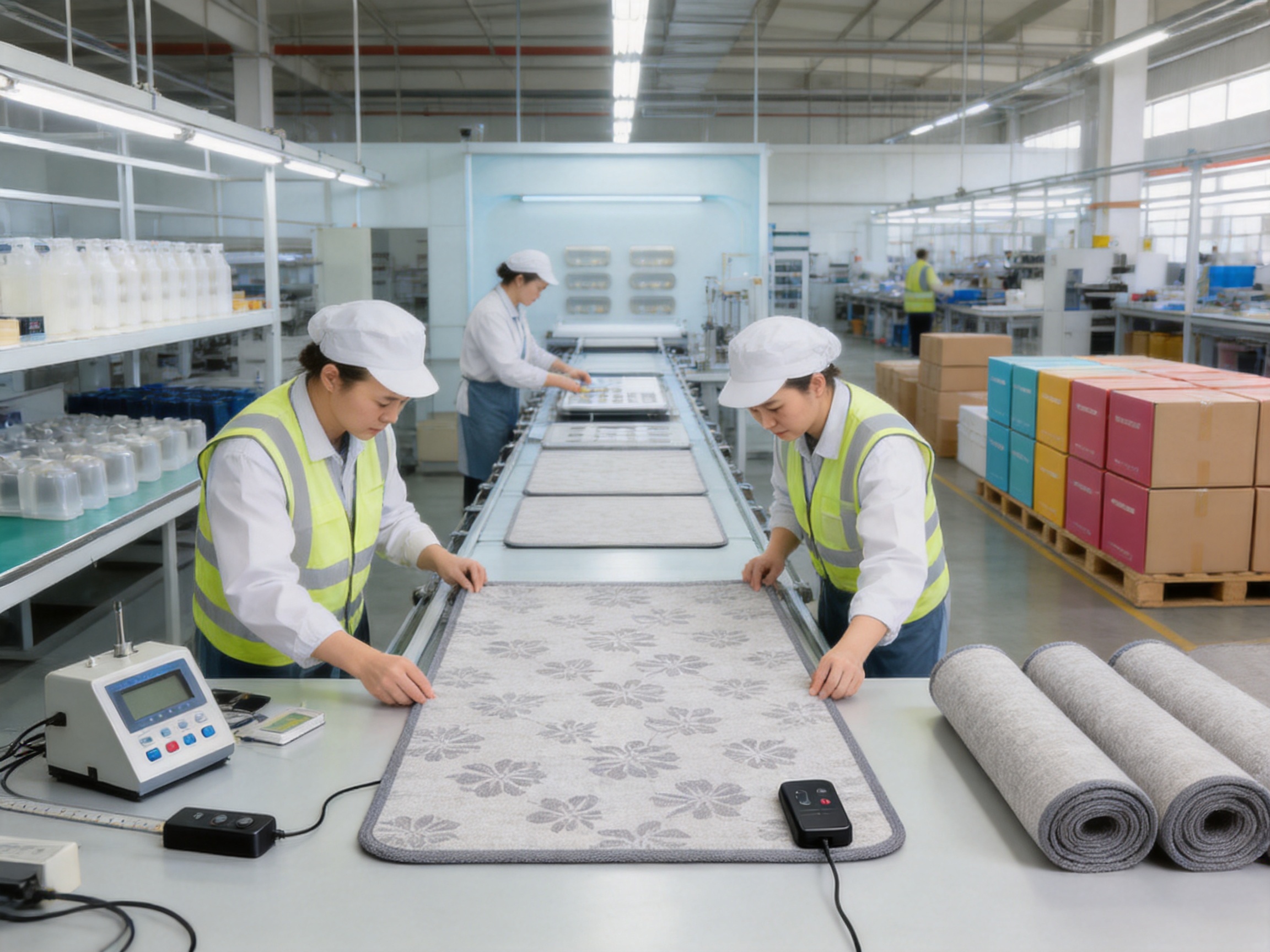
The manufacturer is an integrated home-appliance company established in 2023. Its production facilities cover approximately 5,000 square meters and include injection molding, sewing, assembly, and complete appliance manufacturing. This combination is important because a heated floor mat requires coordination between soft goods, plastic components, electrical systems, controllers, surface materials, and final assembly.
Injection molding capability can support the production of controller housings, protective components, cable fixtures, connectors, and other molded parts. In-house or closely controlled sewing capability is valuable when fabric surfaces, edging, covers, reinforcement layers, or textile packaging elements are required. Assembly capability allows the company to combine these components into a finished product while managing process consistency.
Integrated manufacturing can reduce dependence on numerous external suppliers. Fewer handoffs may improve communication, shorten response times, and make it easier to identify the source of a quality issue. It can also support faster adjustment when a customer requests changes to a controller, surface material, appearance, or packaging format.
For OEM and ODM buyers, manufacturing depth is often as important as the product specification. A supplier may offer attractive samples but struggle to reproduce them consistently at mass-production volume. A factory with injection molding, sewing, assembly, and appliance-production capabilities is better positioned to manage the transition from concept to sample, pilot order, and larger production run.
The company’s stated focus includes heating appliances, cooling appliances, and furniture-related household electrical products. This broader product experience can contribute to a practical understanding of household comfort, user behavior, material selection, and seasonal product demand.
Product development for a heated floor mat involves more than selecting a heating wire and attaching it to a surface. Engineers and designers must consider heat distribution, temperature control, electrical loading, insulation, surface durability, controller ergonomics, foldability or storage, packaging, and user instructions.
The manufacturer reports having professional teams in research and development, design, production management, and project support. This structure can help customers communicate product requirements clearly and follow the project through different stages. Effective project support is particularly important when a buyer needs a customized product for a specific country, retail channel, customer group, or brand identity.
A well-managed development process generally begins with requirement confirmation. This may include target dimensions, rated voltage, power, temperature ranges, timer functions, materials, colors, control layout, packaging, certifications, and order quantities. After the requirements are reviewed, the supplier can prepare drawings, samples, prototypes, or technical proposals.
Testing and sample approval should take place before mass production. Buyers should evaluate heating uniformity, temperature accuracy, timer operation, controller reliability, surface finish, cable routing, packaging protection, and user instructions. If the product is destined for a regulated market, the appropriate electrical, electromagnetic compatibility, flammability, and material tests should be completed through recognized laboratories or certification bodies.
Clear communication between the buyer and manufacturer reduces misunderstandings. Product specifications should be documented, and any changes made during development should be recorded. This helps ensure that the approved sample and the mass-produced product remain aligned.
The MT-DN-001 platform can serve as a starting point for businesses that require customization. Potential adjustments include size and power, surface materials and textures, heating-system configuration, controller design, control functions, logo printing, and packaging solutions.
Size customization can help buyers create products for specific retail categories. A smaller version may target individual users or under-desk applications, while a larger version may serve family rooms or commercial lounges. Power should be adjusted together with dimensions and voltage so that the final product remains technically appropriate.
Surface customization can change the product’s visual identity and tactile experience. A smooth PVC surface may be appropriate for easy-care household use, while a soft textile surface may support a comfort-focused collection. Colors, patterns, edging, and labeling can help the product fit a retailer’s existing range.
Controller customization is another important opportunity. Buyers may request different button layouts, indicator lights, display styles, locking methods, timer choices, or language markings. The control system should remain simple enough for ordinary users while meeting the technical and safety requirements of the target market.
Packaging can also be adapted. The standard packaging is one piece per color box, but buyers may request different box artwork, multilingual instructions, barcodes, warning labels, inserts, carton quantities, or shipping marks. Strong packaging protects the product during transportation and supports a more professional retail presentation.
OEM and ODM projects require realistic planning. Custom colors, molds, controllers, packaging, and certification work may require additional development time, tooling costs, testing, and minimum order quantities. The stated minimum order quantity is 1,500 pieces per color, which should be considered when preparing a purchasing plan.
Quality control for a heated floor mat should cover every stage of production. Incoming materials need to be checked for dimensions, appearance, electrical properties, fabric quality, PVC consistency, connector condition, and compliance with the approved specification.
During production, operators should verify the placement of heating elements, insulation layers, sensors, wiring, controllers, and protective components. Process controls can help prevent uneven heating, loose connections, damaged insulation, poor stitching, surface wrinkles, and incorrect assembly.
Finished-product testing may include power consumption, voltage compatibility, temperature performance, heating uniformity, timer accuracy, control response, insulation resistance, dielectric strength, grounding or shielding performance where applicable, and visual inspection. Packaging inspections are also important because a product can be technically correct but damaged during shipping if it is not packed adequately.
Batch traceability can support effective quality management. If each production batch is linked to material records, operator information, test results, and inspection dates, the manufacturer and buyer can investigate issues more efficiently. This is valuable for international customers who need reliable after-sales support and consistent replenishment orders.
The one-year warranty stated for the product provides a basic level of after-sales assurance. Buyers should clarify warranty scope, exclusions, response procedures, spare-part availability, replacement policy, and responsibilities for transport or service before placing an order.
A 200 × 150 cm mat requires thoughtful packaging because its dimensions affect carton size, storage, shipping volume, and handling. The product should be packed in a way that protects the surface, controller, cable, and edges without causing permanent creases or damage.
Color-box packaging can support retail sales by presenting the product’s main functions, dimensions, temperature levels, timer settings, safety features, and application scenarios. Buyers should ensure that all technical claims printed on the packaging match approved test data and the final product configuration.
For international distribution, logistics planning should include product dimensions, gross and net weight, carton quantity, pallet arrangement, container loading, customs documentation, electrical classification, and destination-market labeling. Since the rated voltage is 100V, compatibility with the buyer’s intended country must be confirmed before shipment.
The minimum order quantity of 1,500 pieces per color may be suitable for wholesalers, national distributors, chain retailers, online brands, and project buyers. It may be less suitable for small test orders unless the buyer accepts standard colors and specifications. Businesses should forecast seasonal demand because heated products often experience stronger sales during autumn and winter.
Purchasing decisions should consider more than unit price. Total landed cost may include tooling, sample fees, certification, packaging development, freight, import duties, inspection, warehousing, and warranty reserves. A supplier that offers stable quality and flexible project support may create better long-term value than a supplier offering only the lowest initial quotation.
The MT-DN-001 can be promoted as a large-area comfort product with adjustable heating and family-oriented functions. Marketing materials should emphasize verified benefits such as broad coverage, four temperature levels, timer choices, material options, and customization support.
Safety claims should be communicated carefully. The product information identifies IPX7 protection, child-lock functionality, and EMF shielding design. These features should be supported by relevant test documents, and advertising should avoid suggesting that the product is risk-free, medical equipment, or a replacement for professional heating systems.
Temperature claims should also be explained accurately. The listed ranges describe control settings or intended operating ranges; actual surface temperature can vary according to ambient conditions, measurement location, operating time, and product tolerance. Users should follow the instruction manual and avoid prolonged direct contact with excessively hot surfaces.
Responsible marketing protects both consumers and distributors. Clear instructions, accurate labels, safety warnings, and appropriate product photography help reduce misuse. They also strengthen the credibility of the product and the seller.
Portable fan heaters can warm room air quickly, but they may produce noise, create localized hot air, and require more time to make floor-level areas comfortable. They also occupy vertical space and may not be suitable for every family environment. A heated floor mat provides a quieter, lower-profile alternative focused on personal and zone comfort.
Electric blankets are designed primarily for beds, sofas, or direct body coverage. They are not generally intended to create a large floor-level shared area. The MT-DN-001 occupies a different category by offering broad underfoot or floor-zone warmth.
Radiant panels and underfloor heating systems can provide excellent room comfort, but they may require permanent installation, construction work, or a higher initial investment. A portable floor mat can be moved between rooms and used without remodeling the building.
Small foot warmers are convenient for individual users, but their coverage is limited. The large-area format of the MT-DN-001 is more appropriate when several people need warmth or when the user wants to create a defined comfort zone around a desk or low table.
The product therefore competes through a combination of portability, broad coverage, adjustable settings, safety-oriented functions, and customization flexibility. Its value is strongest for users who want more than a personal warmer but do not want to install a permanent heating system.
Before using the mat, place it on a clean, stable, and suitable indoor surface. Check the product, power cord, controller, and plug for visible damage. Confirm that the electrical supply matches the rated voltage and that the surrounding area is free from sharp objects or conditions that could damage the surface.
Select a lower temperature initially and adjust gradually according to comfort. Use the timer to define an appropriate operating period. Avoid leaving the product operating in circumstances that conflict with the instruction manual, and never ignore unusual odors, noises, overheating, visible damage, or controller malfunction.
Do not fold, crease, puncture, cut, or modify the mat unless the manufacturer specifically states that such handling is permitted. Do not place incompatible insulating materials, heating equipment, or heavy objects on the mat. Keep the controller and electrical connections protected from moisture.
When cleaning, disconnect the power supply and follow the approved care instructions. Ensure that the product is completely dry before reconnecting it if the instructions permit any form of damp cleaning. Store the mat in a manner that avoids permanent deformation and protects it from moisture, pests, and sharp objects.
Commercial buyers should confirm the final product dimensions, voltage, wattage, plug type, temperature ranges, timer settings, material specification, controller design, surface color, packaging, and warranty terms.
They should request technical documents supporting electrical safety, electromagnetic compatibility, water-resistance claims, temperature performance, and any EMF shielding statement. The exact documentation needed will depend on the target country and sales channel.
Buyers should also inspect samples before approving mass production. Sample evaluation should include heating speed, heat distribution, control usability, timer operation, surface comfort, edge finishing, cable length, packaging condition, and instruction quality.
Finally, buyers should review production capacity, lead times, minimum order quantities, quality-control procedures, spare-part support, communication methods, and after-sales arrangements. These details are essential when developing a seasonal product that may require reliable replenishment during periods of high demand.
The mat measures 200 × 150 cm. This large format is intended to provide a broad warm zone for living rooms, bedrooms, home offices, family spaces, and other indoor applications.
The stated rated power is 1140W. Actual electricity consumption may vary according to the selected temperature level, operating duration, ambient temperature, and control settings.
The stated voltage is 100V. Buyers must confirm compatibility with the electrical system of the intended market and verify the correct plug, labeling, and certification requirements before use or sale.
The product provides four levels: Low, Medium, High, and H+. The stated approximate ranges are 27°C–32°C, 32°C–37°C, 38°C–44°C, and 50°C–55°C respectively.
Yes. The available timer choices are 3, 6, 9, and 12 hours. The timer is intended to improve convenience and help limit unnecessary operation.
The product includes a child safety lock intended to help prevent accidental control changes. Children should still be supervised, and all users should follow the operating and safety instructions.
The product information identifies IPX7 water-resistant protection. Buyers should review the relevant test documentation and instruction manual because a water-resistance rating does not mean that the mat can be used in every wet environment or treated as permanently waterproof.
The mat can be positioned in a designated indoor pet area when appropriate, but pets should be supervised. The product must be protected from chewing, scratching, excessive moisture, and other hazards.
The stated material options are PVC and fabric. Specific surface textures, colors, and combinations may be discussed as part of an OEM or ODM project.
Customization support includes possible adjustments to size, power, surface material, texture, heating configuration, controller design, functions, logo printing, and packaging, subject to technical feasibility, development requirements, and order quantities.
The stated minimum order quantity is 1,500 pieces per color. Buyers should confirm whether special colors, materials, controller designs, or packaging will affect the final order requirement.
The stated warranty period is one year. Buyers should clarify the specific warranty terms, exclusions, claim process, replacement policy, and after-sales responsibilities before ordering.
A heated floor mat combines plastic components, textile or PVC surfaces, electrical heating elements, controllers, wiring, protective layers, and packaging. Manufacturing capabilities covering injection molding, sewing, assembly, and complete appliance production can improve coordination, customization, and process control.
The Large-Area Constant-Temperature Heating Floor Mat is designed for consumers and businesses seeking a broader, more adaptable alternative to small personal heating pads. Its 200 × 150 cm coverage creates a shared comfort zone, while its 1140W heating system is intended to provide fast and stable warmth across a substantial surface.
Four temperature levels allow users to adjust comfort according to weather and personal preference. Timer settings of 3, 6, 9, and 12 hours support convenient operation and more responsible energy management. The stated water-resistant protection, child safety lock, and EMF shielding design add further differentiation when supported by appropriate technical documentation.
The product’s commercial value is strengthened by the manufacturer’s integrated production capabilities. Facilities covering injection molding, sewing, assembly, and complete appliance manufacturing provide a foundation for consistent production and customized development. OEM and ODM support enables buyers to adapt the product’s size, power, materials, controls, appearance, logo, and packaging for specific markets.
For distributors, retailers, and private-label brands, the MT-DN-001 offers a combination of broad coverage, strong heating performance, household-oriented functions, material flexibility, and factory support. With responsible usage instructions, careful certification review, thorough quality control, and accurate marketing, it can serve as a competitive product for seasonal home comfort and indoor warming applications.
International Electrotechnical Commission. General principles and safety considerations for household and similar electrical appliances.
International Electrotechnical Commission. Degrees of protection provided by enclosures, including water-resistance classification principles.
International Organization for Standardization. Quality management principles for manufacturing and supplier evaluation.
Technical product specification for model MT-DN-001, including dimensions, power, voltage, temperature levels, timer functions, materials, packaging, warranty, and customization information.
Manufacturer-provided information concerning integrated production capabilities, product development, OEM and ODM services, and household electrical product manufacturing.
Falling asleep quickly and staying asleep through the night depend on more than just a dark, quiet room. Body temperature plays a central, often underappreciated role in the sleep...
READ MOREThe first time you wash a heated blanket, the process feels slightly risky. You are placing a product filled with wires into water, and a mistake can shorten its lifespan or damag...
READ MOREAs households increasingly seek ways to stay comfortable while managing energy costs, the Energy-Efficient Smart Heated Throw Blanket has emerged as a practical solution that blen...
READ MORESmart energy-efficient portable cooling hand fans have quickly become one of the most practical personal comfort devices available, combining compact design, long battery life, an...
READ MOREPutting an electric blanket on a bed is not complicated, but it is easy to get wrong in a way that affects safety and comfort. The correct method is simple: place it flat on the m...
READ MOREChoosing the Right Handheld Cooling Fan: Quick Answer The best handheld cooling fan for most people is a rechargeable, dual-blade or bladeless model with at least 3 speed settings...
READ MORE