English
 日本語
 한국어
 Deutsch
Home > Author > Luo Yanjun — Senior After-Sales Service Manager > Temperature-Controlled Heated Eye Mask: Comfort, Safety, and Flexible Manufacturing for Everyday Wellness
Content
Modern lifestyles place constant demands on the eyes. Extended computer use, mobile-device viewing, reading, travel, irregular sleep schedules, and indoor heating or air conditioning can all contribute to a feeling of eye tiredness and general facial tension. A heated eye mask offers a convenient way to create a calmer personal routine at home, in an office, or while traveling. However, not every heated eye mask provides the same combination of temperature flexibility, material comfort, safety, operating convenience, and manufacturing reliability.
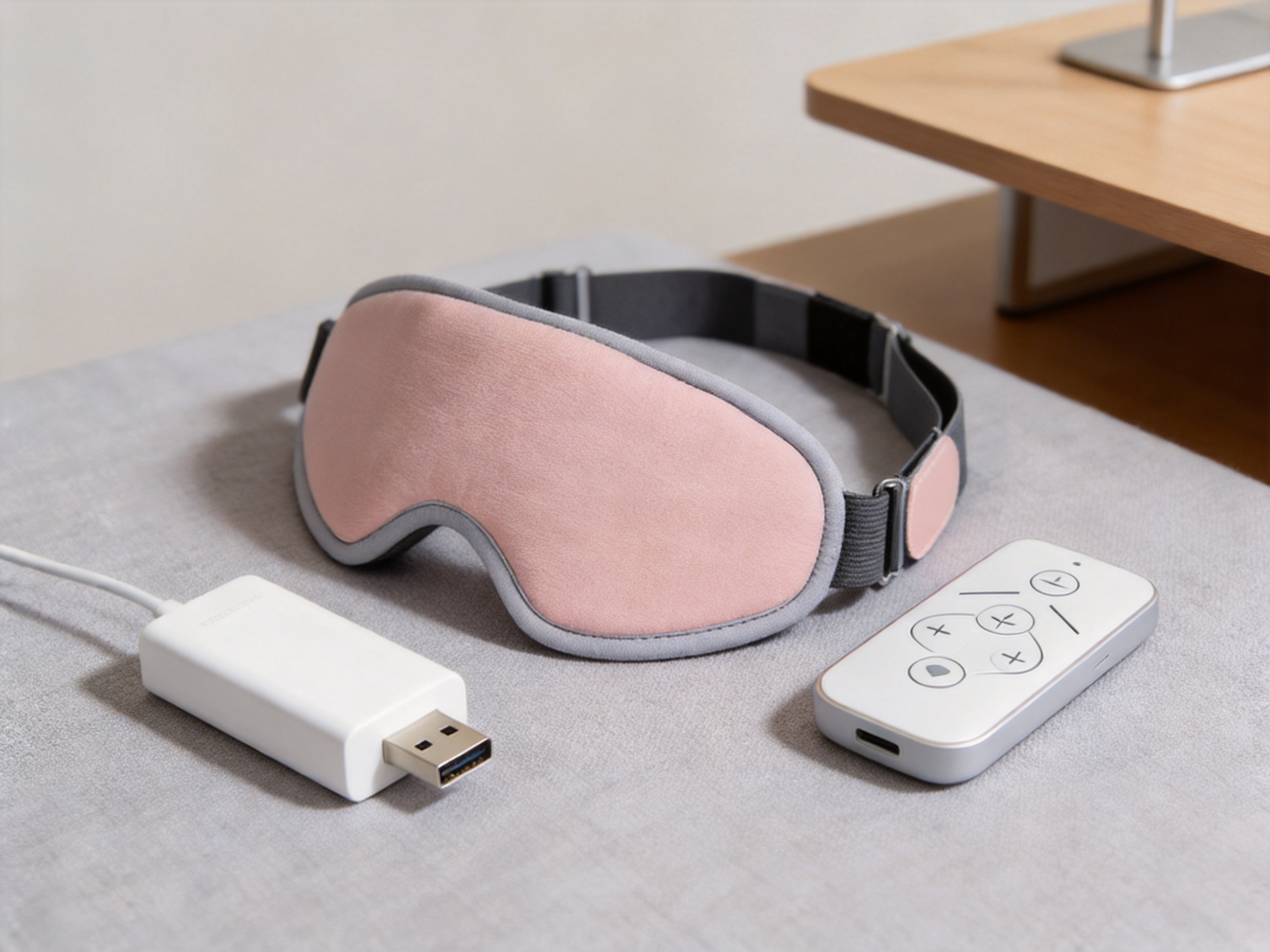
The soothing temperature-controlled heated eye mask, model MT-EM-001, is designed around these practical requirements. It combines adjustable warmth, a soft cotton-blend construction, moisture-wicking performance, three timer settings, and a low-voltage USB power system. Its operating temperature range of 35–55°C allows users to select a gentle level for relaxation or a higher level for a warm compress experience. At the same time, the product is built for controlled, stable, and repeatable performance rather than simply producing heat.
For importers, distributors, private-label brands, gift companies, and wellness retailers, the value of this product extends beyond its consumer-facing features. It is supported by a manufacturer with capabilities in injection molding, sewing, assembly, and complete appliance production. This integrated structure can simplify communication, improve production coordination, and make it easier to develop customized versions for different markets.
This article examines the product’s design, user advantages, safety-oriented features, commercial potential, and manufacturing support in detail. It also explains why a temperature-controlled heated eye mask can be a strong addition to a broader portfolio of household heating, cooling, cleaning, and baby-care items.
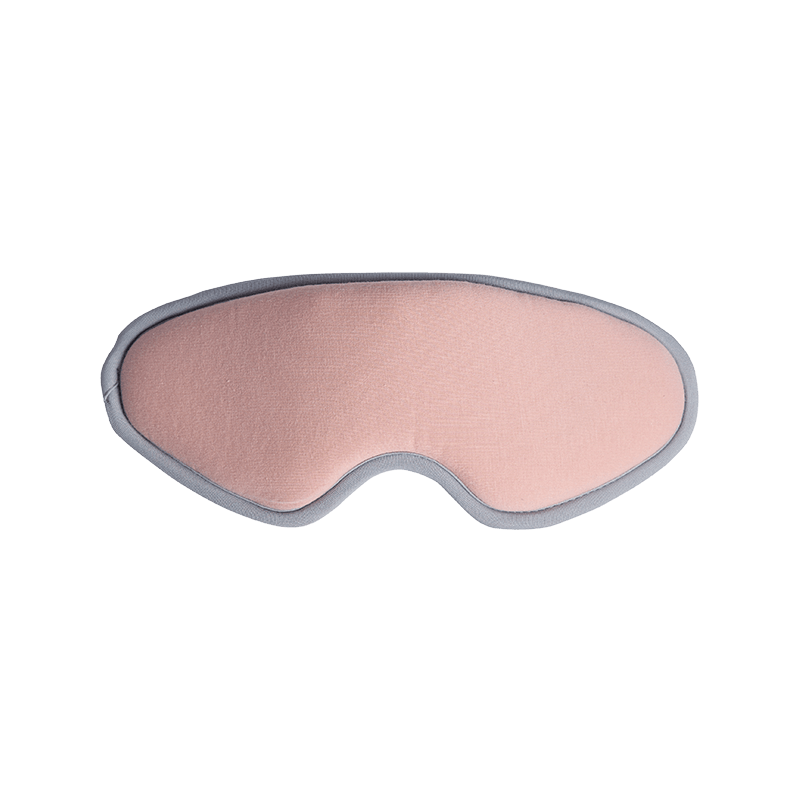
Soothing temperature-controlled heated eye mask
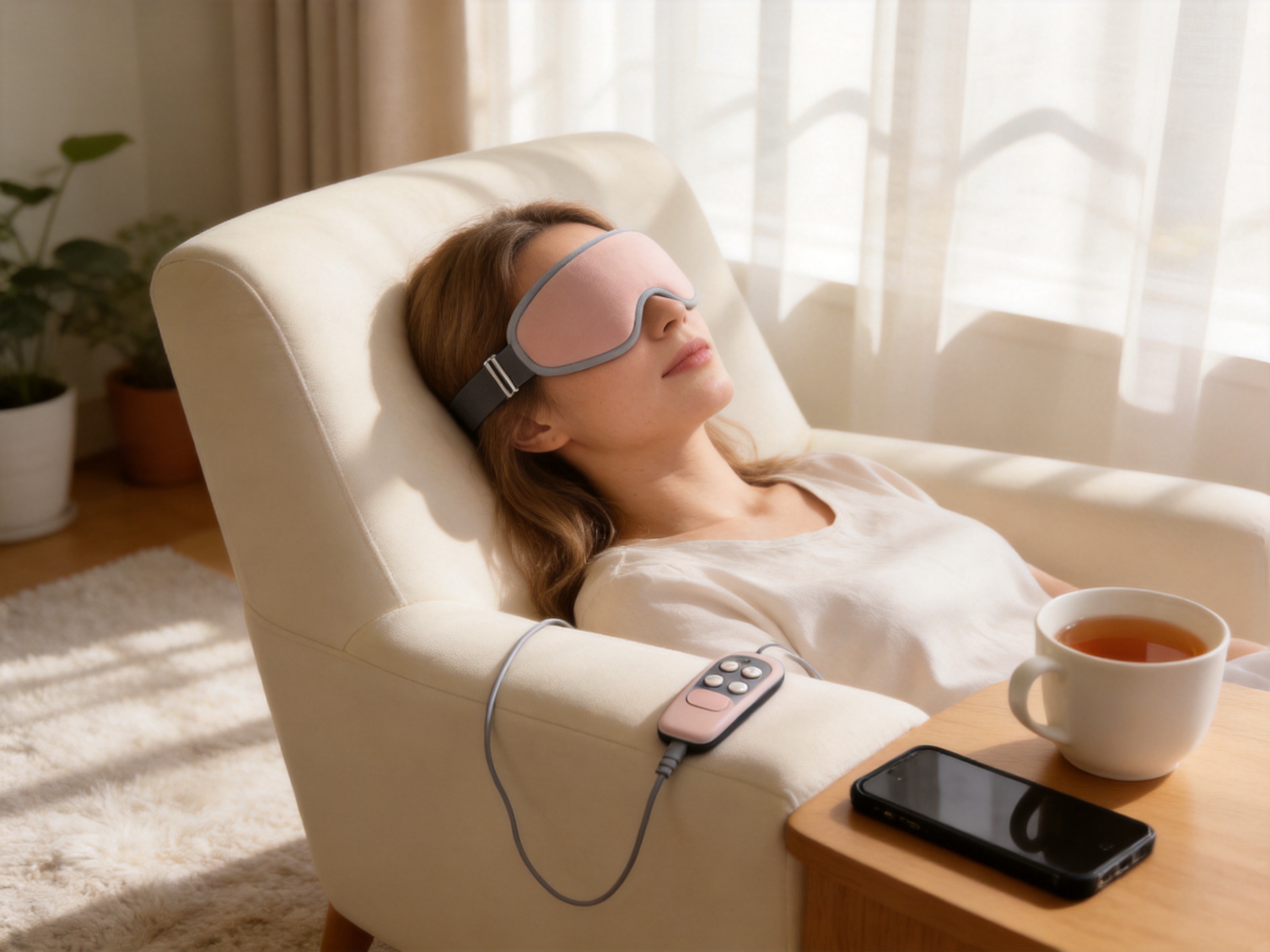
An eye mask is traditionally associated with blocking light during sleep. A heated eye mask adds another function: it creates a controlled source of warmth around the eye area and upper face. This warmth can help establish a relaxing personal-care routine, particularly after long periods of screen use or during quiet moments before sleep.
The MT-EM-001 is intended for everyday comfort and relaxation. It is not presented as a medical device, and it should not be marketed as a substitute for professional diagnosis or treatment. Its main consumer benefit is the ability to provide adjustable warmth in a convenient wearable format.
Many users prefer different heat levels depending on the time of day and their personal preferences. A gentle temperature may be suitable for winding down, reading, or taking a short rest. A higher setting may be preferred when the user wants a more noticeable warm-compress sensation. By offering a 35–55°C operating range, the product allows a broader range of use than a single-temperature heating accessory.
The mask format also provides practical advantages over larger heating products. It is compact, easy to store, and focused on one specific area. Unlike a large warming pad, it does not require a substantial surface or complicated setup. Unlike disposable warmers, it can be connected to a USB power source and used as part of a repeatable routine.
The product can be positioned for several daily-use environments. At home, it can support an evening relaxation ritual. In an office, it may be used during an appropriate break away from active work. In hotels or during travel, its compact format and USB input can make it convenient to carry. It can also be offered as a gift item for consumers interested in self-care, relaxation, and practical household accessories.
For retailers, this broad positioning creates opportunities in wellness, personal care, home comfort, office accessories, travel products, and seasonal gifting. Its neutral household application also makes it suitable for online stores, specialty retailers, employee gift programs, and customized promotional projects.
One of the main advantages of the MT-EM-001 is its temperature range. The product supports an operating range of 35–55°C, allowing the user experience to be adjusted according to preference and purpose.
The lower part of the range is intended for gentle daily relaxation. Many users may prefer a milder temperature when using the mask for a longer quiet period, when preparing for rest, or when they are sensitive to stronger heat. The lower range can provide a soft warming sensation without making the mask feel excessively hot.
This level is also commercially useful because it supports the product’s positioning as an everyday comfort accessory rather than an occasional specialty item. A product that feels appropriate for regular use may encourage stronger customer engagement and repeat purchasing through gifting or household replacement.
The upper part of the range creates a more pronounced warm-compress experience. It is intended for users who prefer stronger warmth around the eye area after a tiring day or extended visual concentration. The higher setting should always be used responsibly, with attention to individual comfort and the product instructions.
The inclusion of this higher range gives the mask greater versatility. Products with fixed heat output may not satisfy users who want to personalize their experience. Adjustable temperature, by contrast, allows one product to serve different users in the same household or different use occasions for the same customer.
Compared with basic warming masks that offer only one heat level, the MT-EM-001 provides a more adaptable experience. This flexibility can be especially valuable for retailers and private-label brands because it creates a clear feature for product comparison and marketing communication.
Temperature adjustability also supports a more premium product presentation. When combined with a breathable fabric, timer settings, and a stable 5V power system, it helps distinguish the product from simple heated accessories that focus only on basic warmth.
Any marketing material should describe the product accurately. Temperature settings should be communicated as comfort options, and claims about therapeutic or medical results should be avoided unless supported by appropriate testing, certification, and market-specific regulatory review.
Heat alone does not determine whether an eye mask is comfortable. The material that touches the skin is equally important. A mask can have a useful heating function but still produce an unsatisfactory customer experience if it feels rough, overly dense, stuffy, or damp during use.
The MT-EM-001 uses cotton blends selected for a soft and practical user experience. The material is described as moisture-wicking and breathable during heat therapy. This construction is intended to reduce the stuffiness that can occur with conventional eye masks and to help absorb moisture while keeping the surface feeling drier.
When fabric is warmed against the face, breathability becomes particularly important. A dense or non-breathable covering may trap heat and moisture, making the user want to remove the mask before the intended session is complete. A breathable cotton-blend structure can help improve perceived comfort by allowing the material to feel less sealed and heavy.
The benefit is not limited to temperature control. Breathable fabric can also support a cleaner, more pleasant experience over repeated use. Consumers increasingly evaluate personal-care products through several sensory factors, including softness, weight, surface texture, moisture management, and ease of cleaning or maintenance.
The material’s moisture-wicking design is intended to absorb moisture quickly and reduce discomfort caused by dampness. This is especially relevant when the mask is used in warm indoor environments, after physical activity, or for repeated sessions.
For brands, material comfort can be an important source of product differentiation. Consumers may initially notice heating performance, but long-term satisfaction often depends on whether the mask remains comfortable against the skin. A pleasant material can help support favorable reviews, repeat use, and stronger perceived value.
Because skin sensitivity, climate, and usage habits vary between markets, material selection should be considered alongside target positioning. A lightweight, breathable fabric may be particularly attractive in warmer regions, while softness and warmth may be emphasized in colder climates. Packaging can explain the material benefits without making unsupported dermatological claims.
The manufacturer’s sewing capabilities also provide a foundation for discussing material, shape, and construction adjustments with customers. Depending on project requirements, buyers may be able to explore different colors, labels, packaging formats, surface treatments, or design details through a customization process.
The MT-EM-001 includes three timer options: 10, 20, and 30 minutes. These settings provide a simple way to select a session length without requiring the user to monitor the clock continuously.
A 10-minute setting can suit a short break or a quick relaxation period. A 20-minute setting may be appropriate for a standard personal-care routine. A 30-minute setting gives users the option of a longer session when desired. The different durations also make the product easier to adapt to different schedules.
A timer improves convenience because the user can select a duration at the beginning of the session. This reduces the need to interrupt relaxation to disconnect the power manually. It also helps create a predictable routine, which can be valuable for consumers who prefer structured wellness habits.
For a wearable heated product, automatic timing is also a meaningful safety-oriented feature. The timer does not eliminate the need for responsible use, but it can help prevent a session from continuing unintentionally for an extended period. Users should still follow the instructions, inspect the product before use, and stop using it if discomfort or abnormal operation occurs.
Simple controls are often more effective than complicated interfaces for household comfort products. Consumers may use a heated eye mask while tired or preparing for sleep, so intuitive operation is valuable. Three clear timer levels can be easier to understand than a large number of complex settings.
For retailers, a 10/20/30-minute timer is also easy to explain on packaging, product pages, and point-of-sale displays. It provides a concrete product feature that can be understood quickly by customers comparing different models.
The product uses a 5V 1A USB input and has a rated power of 5W. This low-voltage configuration is designed to support safe and stable operation when connected to a suitable USB power source.
USB power is widely available in homes, offices, vehicles, travel adapters, power banks, and computer accessories. This makes the product convenient for modern users who may not want to carry a dedicated power adapter. It also allows the mask to fit more naturally into existing household charging habits.
A 5V design is a practical choice for a wearable household heating product. It helps avoid the need for direct connection to higher-voltage household power at the mask itself. The product’s 5W power rating also supports an energy-conscious usage profile compared with larger heating appliances.
Although the 5V configuration is a safety-oriented design choice, safe use still depends on the complete system. Consumers should use compatible power sources and follow the supplied instructions. Retailers and importers should confirm applicable electrical, labeling, testing, and documentation requirements in each target market before commercial sale.
The product is designed to provide controlled warmth rather than uncontrolled temperature rise. This distinction is important. A good heated eye mask should balance heat generation, temperature management, fabric comfort, timer operation, and electrical stability.
The 5W rating offers a clear technical reference for buyers and distributors. It can support product comparison, packaging development, logistics planning, and technical documentation. Clear specifications also help reduce misunderstandings between brands, factories, importers, and end users.
| Specification | Product Information |
|---|---|
| Model | MT-EM-001 |
| Product Type | Temperature-controlled heated eye mask |
| Material | Cotton blends |
| Operating Temperature | 35–55°C |
| Input | 5V 1A, USB input |
| Rated Power | 5W |
| Timer Options | 10, 20, and 30 minutes |
| Packaging | 1 piece per color box |
| Warranty | 1 year |
| Minimum Order Quantity | 1,500 pieces per color |
The heated personal-care category includes disposable warming products, basic fixed-temperature masks, microwaveable masks, and electrically powered adjustable models. Each type has different advantages, but the MT-EM-001 brings several features together in one product.
Disposable warming products may be convenient for one-time use, but they create recurring replacement needs and may produce additional waste. A USB-powered heated eye mask is designed for repeated use, which can offer stronger long-term value for consumers who use warming products regularly.
The reusable format may also be more attractive to retailers seeking durable household products. Instead of selling a single-use item with limited functionality, a reusable mask can be positioned as a practical personal-care accessory with adjustable temperature and timer options.
A fixed-temperature mask can be simple, but it may not accommodate differences in personal sensitivity or preferred use. The 35–55°C range of the MT-EM-001 provides more flexibility. Users can choose a lower warmth level for gentle relaxation or a higher setting for a stronger warm-compress sensation.
Microwaveable masks require heating before use and may cool down gradually. Their temperature can be less consistent, and the heating process depends on the user’s microwave, timing, and handling. A USB-powered design offers a more repeatable operating method, provided that the user has a compatible power source.
The electronic format also makes timer-based operation possible. Rather than manually estimating when a session should end, users can select 10, 20, or 30 minutes.
Larger heating pads may cover a broader area, but they are less targeted and generally less portable. The eye mask format is compact and purpose-specific. It can be stored in a drawer, included in a travel bag, or displayed as a small gift product.
The strongest competitive advantage is not necessarily one isolated specification. It is the combination of adjustable temperature, breathable cotton-blend material, moisture management, timer choices, USB input, low-voltage design, and compact packaging. Together, these features create a product that is practical, understandable, and suitable for several retail channels.
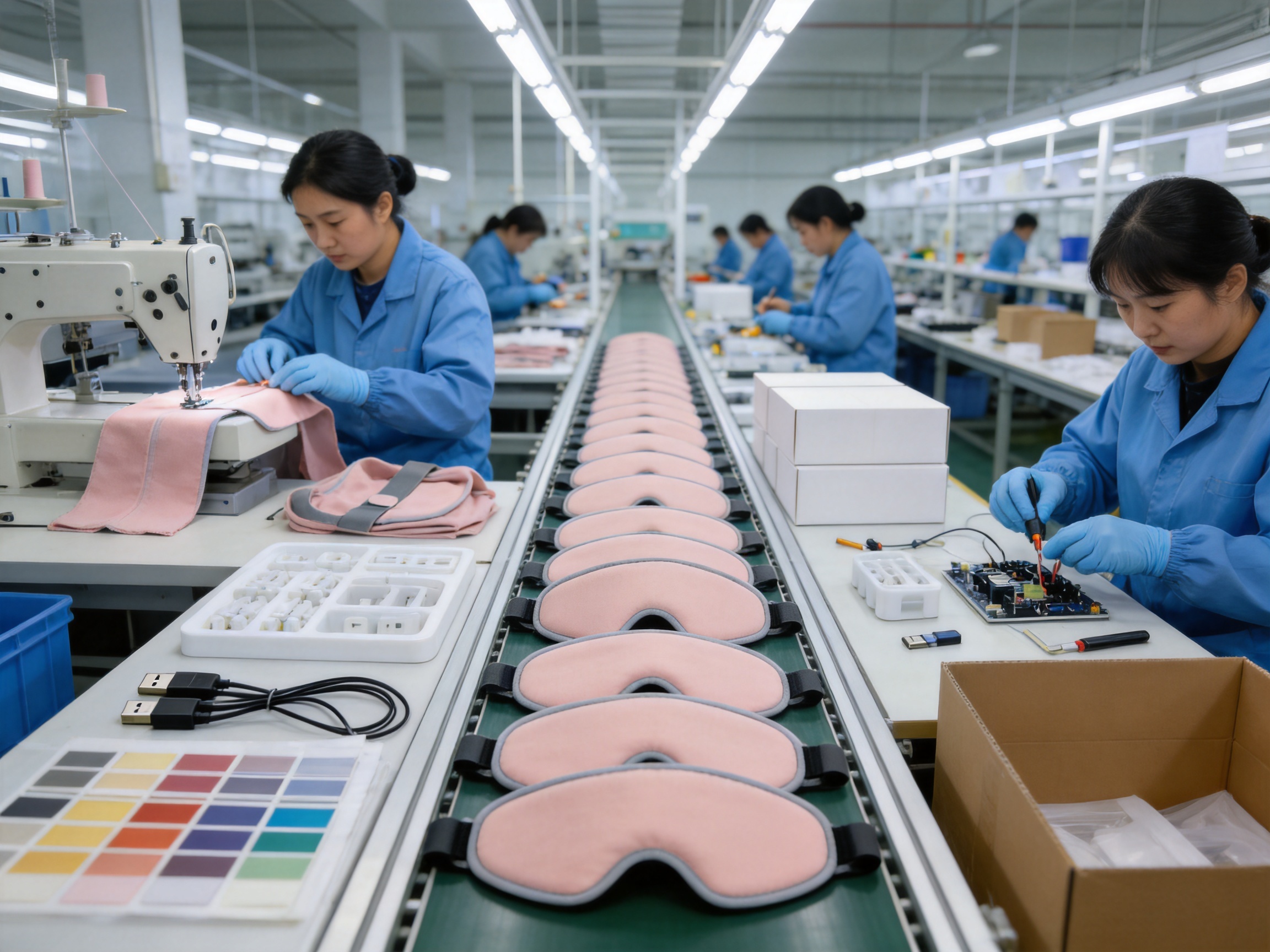
Product performance depends not only on design but also on how consistently the product can be manufactured. The supplier of the MT-EM-001 operates as an integrated home-appliance manufacturer with production facilities of approximately 5,000 square meters. Its capabilities include injection molding, sewing, assembly, and complete appliance manufacturing.
This combination is significant for a product such as a heated eye mask because the product includes both textile and electronic elements. The fabric portion requires accurate cutting, sewing, finishing, and inspection. The electrical portion requires component coordination, wiring, control integration, assembly, and functional testing. An integrated manufacturing structure can help connect these processes more efficiently.
Injection molding supports the production of plastic components such as control housings, connectors, structural parts, and other molded elements used in household appliances. In-house or closely coordinated molding capability can provide better control over dimensions, surface finish, tooling communication, and production scheduling.
For customized projects, the molding process may also support adjustments to the appearance or structure of product components. This can be useful for private-label programs requiring a specific visual identity, control layout, or packaging configuration.
Sewing capability is directly relevant to the eye mask’s comfort and appearance. Accurate stitching helps maintain shape, secure fabric layers, support cable routing, and provide a clean finished look. Consistent sewing quality is particularly important for products worn against the face, where rough edges or uneven seams can affect user satisfaction.
Textile production also supports customization opportunities. Depending on the order requirements, buyers may discuss fabric colors, labels, decorative details, packaging coordination, and other appearance elements. The manufacturer’s ability to combine sewing with appliance assembly can reduce the number of separate production interfaces.
Assembly is where electrical, textile, molded, and control components become a finished consumer product. A structured assembly process should include work instructions, component verification, quality checkpoints, and final functional inspection.
Complete appliance manufacturing experience helps the supplier understand that a product must be evaluated as a system. The heating element, temperature control, timer, power input, fabric layers, and user interface must work together. A product may have high-quality individual components but still fail to meet customer expectations if integration is poorly managed.
The company’s production structure supports coordination from components to finished appliances. This may help reduce communication gaps between design, procurement, manufacturing, quality control, packaging, and shipment preparation.
For overseas customers, clear coordination is especially valuable. International projects often involve specifications, sample confirmation, packaging artwork, inspection requirements, delivery schedules, and market compliance documentation. A supplier with organized project support can make these steps more efficient and transparent.
The manufacturer maintains a professional team covering research and development, design, production management, and project support. This combination is useful for customers who need more than a standard catalog item.
Some buyers may require a basic product with new packaging. Others may want a different color, logo treatment, fabric option, control arrangement, or complete private-label presentation. The level of customization depends on technical feasibility, order quantity, tooling requirements, testing, and target-market regulations. A supplier with design and project experience can help evaluate these requirements before production begins.
Successful customization depends on translating broad ideas into measurable specifications. For example, a request for a “soft and premium” eye mask may need to be converted into fabric composition, surface finish, dimensions, seam construction, padding, color standards, and packaging details.
Similarly, a request for “safe adjustable heating” must be reflected in temperature control, timer behavior, power input, wiring, protective construction, testing procedures, and user instructions. Experienced project management helps ensure that the commercial concept is connected to actual production details.
Sampling is an important stage for heated wearable products. Buyers can evaluate the fit, material, heating sensation, control operation, timer behavior, cable position, packaging, and overall appearance before approving mass production.
Clear communication during sampling can identify potential improvements early. It may also help avoid expensive changes after tooling, bulk material purchasing, or packaging production has begun. A manufacturer that supports direct and organized project communication can be a valuable partner for brands entering or expanding within the personal-care appliance market.
The company focuses on practical household products designed for home and office use. This market orientation supports a balance between comfort, safety, stable performance, and commercial practicality. Products intended for daily life must be easy to understand, easy to operate, and suitable for ordinary household routines.
Participation in professional exhibitions, including international gift and consumer-product events, can also help a manufacturer observe market trends and understand changing buyer requirements. Exposure to customers from different countries and regions may contribute to more adaptable product planning and communication.
Quality control for a heated eye mask should cover raw materials, components, production processes, finished-product performance, and packaging. A reliable inspection system should not focus only on whether the product turns on.
Fabric should be checked for color consistency, surface defects, stitching compatibility, and conformity with the approved sample. Since the product touches the face, visual and tactile quality are important. Packaging and labeling should also accurately describe the material composition and care requirements.
Functional checks may include USB input performance, power consumption, temperature operation, timer selection, heating uniformity, control response, and cable condition. The precise inspection plan should be defined according to the product design and target-market requirements.
Temperature verification is particularly important because the product offers a range of 35–55°C. Testing should confirm that the heating system operates within the intended parameters and that the controls respond consistently. Measurements should be made with appropriate equipment and under defined test conditions.
Each timer option should be checked to confirm that the 10-, 20-, and 30-minute settings operate as intended. A consistent timer function supports both user convenience and safety-oriented product positioning.
The product is specified as one piece per color box. Packaging inspection should confirm product quantity, accessories, printed information, color accuracy, barcode or label requirements, and protection during transport. Well-organized packaging reduces the risk of product damage and supports a more professional retail presentation.
The product includes a one-year warranty. Warranty terms should be clearly documented between the supplier and buyer, including coverage conditions, exclusions, claim procedures, replacement policies, and responsibilities for shipping or inspection. Transparent warranty communication can strengthen buyer confidence and support after-sales service.
The product is suitable for customized commercial programs, subject to technical evaluation and order requirements. Customization can help buyers create a stronger connection between the heated eye mask and their own brand positioning.
Possible visual elements may include color selection, logo application, labels, printed materials, and retail packaging. Different channels may require different presentation styles. A wellness brand may prefer a calm and minimal appearance, while a gift company may choose brighter seasonal packaging. An office-wellness program may require corporate colors and customized inserts.
Depending on feasibility, buyers may discuss adjustments to fabric, shape, cable placement, control components, or accessory combinations. Any change that affects heating, electrical performance, comfort, or safety should be reviewed carefully and validated through sampling and testing.
The stated minimum order quantity is 1,500 pieces per color. This quantity is relevant to private-label planning because it provides a practical starting point for a branded production run while still requiring buyers to forecast demand carefully.
| Customization Area | Examples of Buyer Requirements | Key Considerations |
|---|---|---|
| Color | Brand colors, seasonal colors, neutral tones | Color approval and material availability |
| Packaging | Color box, retail artwork, inserts, labels | Artwork confirmation and packaging protection |
| Branding | Logo, product name, instruction materials | Print method, placement, and compliance information |
| Fabric | Texture, color, surface feel | Comfort, durability, and production feasibility |
| Accessories | USB cable, customized inserts, retail additions | Compatibility and packing configuration |
| Technical Features | Control or timer adjustments | Testing, tooling, cost, and regulatory review |
The MT-EM-001 can support several commercial applications because it combines a clear consumer benefit with compact packaging and straightforward operation.
Wellness retailers can position the mask as a home relaxation accessory. Product communication can emphasize adjustable warmth, breathable fabric, moisture management, timer convenience, and USB usability.
Its compact form makes the mask suitable for gift sets, holiday promotions, employee appreciation programs, and self-care collections. Custom packaging can help align the product with seasonal or event-specific campaigns.
For e-commerce, the product has several easy-to-communicate specifications: 35–55°C temperature range, three timer settings, 5V USB input, 5W power, cotton-blend material, and one-year warranty. Clear photographs, usage instructions, and accurate safety information can help customers make informed purchasing decisions.
Companies seeking practical employee-wellness gifts may consider a heated eye mask as a compact personal-care item. It can be distributed as part of a relaxation kit or a home-office accessory package. Corporate customization may include logo printing, branded packaging, and a tailored instruction card.
The USB input and small format may also make the product appropriate for travel-oriented product collections or hospitality gift programs. Before targeting these channels, buyers should evaluate cable requirements, packaging durability, destination-market labeling, and compatibility with commonly available USB power sources.
Because the product is used around the eyes, responsible communication is essential. Marketing should focus on warmth, relaxation, comfort, convenience, and personal-care routines. Claims that the product diagnoses, prevents, or treats a medical condition should not be made without appropriate evidence and regulatory authorization.
Usage instructions should advise customers to check the product before operation, use a suitable power source, select a comfortable temperature, follow the timer settings, and discontinue use if they experience discomfort. The product should not be used by individuals who cannot safely operate it without supervision, and users should follow all warnings supplied with the finished product.
Clear communication benefits both consumers and commercial partners. It reduces the risk of exaggerated expectations and helps retailers present the product accurately. It also demonstrates that the supplier understands the responsibilities associated with a wearable electrical heating product.
Choosing a supplier is not only a matter of comparing unit price. Buyers also need to evaluate product consistency, communication, development support, production capacity, quality systems, packaging coordination, and after-sales response.
An integrated manufacturer can offer advantages when a product combines multiple production disciplines. The MT-EM-001 requires textile work, heating components, electronic control, assembly, and packaging. Coordination across these areas can help reduce delays and make product changes easier to manage.
The approximately 5,000-square-meter production operation provides a foundation for organized manufacturing. Its capabilities across injection molding, sewing, assembly, and complete appliance production allow the supplier to manage a broader portion of the product process than a company that only performs final assembly.
Integration can also improve accountability. When several independent vendors are involved, it may be difficult to determine whether a problem originated in fabric, molding, electronics, assembly, or packaging. A more connected manufacturing structure can make investigation and corrective action more direct.
For international buyers, the supplier’s experience with professional exhibitions and customers from different regions is another useful strength. Global projects often require cultural awareness, accurate documentation, responsive communication, and careful attention to delivery schedules. These abilities can be as important as production equipment when developing a successful private-label product.
The MT-EM-001 operates within a temperature range of 35–55°C. The lower range of 35–45°C is intended for gentle daily relaxation, while the higher range of 45–55°C provides a stronger warm-compress sensation.
Yes. The product includes three timer options: 10, 20, and 30 minutes. These settings allow users to select a convenient session length.
The mask uses a 5V 1A USB input and has a rated power of 5W. Users should connect it only to a compatible power source and follow the supplied operating instructions.
The mask is made with cotton blends. The material is designed to be breathable and moisture-wicking during heat therapy, helping reduce stuffiness and dampness during use.
The product is designed as a household comfort and relaxation accessory. It should not be promoted as a medical device or as a treatment for a medical condition unless the necessary testing, evidence, and regulatory approvals have been completed for the target market.
Customization may be available for areas such as color, packaging, branding, fabric details, accessories, and certain product configurations. The exact options depend on technical feasibility, order quantity, tooling, testing, and market requirements.
The stated minimum order quantity is 1,500 pieces per color. Buyers should confirm the final quantity, sample policy, customization requirements, and production schedule during project discussions.
The specified packing format is one piece per color box. Additional packaging requirements, such as retail labels, inserts, barcodes, master cartons, or customized artwork, can be discussed for specific orders.
The product specification lists a one-year warranty. Buyers should confirm the warranty terms, coverage, claim process, and applicable conditions in the purchase agreement.
The manufacturer operates production facilities of approximately 5,000 square meters and has capabilities covering injection molding, sewing, assembly, and complete appliance manufacturing. These capabilities support coordination between textile construction, molded components, electrical systems, and finished-product assembly.
The compact design and USB input may make it convenient for travel. However, users should confirm access to a suitable USB power source and follow all instructions regarding storage, transport, and operation.
Its main differentiators are the 35–55°C temperature range, breathable moisture-wicking cotton-blend material, three timer options, 5V USB input, 5W power rating, and support for customization. These features can help position it as a more flexible and comfort-oriented option than a basic fixed-temperature product.
The temperature-controlled heated eye mask is designed to meet a clear need in the growing household wellness and personal-care market. Its value comes from the combination of adjustable warmth, comfortable breathable material, moisture management, timer control, USB convenience, and low-voltage operation.
The 35–55°C range allows users to select a gentler or stronger warming experience according to personal preference. The 10-, 20-, and 30-minute timers add convenience and support structured use. Cotton-blend fabric and moisture-wicking performance help address comfort concerns that can arise when a warm product is worn against the face. The 5V 1A USB input and 5W rating provide a practical technical configuration for home, office, and travel environments.
For commercial buyers, the product also benefits from a manufacturer with integrated capabilities in injection molding, sewing, assembly, and complete appliance production. Approximately 5,000 square meters of production facilities, together with professional teams in research and development, design, production management, and project support, provide a foundation for stable manufacturing and customized cooperation.
In a competitive market, the strongest product is often not the one with a single dramatic feature. It is the one that combines comfort, usability, safety-oriented design, reliable specifications, attractive packaging potential, and dependable production support. The MT-EM-001 offers this balanced approach and can serve as a practical addition to wellness, personal-care, gifting, office, travel, and household product portfolios.
With accurate marketing, responsible usage guidance, appropriate quality control, and clear communication between buyer and manufacturer, the heated eye mask can provide a useful and appealing solution for consumers seeking convenient warmth and everyday relaxation.
1. Product Specification Sheet: MT-EM-001 Temperature-Controlled Heated Eye Mask.
2. Manufacturer Information: Ningbo Meeting Industrial and Trading Co., Ltd., Company Profile and Production Capability Summary.
3. General Principles of Electrical Safety for Low-Voltage USB-Powered Household Products.
4. General Guidance for Textile Product Quality, Moisture Management, and Skin-Contact Comfort.
5. General Product Development Practices for Wearable Household Heating Accessories.
6. General Quality-Control Considerations for Consumer Appliances, Timer Functions, and Temperature-Controlled Products.
The way we use our eyes has changed. Between laptops, phones, and tablets, most adults now spend hours each day staring at close-up screens, and the delicate tissue around the eye...
READ MOREThe heated eye mask is good for your eyes in most cases — particularly for people suffering from dry eye disease, meibomian gland dysfunction (MGD), eye fatigue, or poor sleep. Wh...
READ MOREFew things feel as good at the end of a long day as a warm, gentle hug for your eyes. That is exactly what a steam eye mask delivers. Over the years, we have built heated eye mask...
READ MORESmart energy-efficient portable cooling hand fans have quickly become one of the most practical personal comfort devices available, combining compact design, long battery life, an...
READ MOREPortable cooling fans have become an everyday essential for anyone who wants to stay comfortable when temperatures climb. Whether you are commuting, working outdoors, or simply re...
READ MOREYou settle onto the couch on a cold winter evening, blanket spread across your lap, and hesitate before reaching for the plug. How much electricity will this actually use? Most he...
READ MORE