English
 日本語
日本語 한국어
한국어 Deutsch
Home > Author > Luo Yanjun — Senior After-Sales Service Manager > Large-Area Constant-Temperature Heating Floor Mat for Modern Indoor Comfort
Content
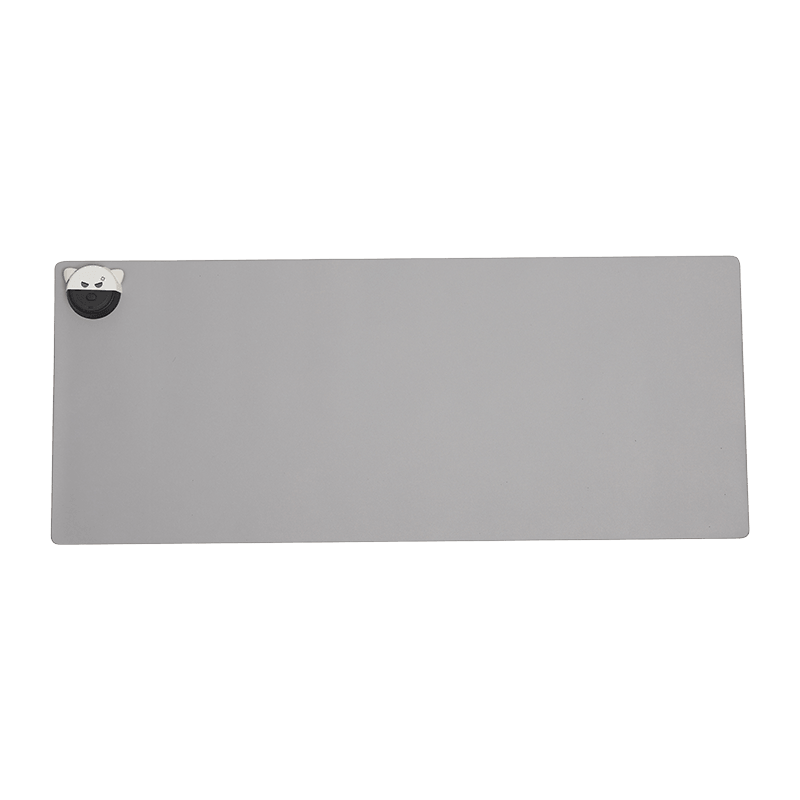
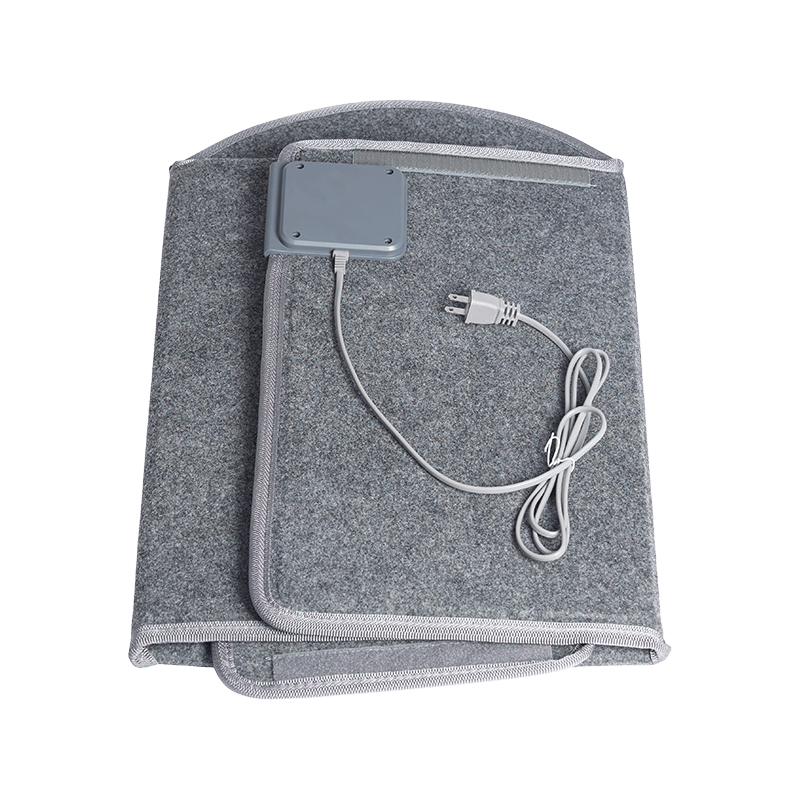
Warmth at floor level is one of the most practical ways to improve indoor comfort during cold seasons, especially in spaces where people sit, work, relax, or gather close to the ground. The Large-Area Constant-Temperature Heating Floor Mat is designed to provide broad, stable, and comfortable warmth across a generous 200 × 150 cm surface. Unlike small personal heating pads that only warm a limited area, this heated floor mat creates a usable warm zone for living rooms, bedrooms, home offices, family spaces, and pet areas.
This product is built for households and commercial buyers that value reliable performance, convenient control, safety-focused design, and flexible customization. With a rated power of 1140W, four adjustable temperature levels, a 3/6/9/12-hour timer, IPX7 water-resistant protection, child safety lock, EMF shielding design, and durable PVC or fabric surface options, it offers a balanced combination of comfort, practicality, and manufacturing adaptability.
The mat is also supported by an integrated manufacturing system that covers injection molding, sewing, assembly, and complete appliance production. This production foundation allows better quality control from components to finished goods, stronger consistency for bulk orders, and more flexible OEM and ODM cooperation for customers developing market-specific heating products.
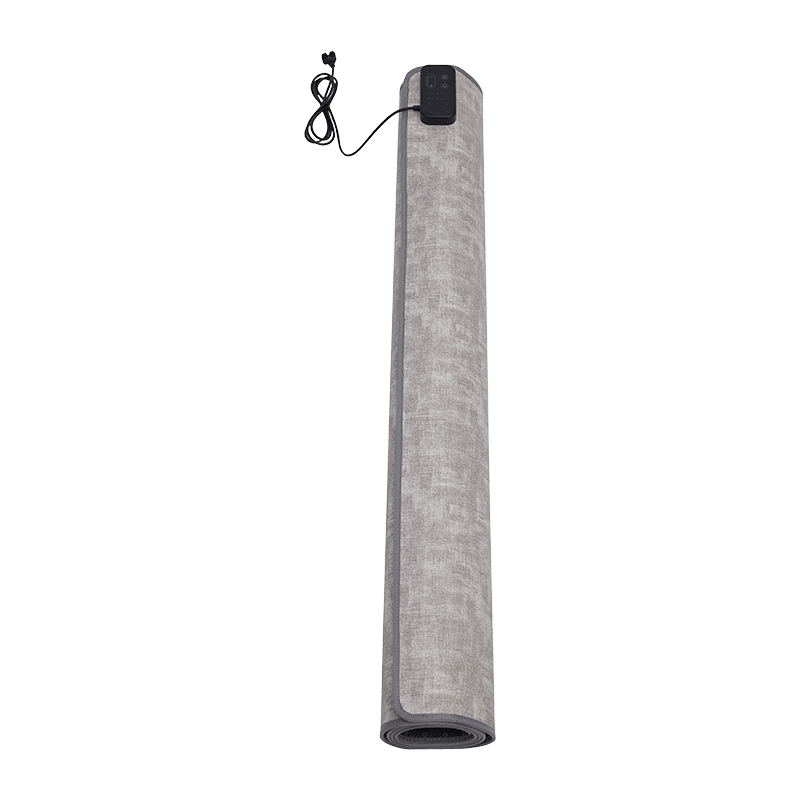
Large-Area Constant-Temperature Heating Floor Mat
The Large-Area Constant-Temperature Heating Floor Mat is developed for people who need more than spot heating. Its 200 × 150 cm size makes it suitable for shared indoor use, allowing users to sit, lie down, place it under a low table, or create a warm corner in a bedroom or office. The product is not limited to one posture or one person; instead, it expands comfort across a wider area.
The mat uses a constant-temperature heating design to deliver warmth evenly and steadily. This helps reduce the discomfort caused by cold floors, particularly in homes with tile, wood, or other hard flooring materials. In many indoor environments, the floor remains cold even when the air temperature is acceptable. A heated floor mat directly solves this problem by bringing warmth to the contact surface where the body, feet, legs, or pets may rest.
The design focuses on daily usability. Users can select from four temperature levels, making the mat suitable for mild cool days, deeper winter conditions, or personal preferences. The timer function supports automatic shut-off after 3, 6, 9, or 12 hours, which is useful for energy management and peace of mind. For families, the child safety lock helps prevent accidental changes to settings, while IPX7 water-resistant protection improves reliability during common household use.
From a business perspective, the mat is also well suited for wholesale, private label programs, and customized product development. Its size, power configuration, surface material, controller functions, logo printing, and packaging can be adjusted according to customer requirements. This flexibility is especially valuable for importers, retailers, and distributors who need products adapted to local markets, climates, consumer habits, and certification expectations.
Item |
Specification |
Model |
MT-DN-001 |
Product Type |
Large Heated Floor Mat |
Size |
200 × 150 cm |
Power |
1140W |
Voltage |
100V |
Material |
PVC / Fabric |
Temperature Levels |
4 levels, approximately 27°C to 55°C |
Low Level |
27°C to 32°C |
Medium Level |
32°C to 37°C |
High Level |
38°C to 44°C |
Highest Level |
50°C to 55°C |
Timer |
3 / 6 / 9 / 12 hours |
Safety Features |
IPX7 water-resistant protection, child lock, EMF shielding design |
Packaging |
1 piece per color box |
Warranty |
1 year |
MOQ |
1500 pieces per color |
Many conventional heating products are designed for small-area personal use. A foot warmer, small electric cushion, or narrow heating pad may be helpful for one part of the body, but it cannot create a comfortable floor zone for multiple activities. In contrast, a 200 × 150 cm heating floor mat changes how a room can be used. It supports floor seating, low-table dining, children’s play areas under supervision, work-from-home setups, and pet resting zones.
Large-area heating is especially useful because body comfort is influenced by direct contact temperature. A room may feel cold when the floor is cold, even if the air heater is running. Traditional space heaters warm air, but warm air rises and may not solve the cold-floor problem efficiently. A heated floor mat places warmth where people need it most: under the feet, legs, body, table area, or resting surface.
Compared with smaller heating mats, the large format reduces the need to constantly adjust position. Users do not need to keep both feet in one small heated zone. Families can share the mat while watching television, reading, playing games, or relaxing. Office users can place it under a desk to create a warmer working environment without heating an entire room. Pet owners can use it to provide a comfortable resting area, provided the product is used responsibly according to instructions.
The wide area also makes the product more attractive for markets where floor-based lifestyles are common. In many households, people sit on rugs, cushions, or low furniture. A heating mat that covers a larger footprint can integrate naturally into these living habits. It functions not only as a heating appliance, but also as part of the indoor comfort environment.
The mat’s 1140W power output is an important performance feature. Heating a 200 × 150 cm surface requires sufficient power to maintain practical warmth across the full area. A lower-powered mat of similar size may struggle to deliver consistent heat, especially in colder rooms or when used on flooring materials that absorb heat. The 1140W system gives the product the capacity to warm up effectively and support stable temperature performance.
Power alone, however, is not the only measure of quality. The key is controlled power distribution. A well-designed heating floor mat must spread heat evenly, avoid uncomfortable hot spots, and respond reliably to selected settings. The constant-temperature concept helps maintain the chosen comfort level rather than producing irregular heating cycles that feel too warm and then too cool.
Compared with low-cost alternatives that may use less efficient heating structures or limited control systems, this mat emphasizes both output and usability. Users can choose a lower setting for gentle warmth, a medium setting for daily comfort, a high setting for cold weather, or the highest setting when stronger warmth is needed. This range makes the product adaptable rather than limited to a single fixed temperature.
For wholesale customers, strong heating performance can also improve consumer satisfaction after purchase. A floor mat that warms quickly and feels stable is easier to promote and easier to recommend. It can serve different climates, room types, and customer expectations, reducing the risk of returns caused by insufficient warmth.
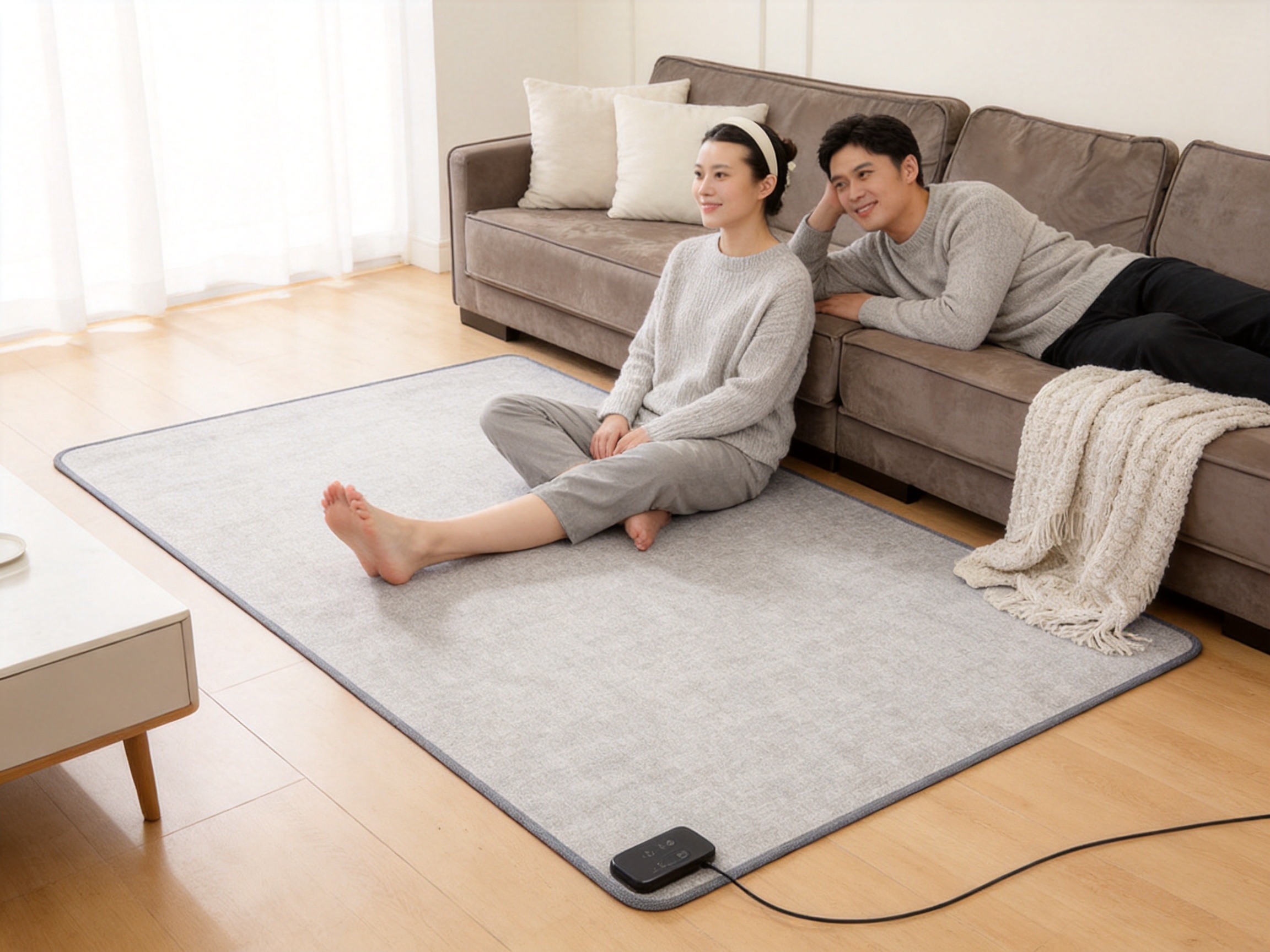
Comfort is personal. Some users prefer mild warmth while working; others want stronger heat after returning home in cold weather. The four-level temperature control system allows the mat to meet these different needs. The low level, approximately 27°C to 32°C, is suitable for gentle warmth during long periods of use. The medium level, approximately 32°C to 37°C, is suitable for everyday comfort. The high level, approximately 38°C to 44°C, offers stronger warming performance for colder conditions. The highest level, approximately 50°C to 55°C, provides more intense warmth when users need rapid or powerful heating.
This level-based structure is simple enough for everyday users while still offering meaningful control. Some competing products provide only basic on/off operation or limited temperature adjustment. Those designs can be inconvenient because users may feel too hot or not warm enough, depending on room temperature and personal preference. Four levels provide a practical balance between simplicity and flexibility.
The temperature range also supports different application scenarios. Under a desk, a lower or medium setting may be comfortable for extended work sessions. In a living room, a medium or high setting may be suitable for family relaxation. In a bedroom, users may prefer a lower setting with a timer. In colder environments, the higher settings can help the mat perform more effectively.
For distributors, temperature flexibility helps position the product in multiple consumer segments. It can be marketed as a home comfort product, office heating accessory, family floor-warming solution, seasonal winter appliance, or customized private-label heating mat. This versatility increases market potential.
The timer function offers four automatic shut-off options: 3, 6, 9, and 12 hours. This feature is valuable because heated products are often used during relaxation, work, or rest, when users may forget to turn them off manually. A timer adds convenience and helps support safer, more energy-conscious operation.
A 3-hour setting is suitable for short use, such as evening relaxation or focused work. A 6-hour setting may fit longer sessions at home or in the office. A 9-hour setting can support extended use during cold days. A 12-hour setting is useful when longer warming periods are required, while still providing an automatic shut-off structure.
Compared with basic heating mats without timers, this product gives users more control over operating time. This can help reduce unnecessary energy consumption and improve confidence in daily use. For families, elderly users, and busy professionals, automatic timing is a practical benefit that adds value beyond simple heat generation.
The timer function also improves the product’s appeal in modern appliance markets. Consumers increasingly expect home products to be convenient, controllable, and energy-aware. A heating mat that provides multiple time settings is better aligned with these expectations than a product that requires constant manual monitoring.
Floor products face more environmental exposure than small handheld appliances. They may be used near cups, humid spaces, damp floors, or areas where accidental spills occur. IPX7 water-resistant protection is therefore a meaningful safety and durability feature. It is designed to help prevent leakage-related risks and support safer daily use.
Water-resistant construction does not mean users should treat the mat carelessly, but it does improve product resilience in real household conditions. In family spaces, accidents happen. A more protected design gives users confidence and helps the product maintain performance over time.
Compared with ordinary floor mats that may lack strong water-resistant design, the IPX7 feature creates a competitive advantage. Consumers are increasingly attentive to safety, particularly when electrical appliances are used near the floor. Retailers and distributors also benefit from offering products with clearly defined protection features because safety is a key purchasing factor in heating categories.
From a manufacturing perspective, water-resistant design requires careful material selection, sealing processes, component integration, and quality inspection. It is not simply a marketing claim; it must be supported by process discipline. An integrated production system that can manage materials, assembly, and testing is important for maintaining consistent protection across large production runs.
The child safety lock is designed to prevent accidental operation or unintended setting changes. This feature is particularly important because a large floor mat may be used in family areas where children or pets are present. Even when adults supervise use, accidental button presses can happen. A safety lock helps maintain the intended operating mode.
Family-oriented heating products must be easy to use but not too easy to misoperate. The child lock provides a practical solution. It helps keep the selected temperature and timer settings stable, reducing the chance that a child will raise the temperature or change the operating time without awareness.
Many low-end heating products focus only on basic warmth and overlook family safety features. By including a child lock, this mat positions itself as a more complete household appliance. It is suitable not only for individual users but also for shared living environments where safety, stability, and control matter.
The mat includes an EMF shielding design intended to reduce electromagnetic exposure and improve the comfort of use. While electric heating products naturally involve electrical operation, thoughtful design can help address consumer concerns and support a more reassuring user experience.
EMF shielding is especially relevant for products used close to the body for extended periods. A heated floor mat may be used while sitting, lying, working, or relaxing, so users may care about the electrical design as well as the surface temperature. By incorporating shielding, the product demonstrates attention to a broader definition of safety and comfort.
Compared with competitors that do not clearly address electromagnetic exposure, a mat with EMF shielding can be easier to position as a premium or safety-conscious product. This feature may be particularly valuable in markets where consumers carefully compare specifications before purchasing heating appliances.
The product can be made with PVC or fabric surface options, giving buyers flexibility in appearance, texture, and application. PVC offers durability, wear resistance, and easy maintenance. It is practical for areas where cleaning convenience is important. A soft fabric option provides a warmer, more comfortable touch, which may be preferred for living rooms, bedrooms, or relaxation spaces.
Surface material is a major factor in user satisfaction. A heated floor mat must not only warm effectively; it must also feel appropriate underfoot or under the body. It should be easy to maintain, pleasant to use, and strong enough for daily contact. The ability to choose materials helps meet different market preferences.
Compared with products that offer only one surface type, this mat’s material flexibility supports broader product positioning. A PVC version may be suitable for practical, easy-clean markets. A fabric version may be positioned as a comfort-focused home accessory. Texture, color, pattern, and branding can also be adjusted through OEM and ODM programs.
Durability is especially important for large mats because they may be walked on, moved, folded or stored according to instructions, cleaned, and used repeatedly across a winter season. Wear-resistant construction helps the product remain attractive and functional over time, improving customer satisfaction and brand reputation for the buyer.
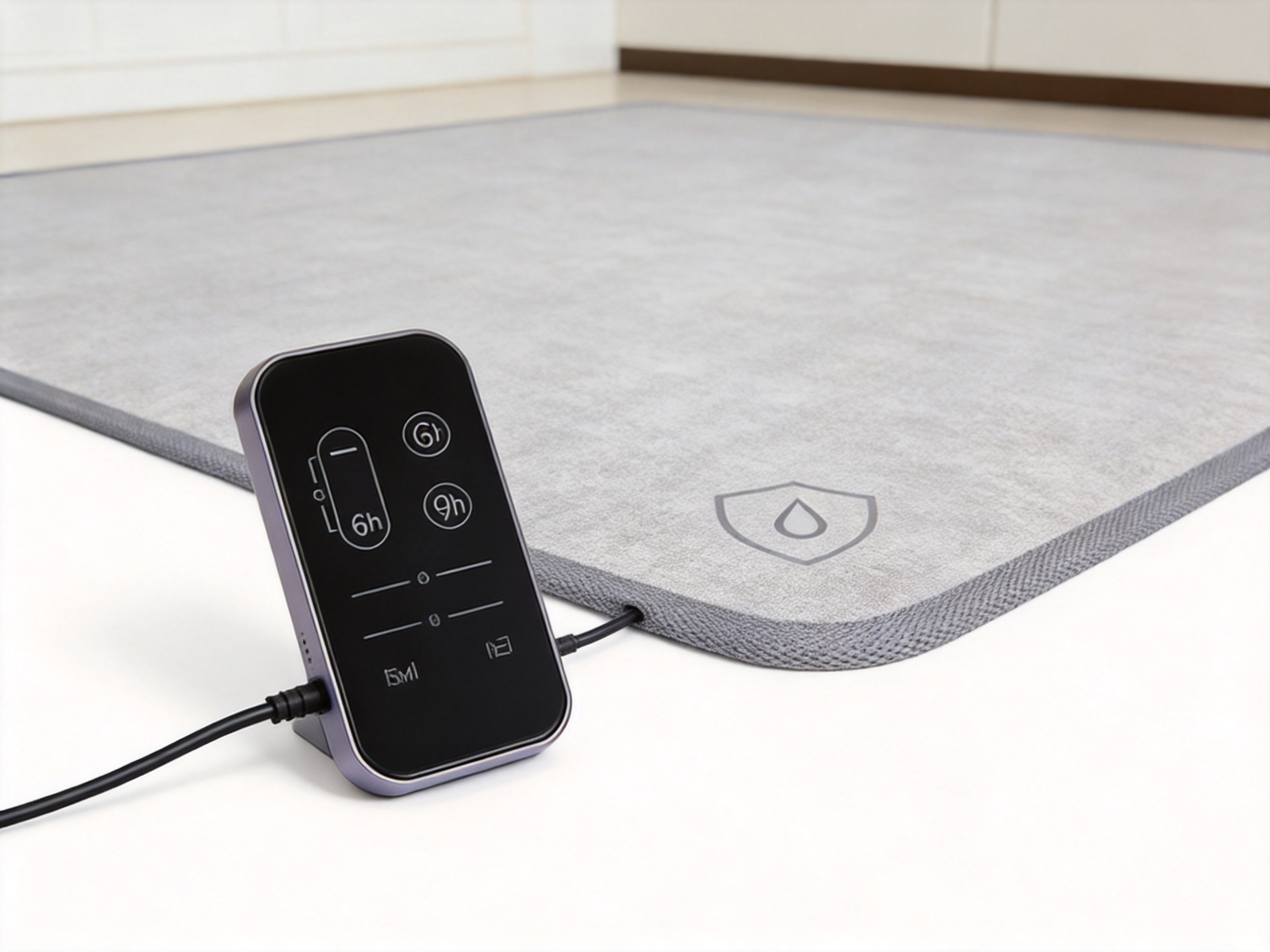
The Large-Area Constant-Temperature Heating Floor Mat is suitable for a wide range of indoor environments. In living rooms, it can be placed near sofas, under coffee tables, or in floor-seating areas to create a warm gathering zone. In bedrooms, it can be positioned beside the bed or in areas where users want warm footing in the morning and evening. In home offices, it can be placed under a desk to warm the feet and lower body during long work sessions.
Family spaces are another strong application. The large area allows more than one person to enjoy warmth at the same time, making it useful for shared relaxation. Pet areas can also benefit from gentle floor warmth, provided users follow proper operating guidance and ensure safe conditions. The mat can help create a comfortable resting location for pets during cold weather.
This application flexibility gives the product an advantage over fixed heating solutions. Installed floor heating can be expensive and difficult to modify. Space heaters may occupy floor space, create airflow noise, or heat the entire room instead of a specific zone. Small heating pads are portable but limited in coverage. A large heated floor mat combines portability, targeted warmth, and wide coverage in one product.
For consumers living in apartments, rented homes, or spaces where renovation is not possible, this mat provides a practical alternative to built-in heating. It can be used seasonally, moved between rooms, and stored when not needed. That makes it attractive to customers who want comfort without construction work or permanent installation.
The first advantage is coverage. Many competitor products are smaller and only warm the feet or a narrow seating area. The 200 × 150 cm design creates a broader comfort zone that can serve more activities and more users. This makes the product more useful in real home environments.
The second advantage is power and performance. A large surface needs sufficient output, and the 1140W system is designed to deliver practical warmth across the mat. Some low-power alternatives may look similar in size but fail to provide satisfying heating in cold rooms. This mat is engineered for stronger, more stable warmth.
The third advantage is adjustable control. Four temperature levels allow users to match heat output to weather, room conditions, and personal preference. Products with only one or two settings may feel too limited, while overly complex controls may confuse users. This mat provides a clear, practical control range.
The fourth advantage is timer flexibility. Automatic shut-off options of 3, 6, 9, and 12 hours support different usage habits and reduce the need for constant manual operation. Many basic mats lack timer options or offer only one fixed timer.
The fifth advantage is safety-oriented design. IPX7 water-resistant protection, child safety lock, and EMF shielding address concerns that consumers commonly have with electric heating appliances. These features make the product more suitable for family settings and long-duration use.
The sixth advantage is material and customization flexibility. Buyers can choose PVC or soft fabric options and request changes to size, power, surface texture, controller design, logo printing, and packaging. Many standard competitor products are offered only as fixed models, which limits the ability of distributors to differentiate in the market.
The seventh advantage is manufacturing integration. Because production capabilities cover injection molding, sewing, assembly, and complete appliance manufacturing, the product can be supported with more coordinated process control. This matters for bulk orders because consistency, delivery, and customization depend on more than product design; they depend on manufacturing discipline.
A heating floor mat is not a simple textile item. It combines electrical heating, surface materials, insulation, controller components, safety features, assembly accuracy, and packaging. Producing it reliably requires coordination across multiple manufacturing processes. The company behind this product operates approximately 5,000 square meters of production facilities and has capabilities covering injection molding, sewing, assembly, and complete appliance manufacturing.
Injection molding supports the production of plastic components such as controller housings, connectors, structural parts, and other appliance elements. In-house or closely controlled molding helps improve consistency in dimensions, material selection, and fitting accuracy. For electrical products, even small component variations can affect assembly quality and user experience.
Sewing capability is important for fabric versions and related soft-surface products. Clean stitching, accurate alignment, and durable seams contribute to both appearance and service life. A heated mat with soft material must feel comfortable while also maintaining structural integrity. Sewing quality influences how the product looks, lies flat, and withstands repeated use.
Assembly capability brings together the heating system, surface layers, controller, wiring, protective structures, and final packaging. Good assembly management helps ensure that each unit follows the correct process. This is essential for safety-focused appliances because the final product depends on correct installation of all components.
Complete appliance manufacturing capability means the company is not limited to one production step. It can manage the full path from component preparation to finished product. This creates advantages in quality control, communication, sampling, troubleshooting, and production scheduling. For OEM and ODM customers, this integrated structure helps reduce coordination complexity and supports faster project execution.
Quality control is central to any electric heating product. Consumers expect warmth, but they also expect safety, durability, and stable operation. A large heated floor mat must perform consistently across its surface and across repeated use. It must also meet expectations for material quality, controller reliability, packaging integrity, and visual appearance.
Process discipline begins with material selection. PVC, fabric, heating elements, insulation layers, electronic parts, and packaging materials must be chosen according to product requirements. Each material affects performance. The surface must resist wear and remain comfortable. The internal heating system must distribute warmth. The controller must respond accurately. The package must protect the product during shipping.
During production, dimensional control is important because the mat has a large 200 × 150 cm format. Alignment errors, uneven layers, or poor sealing can affect both appearance and performance. Standardized production methods help maintain consistency from one batch to another.
Electrical assembly requires careful attention. Heating products involve power input, wiring, control circuits, and protection functions. Proper assembly reduces the risk of malfunction and improves long-term reliability. Inspection procedures can include visual checks, functional testing, temperature checks, controller operation verification, and packaging review.
For export and wholesale customers, consistent quality is especially important because large orders may be distributed across multiple sales channels. A stable manufacturing process helps reduce after-sales issues and supports brand credibility in the target market.
The company has a professional team in research and development, design, production management, and project support. This team structure helps translate market ideas into manufacturable products. For a heating floor mat, R&D is not only about creating heat; it is about balancing warmth, material feel, control logic, safety functions, energy use, durability, and cost.
Product adaptability is a major strength because heating appliance markets vary widely. Some markets require lower temperature settings for mild climates. Others need stronger heating performance for colder winters. Some customers prefer simple controllers, while others want more advanced functions. Packaging preferences also differ between retail stores, e-commerce platforms, and private-label programs.
The product can be customized in size and power, allowing buyers to create models for different room sizes or market positions. Surface materials and textures can be adjusted to match consumer preferences. Heating system configuration can be modified according to performance goals. Controller design and functions can be adapted to create unique selling points. Logo printing and packaging solutions can support private labels and retail presentation.
This flexibility is important for buyers competing in crowded appliance categories. A standard product may be easy to source, but it is also easy for competitors to copy. Customization allows distributors and retailers to build differentiated product lines, target specific customer groups, and strengthen market identity.
OEM and ODM support is a key part of the product’s business value. OEM cooperation allows customers to apply their own branding, packaging, and market positioning to an existing product platform. ODM cooperation goes further by supporting development of modified or new designs based on customer requirements.
For the Large-Area Constant-Temperature Heating Floor Mat, OEM and ODM opportunities may include different sizes, alternative voltage configurations, varied surface patterns, custom controller interfaces, different timer settings, packaging language adaptation, and market-specific feature combinations. This makes the product suitable for wholesalers, importers, retail brands, e-commerce sellers, and regional distributors.
Strong project support helps customers move from idea to sample, from sample to testing, and from testing to mass production. Clear communication is important because customization involves technical, aesthetic, and commercial decisions. A professional team can help customers understand which changes are practical, what trade-offs may exist, and how to control production schedules.
Compared with suppliers that only sell fixed inventory products, a manufacturer with OEM and ODM capability provides more strategic value. It can help customers respond to market trends, create exclusive models, and adjust product features based on consumer feedback.
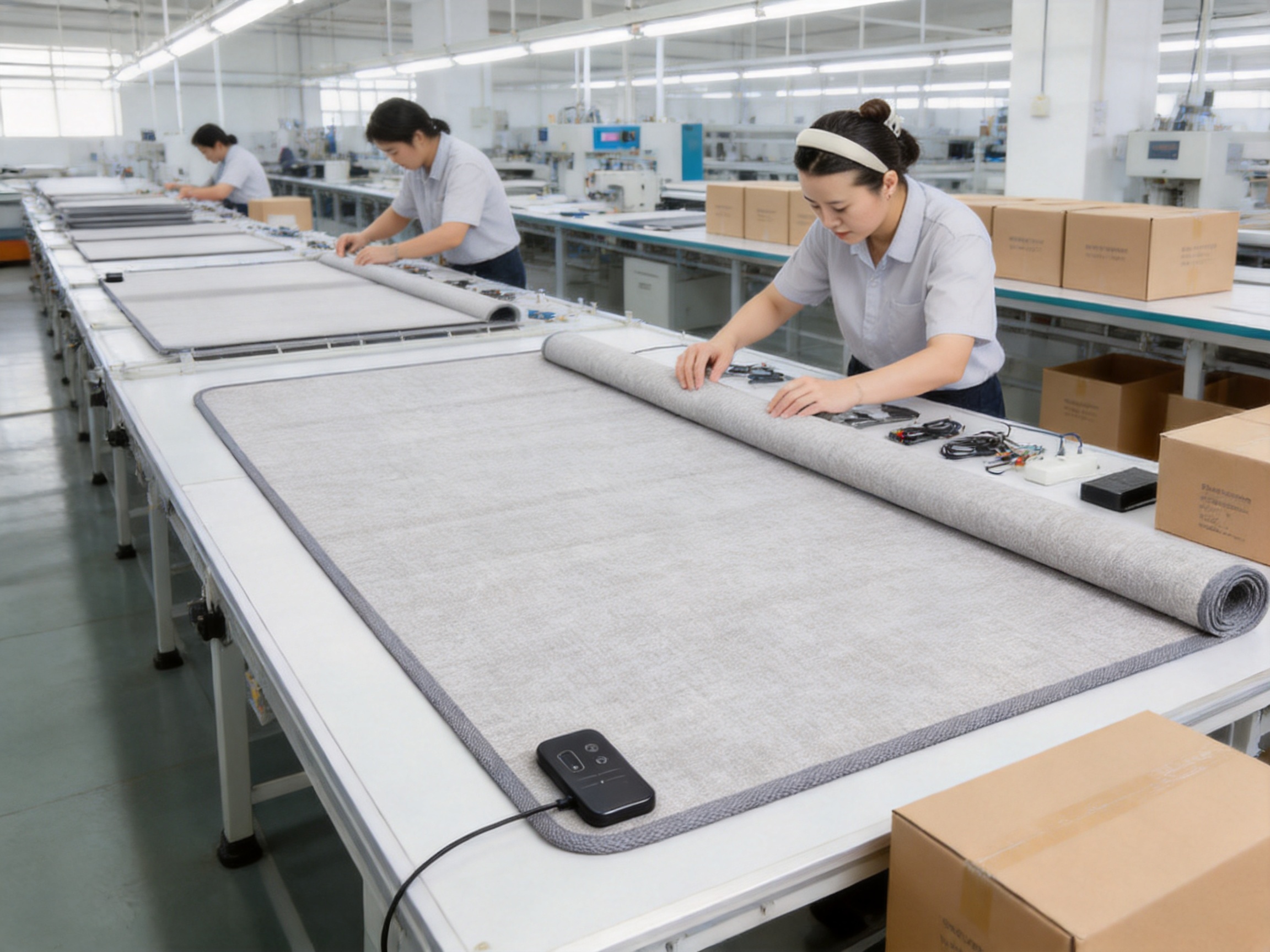
The strongest products in the home appliance market are those that solve real problems simply and reliably. This heating floor mat addresses the common problem of cold floors and uncomfortable indoor zones. It does so with a large heating area, sufficient power, adjustable temperatures, timer control, safety-oriented features, durable materials, and customization options.
Comfort comes from the direct warmth delivered across a broad surface. Safety confidence comes from features such as water-resistant protection, child lock, and EMF shielding design. Practicality comes from easy operation, timer options, material choices, and multiple room applications. Business value comes from manufacturing support, OEM and ODM flexibility, and stable production capabilities.
The product is especially suitable for modern living patterns. More people work from home, spend time in flexible living spaces, and look for targeted comfort solutions instead of heating entire rooms. A large heated mat can reduce dependence on room-wide heating in certain situations and create a localized comfort zone where it is needed most.
For retailers, the product offers clear selling points that consumers can understand immediately: large size, fast warmth, four temperature levels, timer, family safety features, and easy-clean or soft-touch material options. For distributors, it offers customization and scalable production. For end users, it offers a warmer and more comfortable daily environment.
In the living room, the mat can create a warm area for watching television, reading, drinking tea, playing games, or gathering around a low table. Its large size allows it to serve more than one person and helps make the room feel more inviting during winter.
In the bedroom, the mat can be placed beside the bed so users step onto a warm surface in the morning or evening. It can also support quiet relaxation before sleep when used with an appropriate timer setting.
In a home office, cold feet can reduce comfort and concentration. Placing the mat under or near a desk creates localized warmth without needing to heat the entire room. This is useful for long work sessions in cooler seasons.
Families can use the mat as a shared warm zone. The child lock helps prevent accidental setting changes, making it more appropriate for household environments where multiple people are present.
Pets often seek warm places during cold weather. The mat can create a comfortable resting area when used responsibly and under suitable conditions. Users should always follow product guidance and monitor pet use.
Buyers selecting a heated floor mat should evaluate more than price. Important factors include heating area, power level, temperature control, timer options, safety features, material durability, ease of cleaning, packaging, warranty, and customization support. A lower-priced product may not provide the same heating coverage, safety functions, or manufacturing consistency.
The 200 × 150 cm size is a strong selling point, but it must be matched with adequate power and control. The 1140W specification supports meaningful warmth across the large area. Four temperature levels allow users to avoid the frustration of fixed-temperature products. Timer options add convenience and energy awareness. IPX7 protection, child lock, and EMF shielding help address safety concerns.
For retail presentation, packaging should clearly communicate the main benefits. Consumers should quickly understand that the product provides large-area warmth, adjustable temperature, automatic timing, water-resistant protection, and family-friendly safety features. For e-commerce, detailed specification tables, lifestyle images, and clear usage scenarios can help improve conversion.
For private-label customers, customization can be used to differentiate. A brand may choose a soft fabric surface for a premium home-comfort line, or a PVC surface for a practical easy-clean version. Controller appearance, packaging artwork, and language can be adapted for target markets. These options make the product more than a commodity; they turn it into a tailored market solution.
A small heating pad usually warms only one part of the body or a very limited area. This mat measures 200 × 150 cm, creating a larger warm zone suitable for sitting, lounging, working, or shared family use.
Yes. The large size and adjustable temperature levels make it suitable for living rooms, bedrooms, home offices, family spaces, and other indoor areas where floor-level warmth is needed.
The mat offers four temperature levels: approximately 27°C to 32°C, 32°C to 37°C, 38°C to 44°C, and 50°C to 55°C. Users can choose the level that best matches the room temperature and personal comfort preference.
A large heating area requires sufficient power to provide effective warmth. The 1140W rating helps the mat warm up efficiently and maintain stable comfort across the surface.
Yes. It includes timer settings for 3, 6, 9, and 12 hours. These options help users manage operating time and reduce the need to turn the mat off manually.
Yes. The mat includes IPX7 water-resistant protection, a child safety lock, and EMF shielding design. These features are intended to improve safety confidence and daily reliability.
Yes. PVC and soft fabric options are available, and surface texture or appearance can be adjusted according to project requirements.
Yes. Size, power, surface material, heating configuration, controller design, logo printing, and packaging can be customized for OEM and ODM projects.
It is suitable for wholesalers, importers, retailers, e-commerce sellers, private-label brands, and distributors seeking a large-area indoor heating product with customization potential.
The standard packaging is one piece per color box, and the product includes a one-year warranty. The minimum order quantity is 1500 pieces per color.
The Large-Area Constant-Temperature Heating Floor Mat is a strong solution for modern indoor warmth. It combines broad 200 × 150 cm coverage, 1140W heating performance, four temperature levels, smart timer control, IPX7 water-resistant protection, child safety lock, EMF shielding design, and durable PVC or fabric materials. These features make it more versatile and competitive than many conventional small or basic heating mats.
Its value is not limited to end-user comfort. The product is supported by integrated manufacturing capabilities, including injection molding, sewing, assembly, and complete appliance production. This foundation strengthens quality control, customization, production consistency, and OEM/ODM cooperation. For business buyers, the product offers both a ready market opportunity and a flexible development platform.
As consumers continue to seek practical, safe, and comfortable heating solutions for homes and offices, large-area heated floor mats are well positioned for growth. This model meets that demand with a thoughtful balance of performance, safety, comfort, and manufacturing adaptability.
1. International Electrotechnical Commission. Household and Similar Electrical Appliances Safety Standards.
2. International Electrotechnical Commission. Degrees of Protection Provided by Enclosures, IP Code.
3. American Society of Heating, Refrigerating and Air-Conditioning Engineers. Thermal Environmental Conditions for Human Occupancy.
4. Consumer Product Safety Guidance for Electric Heating Appliances.
5. Materials Engineering References on PVC, Fabric Durability, and Household Appliance Surface Design.
6. Product Development Practices for OEM and ODM Home Appliance Manufacturing.
Smart energy-efficient portable cooling hand fans have quickly become one of the most practical personal comfort devices available, combining compact design, long battery life, an...
READ MORECleaning has traditionally been one of the most time consuming and physically demanding tasks in both household and commercial settings. Whether it involves scrubbing floors, vacu...
READ MOREIn office environments where air conditioning runs year-round, or during winter months with inadequate central heating, workers seated for extended periods regularly experience ...
READ MOREUnderstanding Portable Cooling Fans and Their Applications Across Different Environments Portable cooling fans represent efficient, lightweight personal cooling solutions providin...
READ MOREThe heated eye mask is good for your eyes in most cases — particularly for people suffering from dry eye disease, meibomian gland dysfunction (MGD), eye fatigue, or poor sleep. Wh...
READ MOREDoes a Heated Eye Mask Support Eye Comfort Used at a moderate setting for a short session, a heated eye mask generally supports temporary comfort around the eyes by easing tension...
READ MORE